SCREENING · CONVEYING · BULK MATERIAL HANDLINGBULK MATERIAL HANDLING

Spare Parts

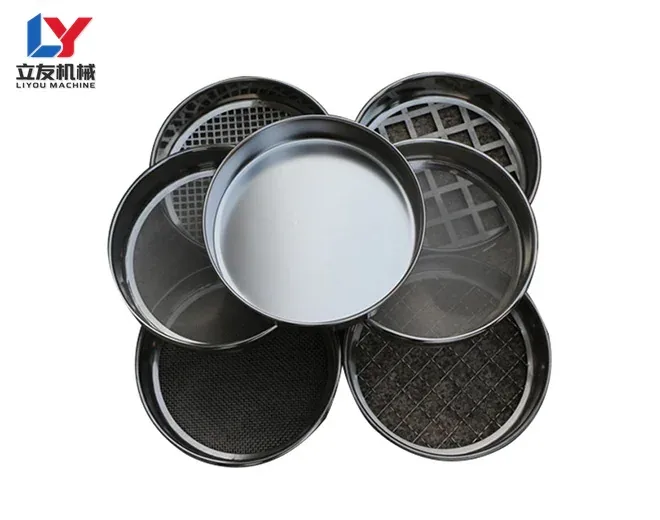
Laboratory Test Sieves

Separate laboratory samples into measurable fractions with test sieves selected for the required particle-size range.

Compare Spare Parts ↗

Production Problems It Solves

No quantitative check on a coarse or fine fraction

Weigh material retained on each sieve to describe the sample distribution.

Inconsistent batch acceptance

A defined aperture series gives incoming and finished samples the same basis for comparison.

Where It Fits in Your Plant

Sand and aggregate laboratories

Determine retained fractions using the aperture series and test procedure required for the material.

Powder and granule production

Check samples after grinding or screening. Frame fit, mesh condition and traceability belong to the actual sieve supplied; a product description does not establish calibration or certification.

How the Laboratory Test Sieves Work

A sieve frame holds a specified mesh or perforated surface. Stacked sieves retain successive fractions, which are weighed to establish the sample grading.

Selection Factors

  • Aperture series: choose openings that resolve the required particle-size range.
  • Frame compatibility: diameter and height must fit the shaker, lid, receiver and clamp.
  • Traceability: required dimensional inspection or certification must refer to the actual sieve supplied.

Material & Process Compatibility

Sand samples

Material form
Dry mineral grains
Typical application
Determine grading by retained mass
Handling considerations
Use documented apertures and a defined test method
Granule samples

Material form
Dry granules
Typical application
Compare particle-size distribution between batches
Handling considerations
Sieve sequence and test mass

Powder samples

Material form
Dry dispersible powder
Typical application
Measure coarse fractions in a sample
Handling considerations
Method suitability for cohesive fines

Common Issues & Checks

  • Inconsistent retained mass: inspect blinded openings and sample losses at frame joints.
  • Damaged mesh: remove the sieve from comparative testing until its condition and opening dimensions are resolved.

Useful answers

Frequently asked questions

How is a particle-size distribution measured?

A representative sample passes through a selected sieve stack. The mass retained on each sieve and in the receiver is weighed and expressed as fractions of the recovered sample.

Start with your material

Let's build the right solution.

Share your material, throughput and process requirements. We will review the details needed for equipment selection.

Additional technical details (optional)

WhatsAppGet a quote ↗
Chat on WhatsApp