Grain
- Material form
- Dry grains
- Typical application
- Transfer grains between adjacent process points
- Handling considerations
- Transport response and breakage tolerance
Conveying Equipment
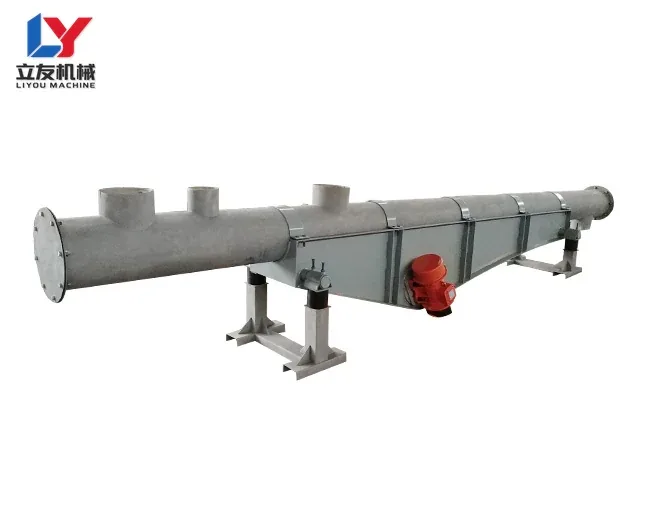
Transfer bulk solids along an enclosed vibrating tube with a tubular vibratory conveyor between fixed process machines.
Compare Conveying Equipment ↗A tube encloses the carrying path, with inlet and outlet joints completing containment.
Vibration advances the solids along the tube rather than rotating a flight through the product.
Connect a screening outlet to a downstream receiver for suitable dry granules or powders. Product flow depends on how the material responds to the tube motion.
Move material between nearby machines with flexible joints at vibrating interfaces. Sticky buildup or a rigidly constrained tube can interrupt travel; this is not pneumatic long-distance transport.
Vibratory drives move the tube so particles advance by repeated inertial movement. Flexible connections and isolated supports accommodate the moving housing at the inlet and outlet.
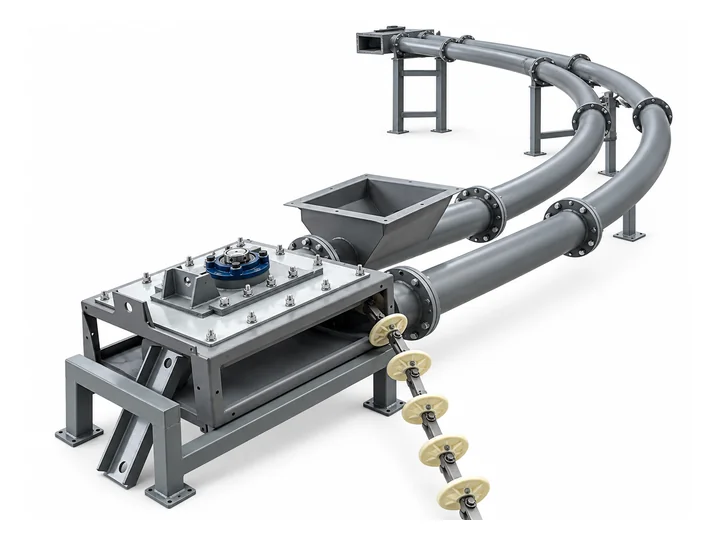
Transfer chemical powders, food ingredients and plastic granules through an enclosed pipe chain conveyor linking storage, mixing and packing.
Explore equipment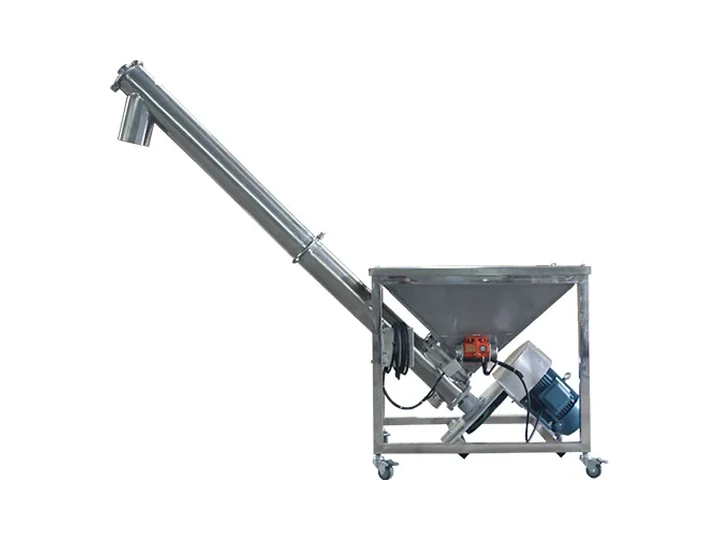
Transfer dry powders and granules between hoppers, mixers and packing equipment with a screw conveyor sized for the feed and incline.
Explore equipment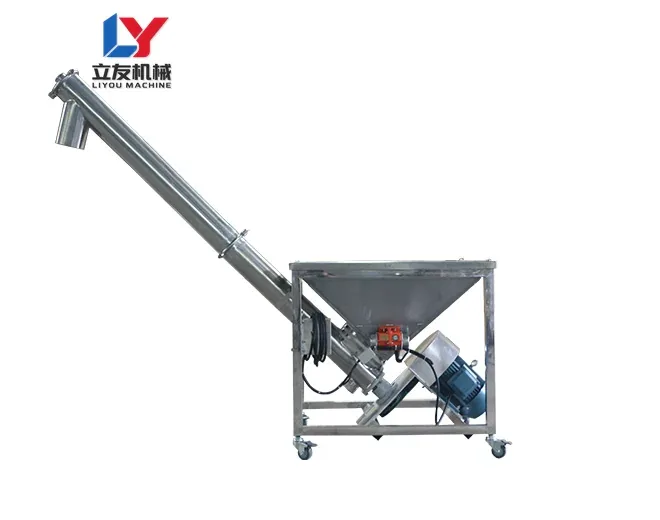
Powder conveying selection depends on more than distance.
Read guideA tubular chain conveyor uses discs carried by a chain.
Read guideUseful answers
The tube itself vibrates and advances the particles by repeated inertial movement. It does not use a circulating chain or a rotating screw flight.
Start with your material
Share your material, throughput and process requirements. We will review the details needed for equipment selection.