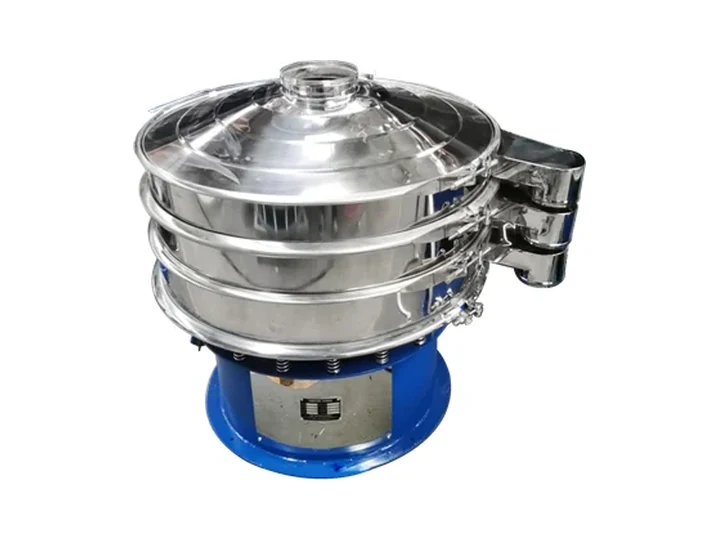
Rotary Vibrating Screen
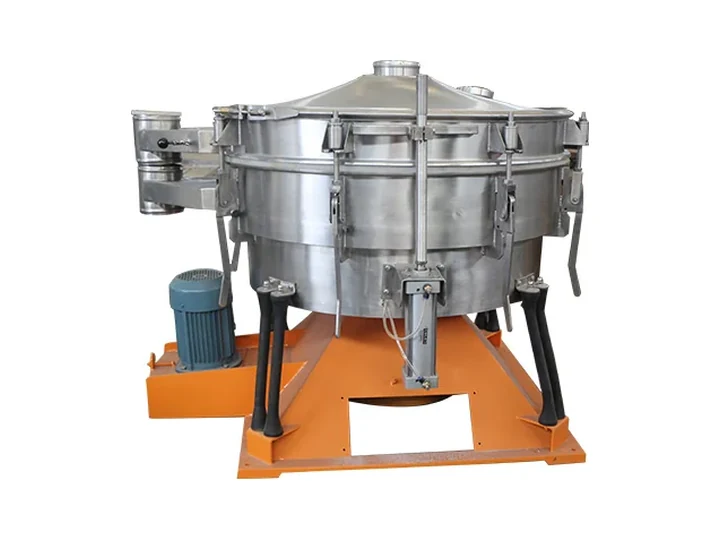
Remove lumps and grade powders with a rotary vibrating screen for flour, starch, mineral fillers and chemical ingredients.
Explore equipmentIndustry solution
Screen calcium carbonate, resin and pigment powders; control agglomerates, mesh blinding and dust at enclosed transfer points.
Discuss your application ↗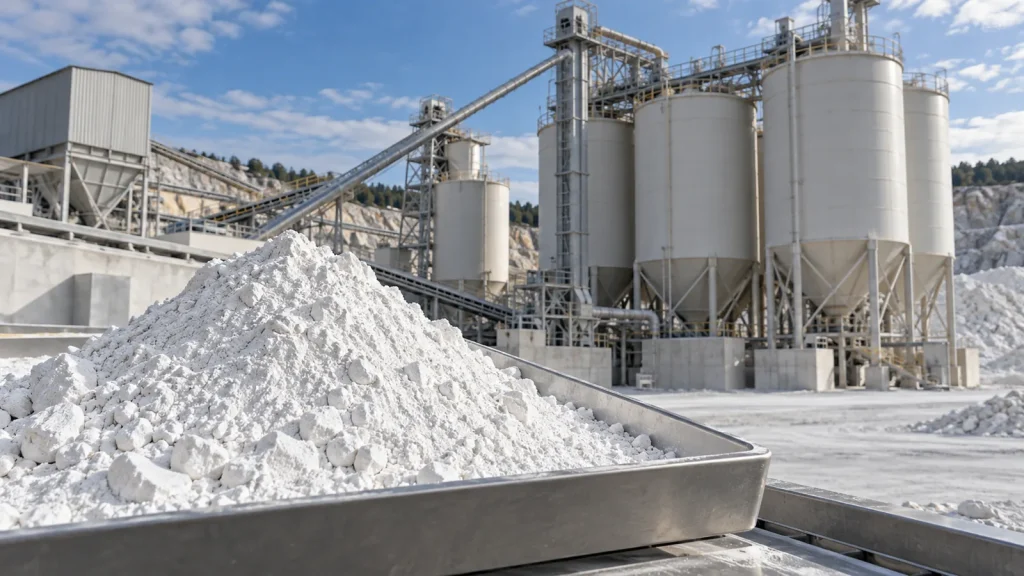
Chemical powder screening separates coarse particles, agglomerates or selected size fractions. Calcium carbonate used as a filler requires control of the coarse tail. Resin powder may contain fused particles from storage or upstream processing. Pigment powders can coat fine mesh and reduce the area available for separation. Screening changes the particle-size distribution; it does not change chemical purity or remove a dissolved impurity.
A free-flowing powder spreads into a shallow layer, exposing particles to openings. A cohesive powder moves as clusters and can carry usable fines into the oversize outlet. Humidity can turn some powdered salts into lumps and deposits. For mixtures, the components may pass at different rates and segregate during handling. Keep accepted powder and rejects separate so coarse particles do not re-enter the batch.
| Material / observation | Separation / cause | Equipment / action |
|---|---|---|
| Calcium carbonate | Remove coarse particles or separate grades; monitor abrasive wear. | Rotary, ultrasonic or tumbler screen |
| Resin powder | Remove fused particles and lumps without mixing product grades. | Rotary or tumbler screen |
| Pigment powder | Control agglomerates and powder adhesion on fine mesh. | Ultrasonic-assisted screen where compatible |
| Soda ash / powdered salts | Separate storage lumps and limit moisture ingress. | Enclosed screening and transfer |
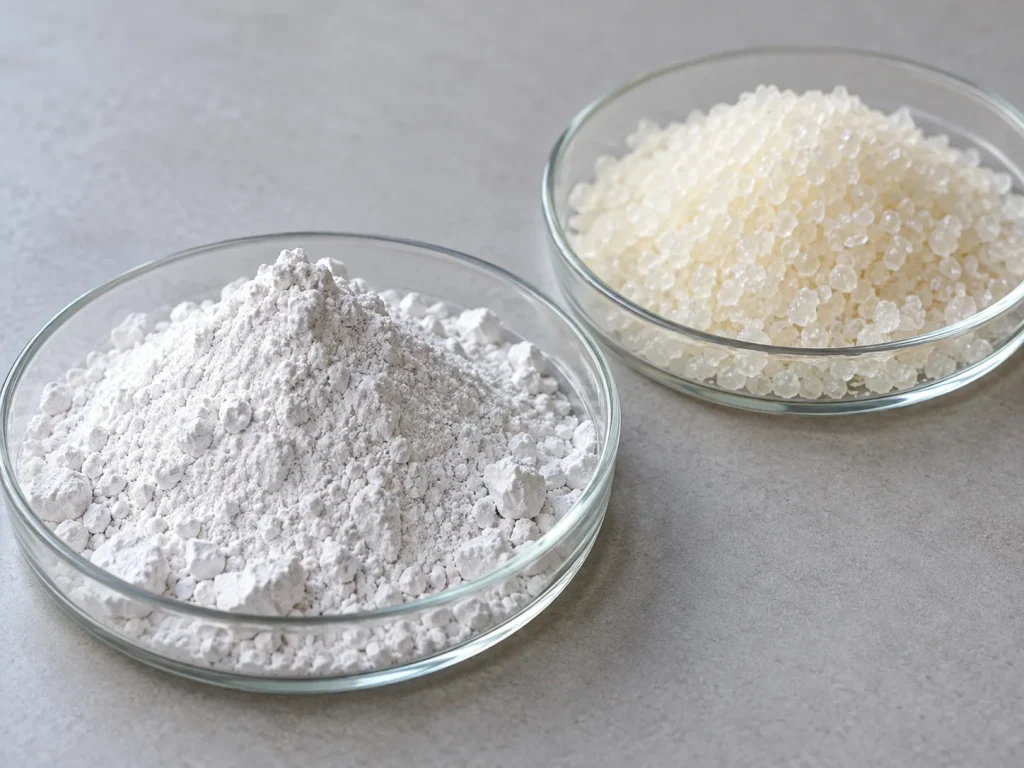
A falling throughput with unchanged feed often points to loss of open area rather than insufficient motor power. Inspect the underside as well as the top of the mesh. Mechanical cleaning helps dislodge lodged particles; ultrasonic assistance helps with fine-powder adhesion on a compatible mesh assembly. Hard agglomerates larger than the opening remain rejects. Increasing force to push them through can damage the mesh and defeat the separation.
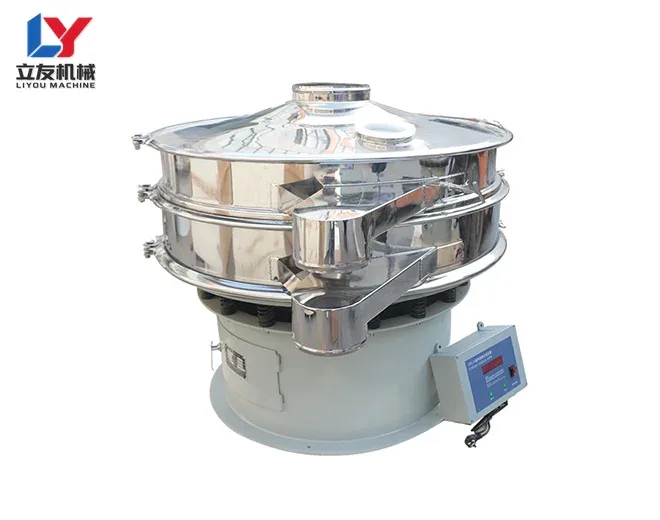
A rotary vibrating screen serves compact powder separation. A tumbler screen provides separate outlets for several size bands. Ultrasonic vibrating screens address fine-mesh blinding where the powder and screen assembly are suitable. The screen must be supported and sealed so that powder cannot bypass the mesh around its edge. Inspect gasket seating after every screen change.
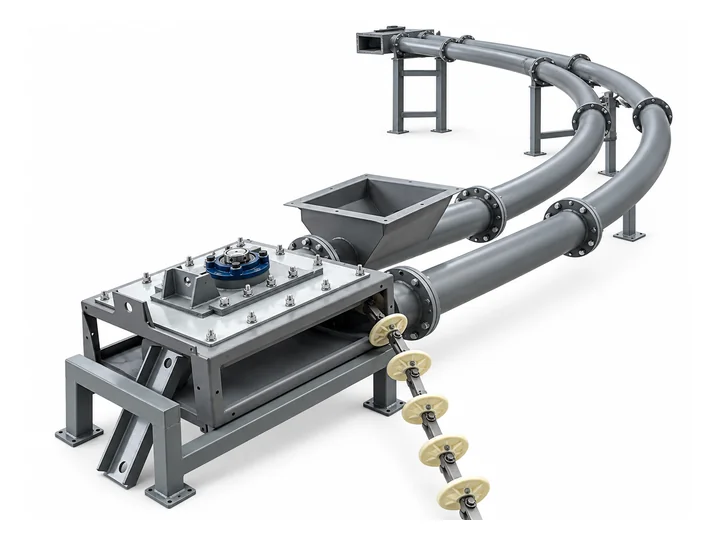
Screw conveyors provide short enclosed transfers. Pipe chain conveyors carry suitable powders through a tube route with bends. Dust release commonly occurs at the hopper, flexible connector and discharge rather than along the closed tube itself. Match pressure conditions at those interfaces and keep extraction from drawing usable powder out of the process. Retained material at bends and outlets can contaminate a later grade. Abrasive fillers wear conveying surfaces; incompatible powders attack seals or contact materials.
Remove lumps and grade powders with a rotary vibrating screen for flour, starch, mineral fillers and chemical ingredients.
Explore equipmentClassify fine powders and delicate granules with a tumbler screen, using extended mesh contact to separate closely sized fractions.
Explore equipmentKeep fine-powder screening openings clear with an ultrasonic vibrating screen for coating powders, mineral fillers and other cohesive dry powders.
Explore equipmentTransfer chemical powders, food ingredients and plastic granules through an enclosed pipe chain conveyor linking storage, mixing and packing.
Explore equipment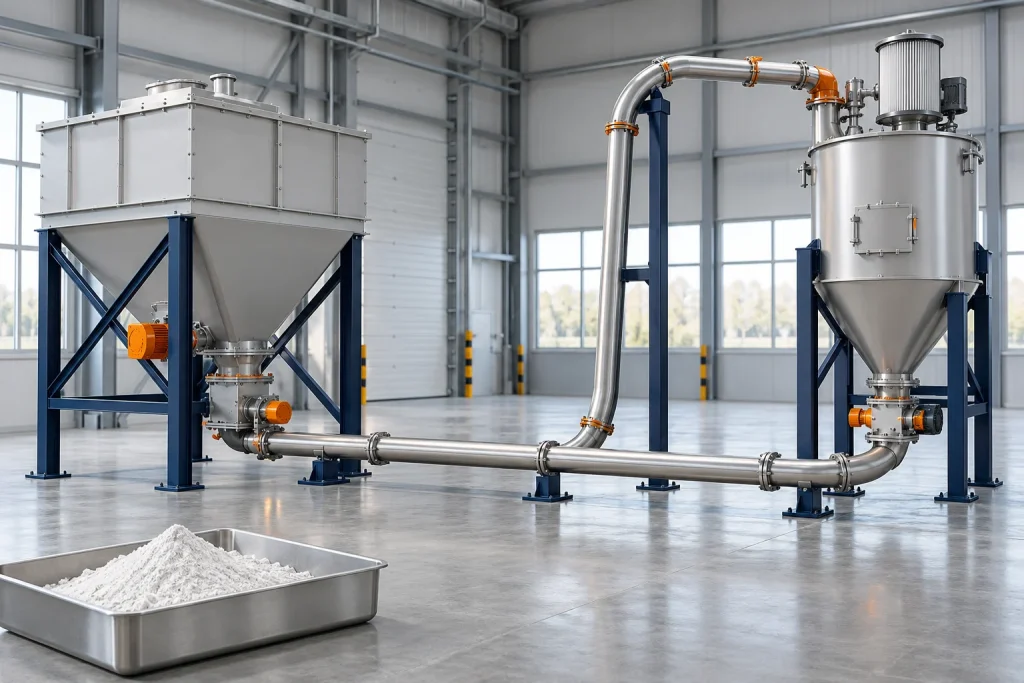
Application concept
Where dust escapes from enclosed powder conveyors, how retained powder causes carryover, and why abrasive fillers need wear inspection.
Read guideUseful answers
No. A screen separates by size, so chemical purity requires other process controls.
Look for coated mesh, plugged openings, a deep bed and an obstructed discharge before increasing feed or vibration.
Start with your material
Share your material, throughput and process requirements. We will review the details needed for equipment selection.