Technical resource
How to Calculate Vibrating Screen Capacity
Understand feed rate, bulk density and screen loading, then check output capacity against the required particle-size separation.
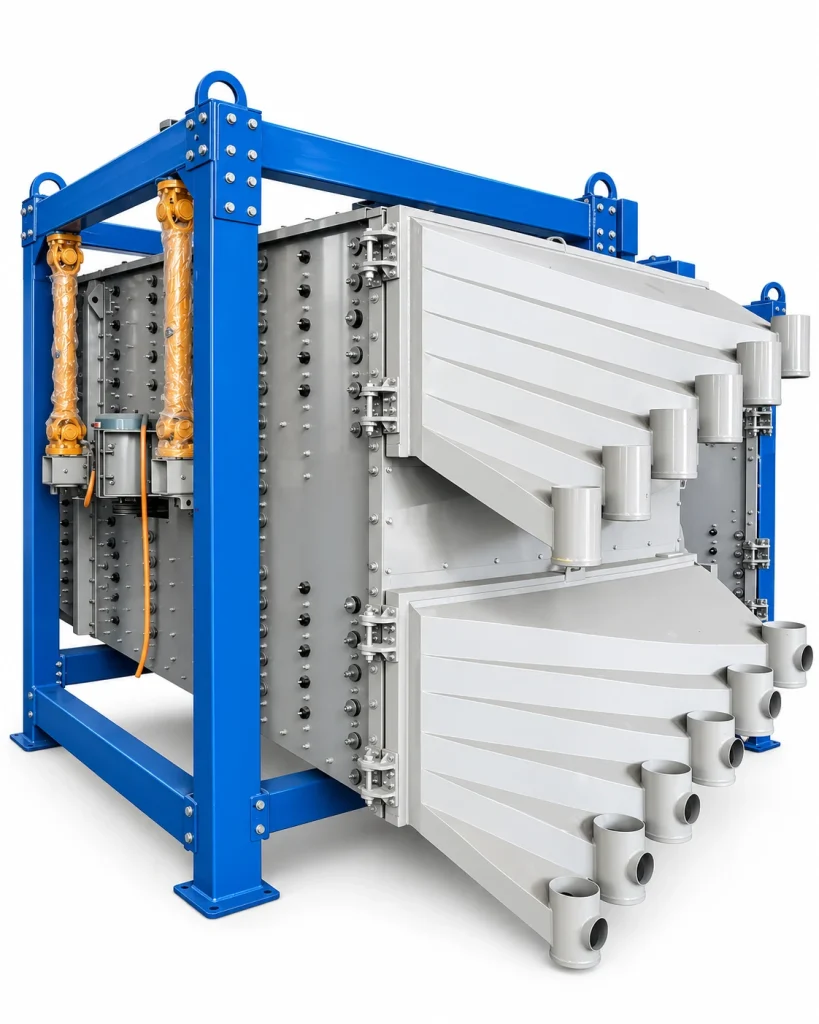
Separate feed capacity from useful product
Screen capacity is not determined by motor power alone. The deck receives an incoming feed and produces individual fractions, so state which rate is being measured. Bed depth, feed spread, near-size content, moisture and available openings affect the separation.
Use units consistently
Mass rate equals volumetric rate multiplied by the applicable bulk density when the quantities refer to the same stream and condition. This is a dimensional relationship, not a screening design formula. Measure density and keep kilograms, tonnes and cubic metres consistent. A peer catalog model cannot be scaled by deck area alone to predict another machine.
Validate the design assumption
Provide the grading curve and separation target to the engineer. Request the assumed feed distribution, screen medium and active area. During a trial, sample all outlets over a common interval and check the mass balance. Record mesh condition and settings, and extend the observation sufficiently to identify blinding or buildup. Use the agreed product-quality limits together with the rate.
Equipment for this decision
- Linear Vibrating Screen
- Probability Screen
- Dewatering Screen
Related equipment
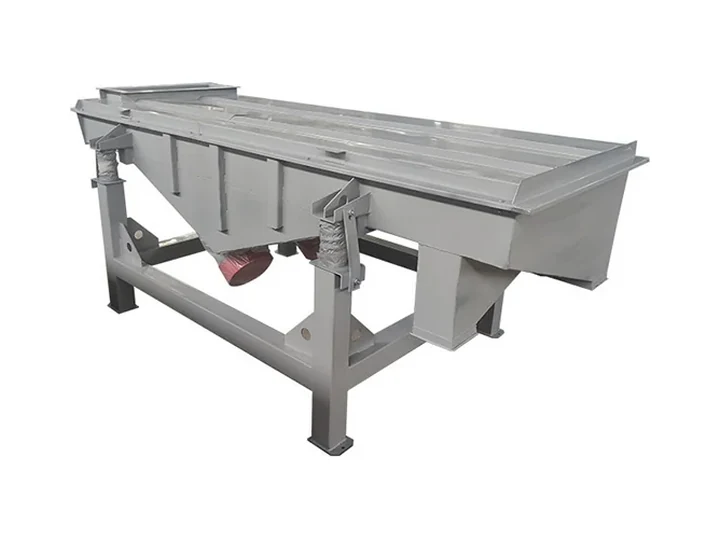
Linear Vibrating Screen
Grade sand, fertilizer granules and plastic pellets with a linear vibrating screen that separates fines, saleable fractions and oversize.
Explore equipment