Technical resource
Linear Vibrating Screen vs Rotary Vibrating Screen
Compare rectangular and circular screening decks, feed distribution, discharge layout and screen-change access.
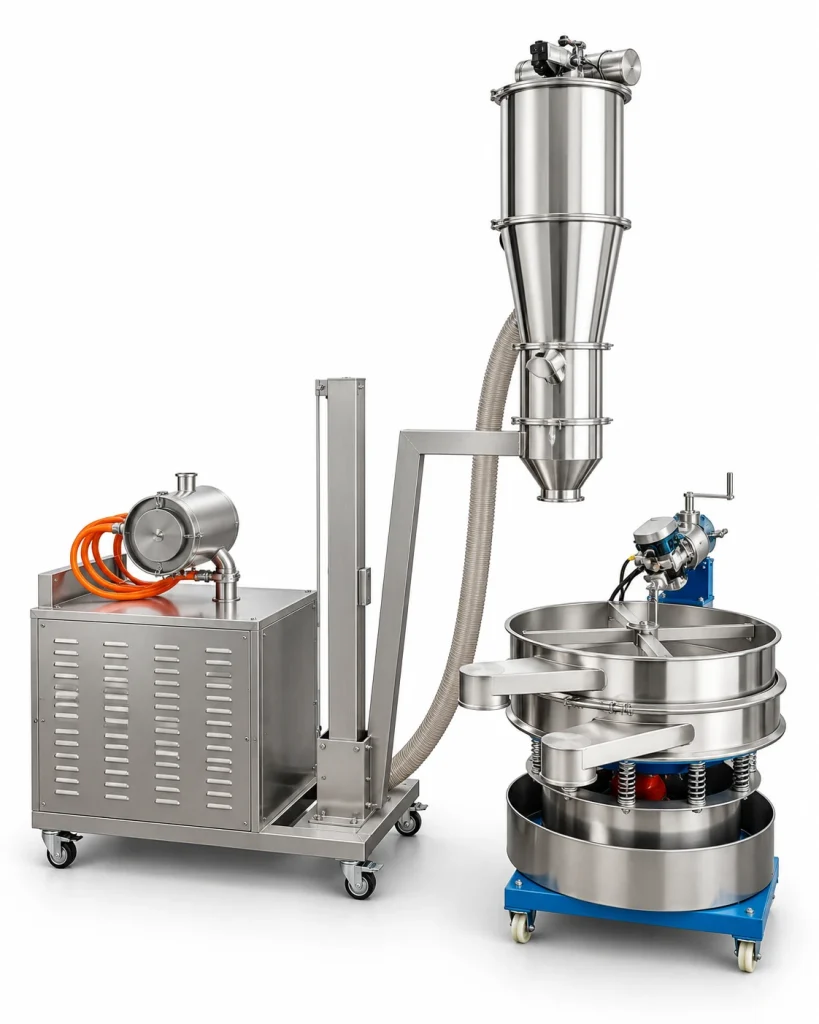
Compare the process interfaces
Linear and rotary screens both separate particles through openings, but their movement and layouts differ. A linear machine advances material across a rectangular deck. A rotary machine spreads material on a circular surface using a vertical vibratory drive. Neither shape alone establishes greater accuracy or capacity.
Choose by material and fractions
Compare feed distribution, near-size content, moisture and desired fractions. A multi-deck linear screen may fit an extended process route; a circular machine may fit a compact powder-processing point. These are layout considerations rather than universal rankings. Both can experience blinding and seal bypass, and both need a defined mesh and maintenance procedure.
Use one comparison procedure
Trial the same material at the same feed condition and specify output grading, mass balance and retained contamination. Record motor arrangement, screen medium and cleaning accessories. Compare installation envelope, outlet elevations and screen replacement access with the technical result. An apparent higher rate is not a benefit if it produces an unacceptable fraction.
Equipment for this decision
Related equipment
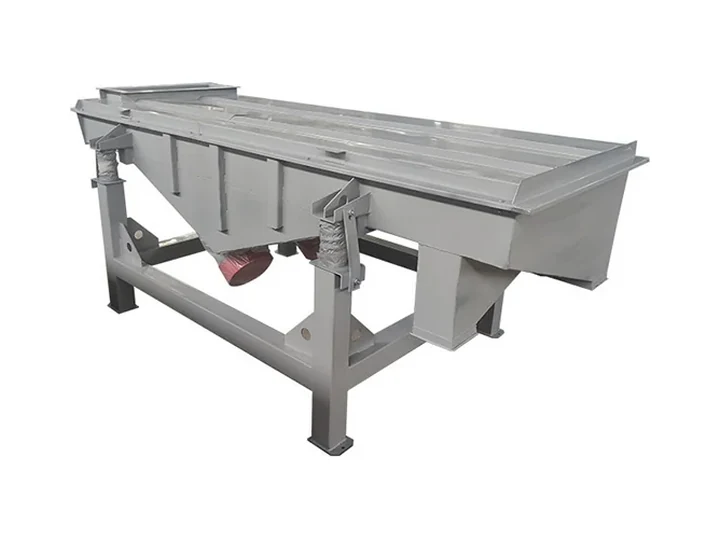
Linear Vibrating Screen
Grade sand, fertilizer granules and plastic pellets with a linear vibrating screen that separates fines, saleable fractions and oversize.
Explore equipment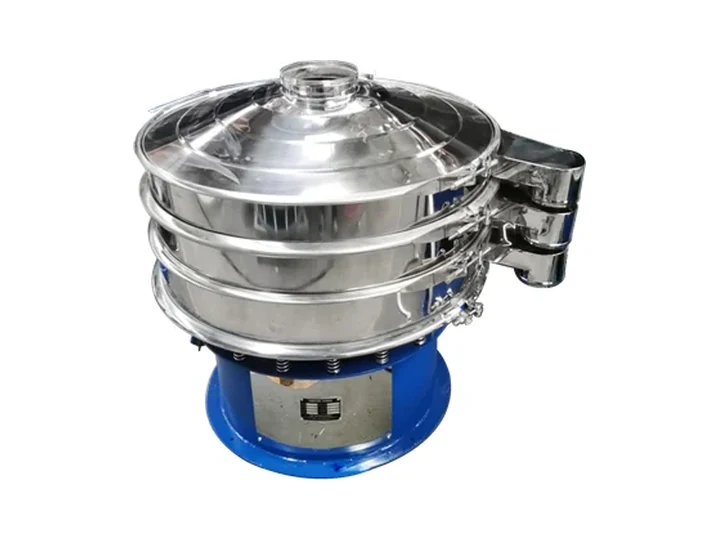
Rotary Vibrating Screen
Remove lumps and grade powders with a rotary vibrating screen for flour, starch, mineral fillers and chemical ingredients.
Explore equipment