Technical resource
How Tubular Drag Chain Conveyors Move Powders and Granules
How tubular chain conveyors handle chemical powders, mineral fillers, resins, grains and ingredients, with practical dust, wear and cleanout conditions.
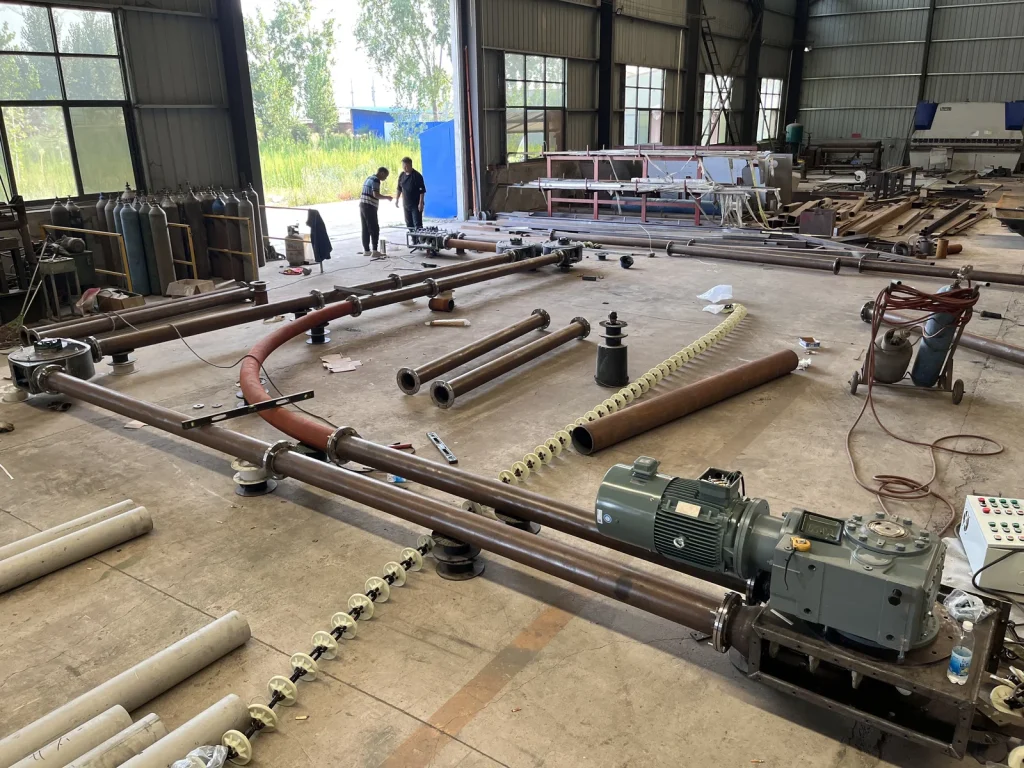
What Moves the Material
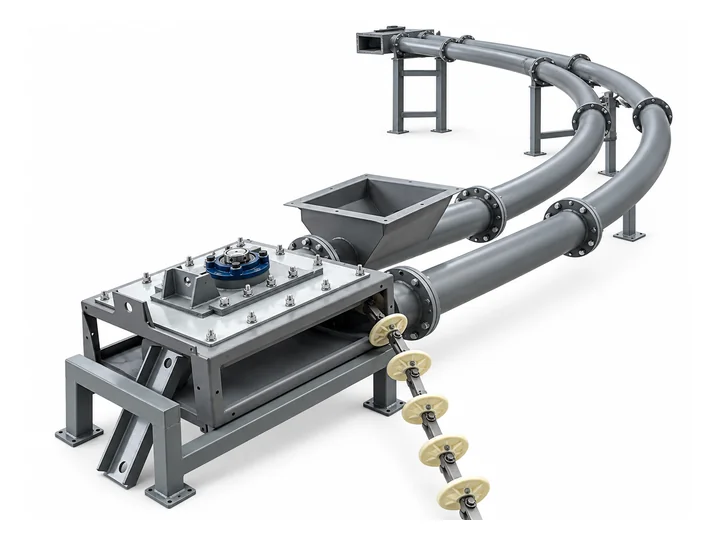
A tubular drag chain conveyor uses a circulating chain with conveying discs inside enclosed tubes. The drive pulls the chain through the circuit; the discs move the material toward the discharge. A tensioning mechanism maintains the chain arrangement, and the return tube completes the circuit.
The conveying tube contains the material path. Feed and discharge points, inspection ports and the return run remain part of the complete system rather than separate conveyors.
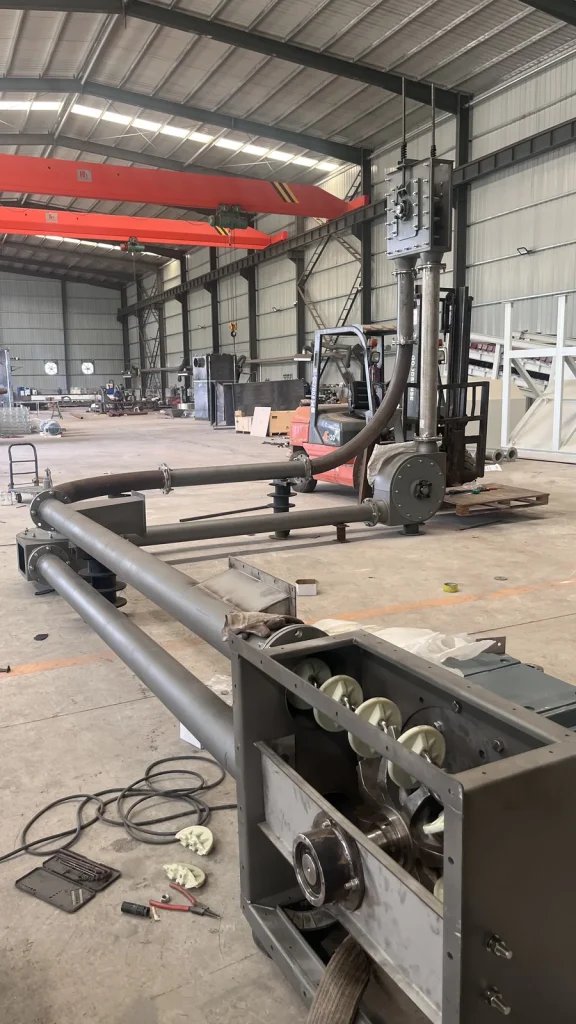
Horizontal Transfer: Material Moves Between Discs
In a horizontal section, the discs push the material forward as a bulk mass. The spacing between feed and receiving equipment determines the useful conveying run, but the return tube and bends also occupy space and contribute to the circuit.
Several inlet or discharge points can be included. Their operating sequence must keep material moving toward the intended receiver without overfilling the tube.
Vertical Transfer: Discs Support the Lifted Material
In a rising section, the discs support and lift the solids. The LIYOU brochure notes that reduced filling helps limit fallback. Vertical duty therefore depends on material density and loading as well as height; the horizontal capacity cannot simply be assigned to every vertical route.
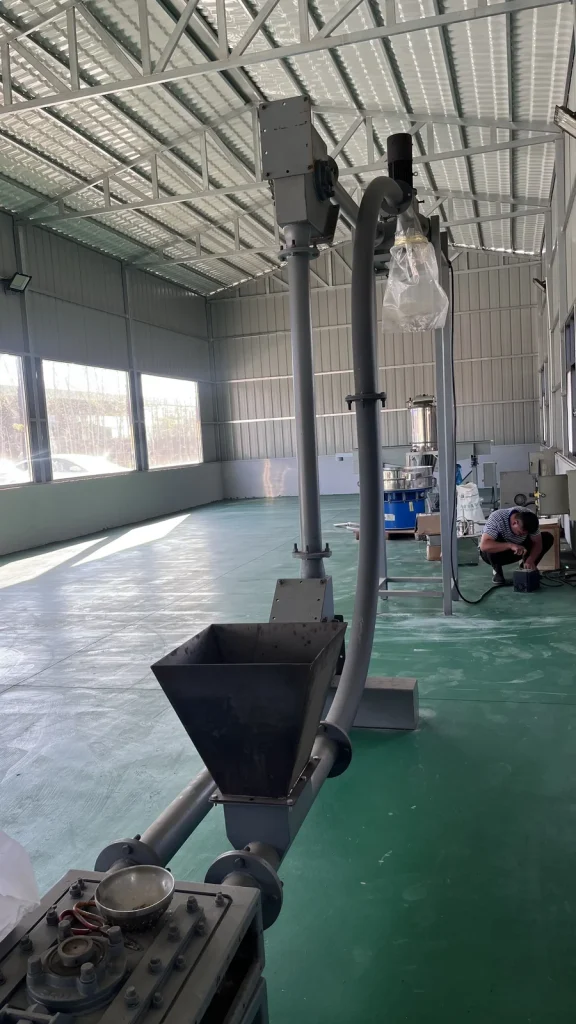
Bends Connect Points Around Existing Equipment
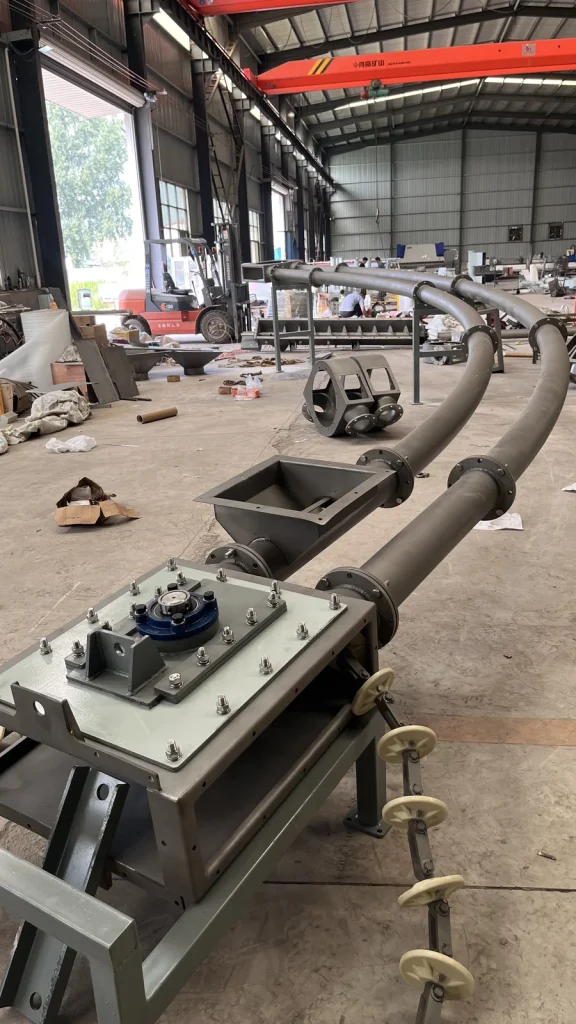
Large-radius elbows change direction along a fixed tube route. The circuit can combine horizontal runs, lifts and bends to connect equipment that is not aligned. Bend geometry affects disc passage, material impact and contact with the tube wall. Inspection points need to remain accessible after installation.
Material Groups and Conveying Conditions
Dry-solid transfer covers more than flour or plastic pellets. The material groups below need different control of pickup, deposits and contact surfaces; the same tube diameter does not establish the same mass throughput for every product.
| Material group | Examples | What matters in the circuit |
|---|---|---|
| Chemical powders and pigments | Sodium bicarbonate, soda ash, titanium dioxide, iron oxide, sodium phosphate | Powder pickup, dust containment, product-contact compatibility and colour-change residues |
| Mineral fillers and building powders | Calcium carbonate, talc, kaolin, bentonite, cement | Bulk density, cohesive grades, moisture-related lumps, tube and disc wear |
| Plastics and resins | PET and other pellets; PVC and other resin powders | Pellet fines, powder cohesion, static behaviour and grade-change cleaning |
| Grain and food ingredients | Wheat, rice, corn, flour, starch, sugar, salt | Grain or crystal damage, cleanout, moisture and contact-grade requirements |
| Feed and fertilizers | Animal feed pellets, dry feed ingredients, urea and fertilizer granules | Pellet breakage, caking and formulation carryover |
| Adsorbents | Activated carbon powder and granules | Powder containment, granule friability, residues and dust-specific protection |
Powder Pickup, Deposits and Contact Materials
A cohesive powder can bridge above the inlet while the conveyor itself remains clear. Pigment deposits at bends and discharge faces can contaminate the next batch. Mineral powder grades differ in density and wear behaviour; granules can generate fines through repeated contact. These are different causes and should not all be treated by increasing motor power.
Carbon steel, 304 stainless steel and 316L stainless steel are catalogue construction options. The chain, discs and seals also need compatibility with the product and cleaning exposure. Food, chemical and dust-hazard duties cannot be assigned the same contact or protection arrangement simply because the tube is enclosed.
Use the GL-Series Data for the Complete Route
The catalogue covers GL89 through GL325. Capacity is given in m³/h, alongside tube outside diameter, maximum horizontal distance, maximum lift and motor-power ranges.
Read the GL-series specifications and capacity explanation, or compare the Pipe Chain Conveyor, horizontal, vertical and curved arrangements.
Related equipment
Pipe Chain Conveyor
Transfer chemical powders, food ingredients and plastic granules through an enclosed pipe chain conveyor linking storage, mixing and packing.
Explore equipment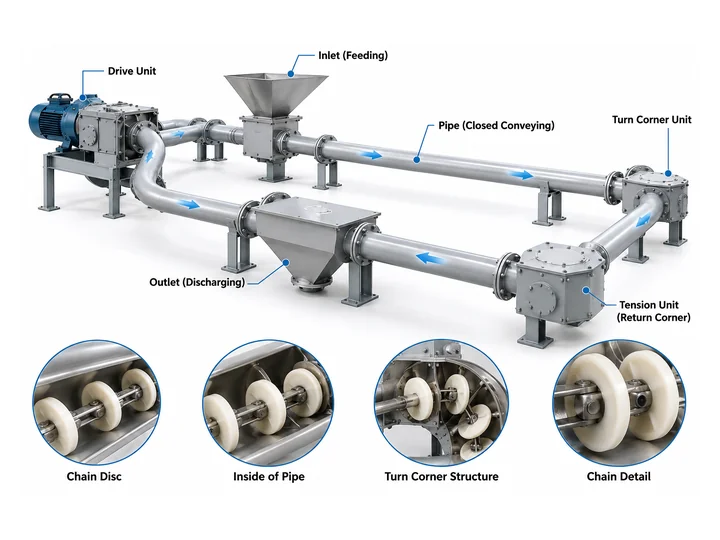
Horizontal Pipe Chain Conveyor
Connect hoppers, mixers and packing stations at similar elevations with a horizontal pipe chain conveyor for enclosed powder and granule transfer.
Explore equipment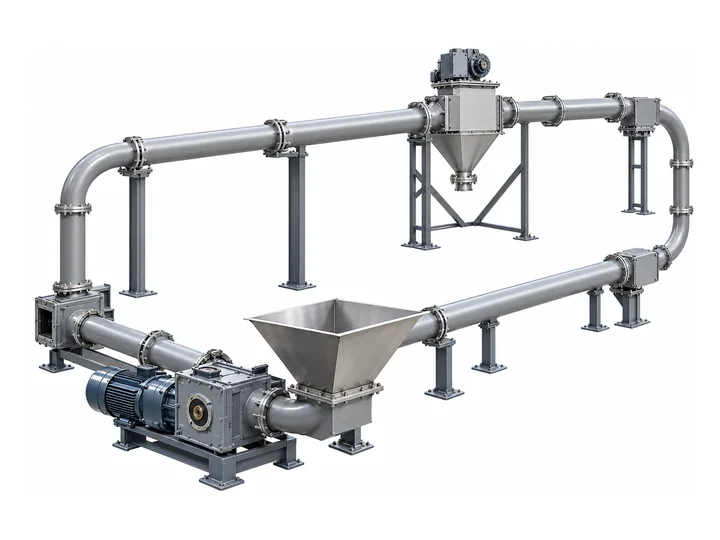
Vertical Pipe Chain Conveyor
Lift dry powders and granules to upper hoppers with a vertical pipe chain conveyor using chain-mounted discs inside a tube.
Explore equipmentCurved Pipe Chain Conveyor
Route dry powders and granules around fixed plant equipment with a curved pipe chain conveyor using engineered tube bends.
Explore equipmentTechnical resources
GL-Series Tubular Drag Chain Conveyor Specifications and Capacity
GL89 to GL325 tube diameters, volume capacities, lift limits and motor ranges, explained with the LIYOU catalogue reference conditions.
Read guide