Flour
- Material form
- Dry food powder
- Typical application
- Scalp larger particles before mixing or packing
- Handling considerations
- Hygiene, aperture and stable feed
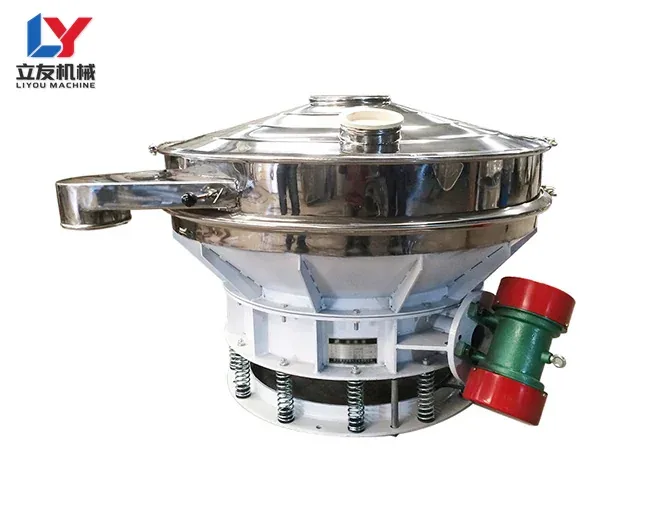
Screening Equipment
Check-sieve powder through a direct discharge sifter between a feed hopper and receiving equipment with limited installation height.
Accepted powder leaves below the deck through a short vertical path.
Retain lumps and larger contaminants at the mesh before the powder reaches the receiving vessel.
Place the sifter below the powder intake and above the next hopper to screen flour, starch or dry additives as they enter production.
Screen dry ingredients before blending when the duty is oversize removal rather than producing many graded fractions. Retained solids still need a clear removal route.
Vibration presents the feed to the mesh. Accepted material passes toward the bottom discharge, while retained oversize remains separated according to the actual outlet arrangement. The configuration must establish how retained contamination is removed.
Applications & Suitable Materials
Flour
Starch
Sugar
Technical Specifications
Model Single-motor power (kW) Twin-motor power (kW) Effective diameter (mm) ZPS600 0.18 2 × 0.12 550 ZPS800 0.18 2 × 0.18 750 ZPS1000 0.25 2 × 0.18 970 ZPS1200 0.55 2 × 0.25 1170 ZPS1500 0.75 2 × 0.55 1470 ZPS1800 1.1 2 × 0.75 1770
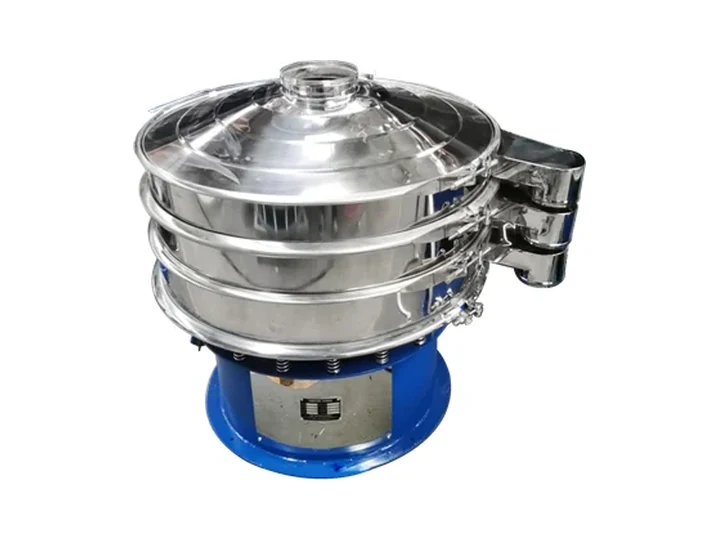
Remove lumps and grade powders with a rotary vibrating screen for flour, starch, mineral fillers and chemical ingredients.
Explore equipment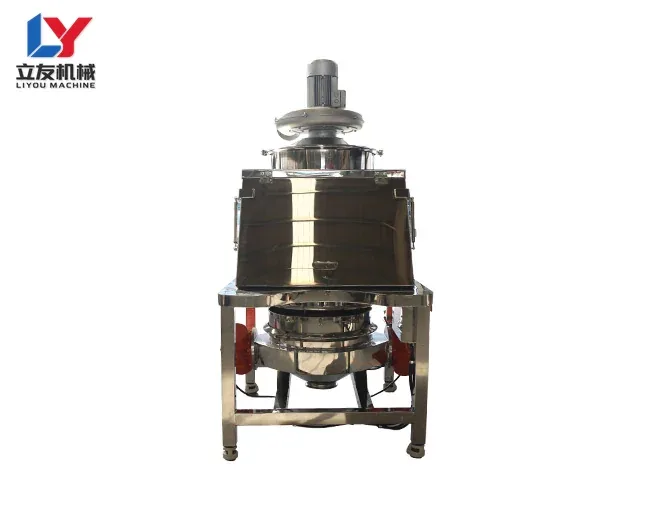
Empty powder bags into a contained receiving hopper with a dust free feeding station and the appropriate dust extraction connection.
Explore equipment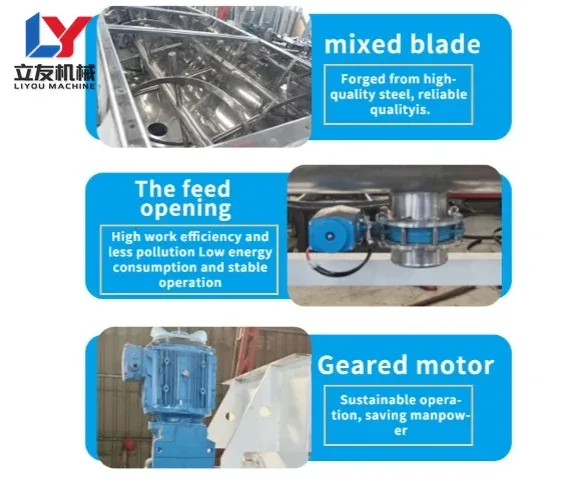
Blend dry powders and granules in a ribbon mixer before packing, forming or further processing.
Explore equipment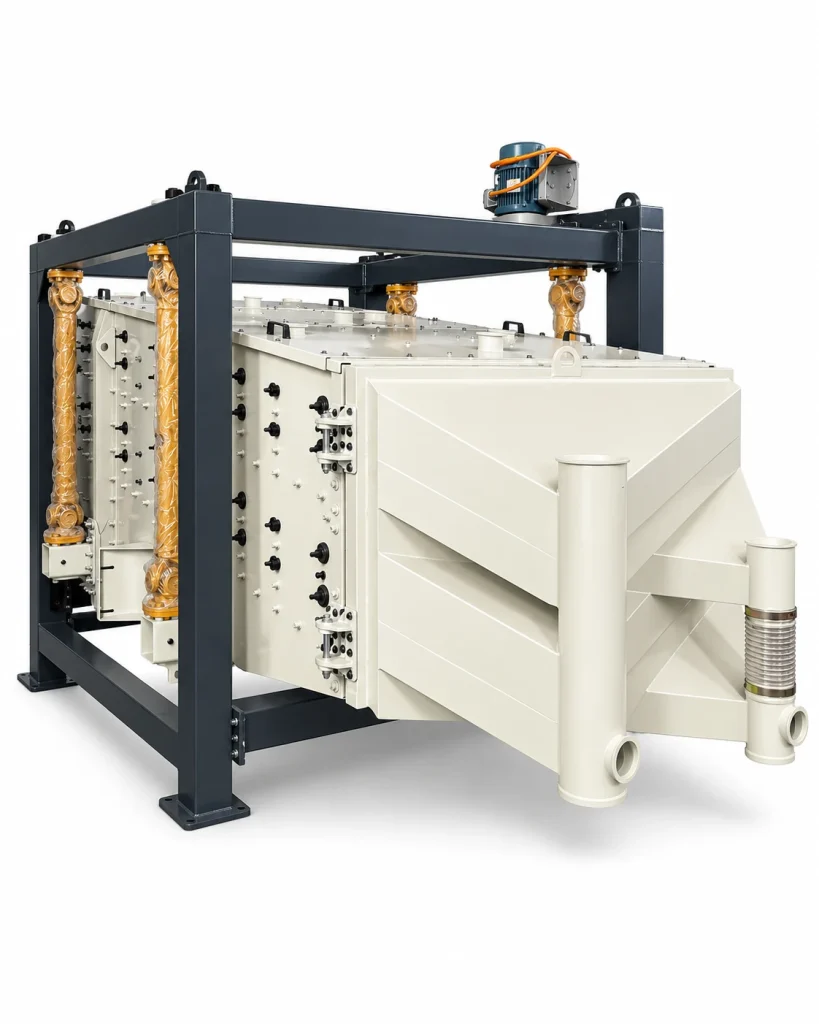
Compare screen motion, mesh openings and material properties to select equipment for the required size separation.
Read guide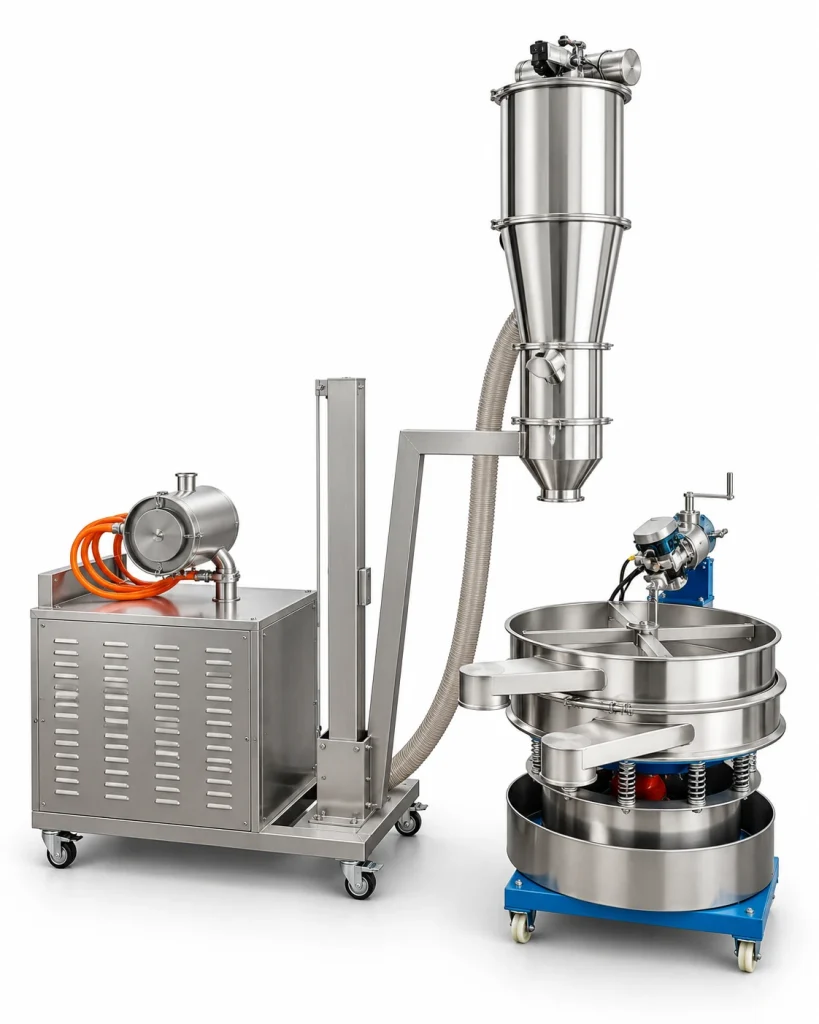
Compare rectangular and circular screening decks, feed distribution, discharge layout and screen-change access.
Read guide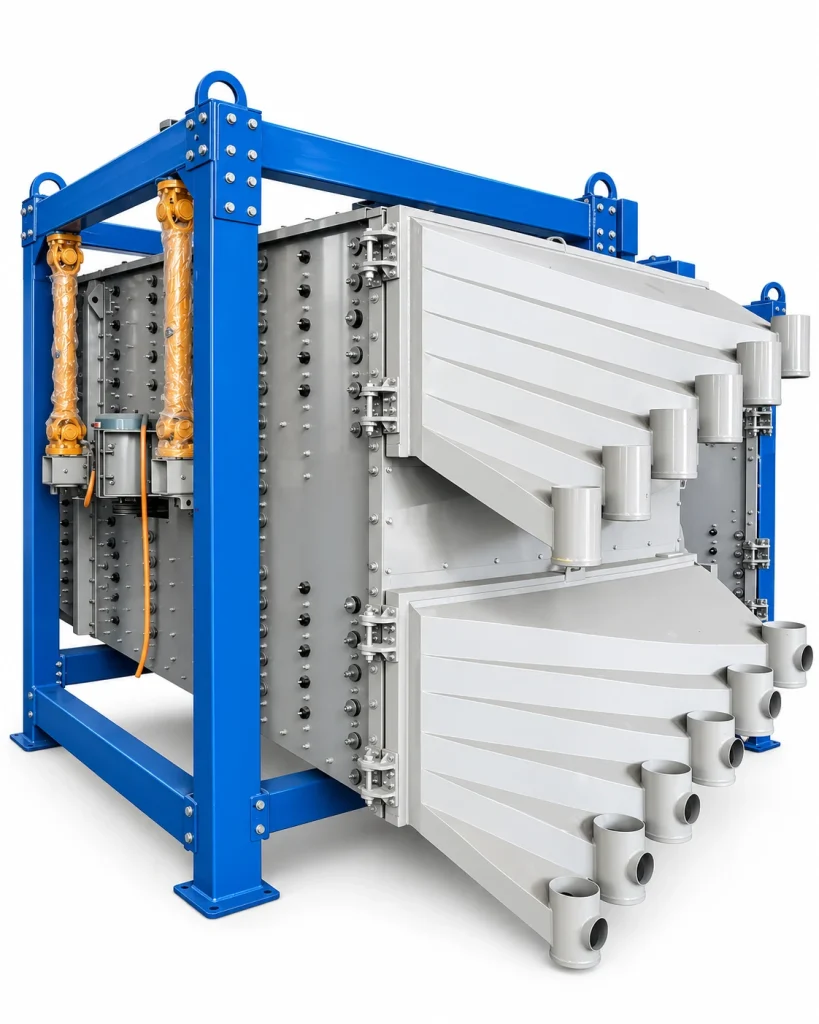
Understand feed rate, bulk density and screen loading, then check output capacity against the required particle-size separation.
Read guide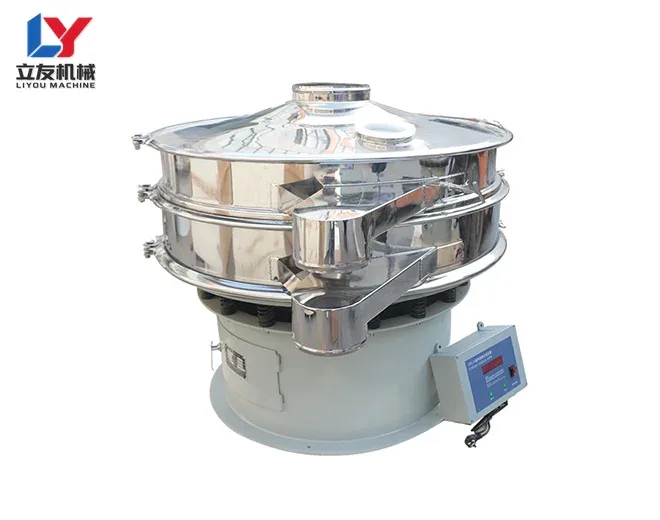
Screen blinding can arise from particles lodged in openings, sticky coatings or cohesive agglomerates.
Read guideUseful answers
No. A central through-screen path is primarily a scalping arrangement unless a specific multi-fraction design is documented.
Start with your material
Share your material, throughput and process requirements. We will review the details needed for equipment selection.