Flour
- Material form
- Dry food powder
- Typical application
- Transfer powder to a mixer or receiving hopper
- Handling considerations
- Hygienic filters, dust controls and cleaning
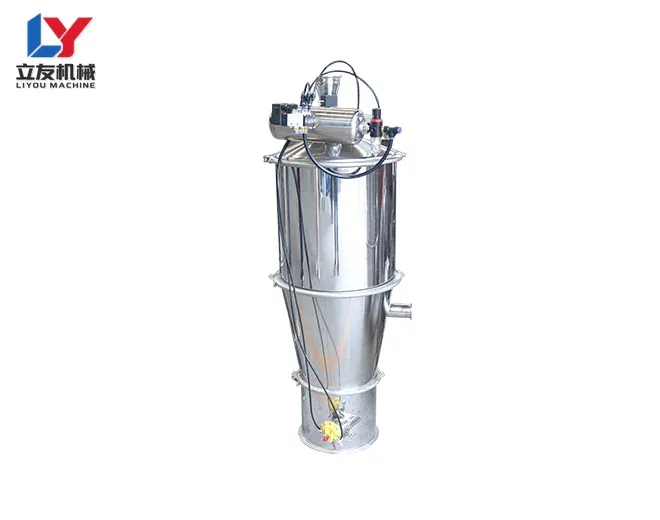
Conveying Equipment
Transfer powders from a pickup point to an elevated receiver with a vacuum conveyor for mixer charging and packaging feed.
A pickup line moves material to the receiver, reducing repeated manual lifting along that transfer.
Suction draws material into a closed conveying line when the pickup and receiver are correctly connected.
Draw suitable flour, starch or dry ingredients from a source container into a receiver above the mixer. Cleaning access and filters matter when changing recipes.
Replenish a hopper from a separate powder source. Conveying is cyclic when the receiver alternates filling and discharge; filter loading and route resistance affect average output.
A vacuum source creates the pressure difference. Material enters the transport line, collects in the receiver and is released through a discharge arrangement. Filter cleaning and discharge timing influence sustained throughput.
Suitable Materials for Conveying
Flour
Starch
Plastic pellets
Technical Specifications
Model Catalogue volume rate (L/h) Motor power (kW) Air consumption (L/min) Supply pressure (MPa) Dimensions (mm) ZKS-2 600 2.2 8 0.5–0.6 Ø290 × 996 ZKS-3 1200 3 10 0.5–0.6 Ø290 × 996 ZKS-4 2000 4 12 0.5–0.6 Ø420 × 1328 ZKS-5 3000 5.5 12 0.5–0.6 Ø420 × 1328 ZKS-6 4000 5.5 12 0.5–0.6 Ø420 × 1328 ZKS-7 6000 7.5 17 0.5–0.6 Ø420 × 1420 ZKS-10-6 6000; conveying distance 10 m 7.5 34 0.5–0.6 Ø600 × 1420
Vacuum containment does not by itself establish hygienic or hazardous-area compliance.
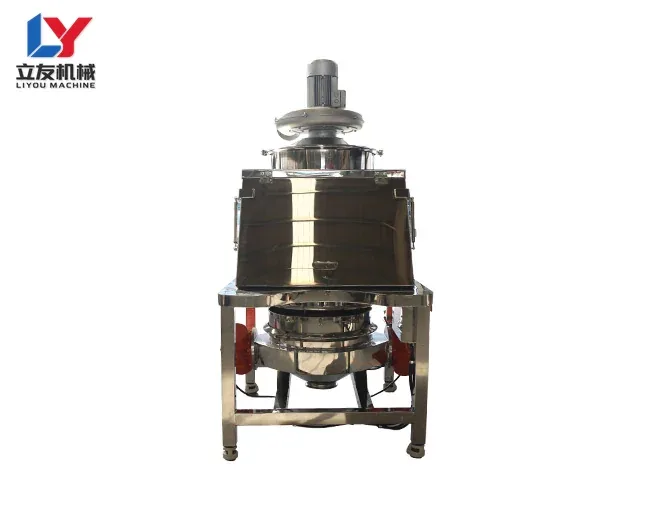
Empty powder bags into a contained receiving hopper with a dust free feeding station and the appropriate dust extraction connection.
Explore equipment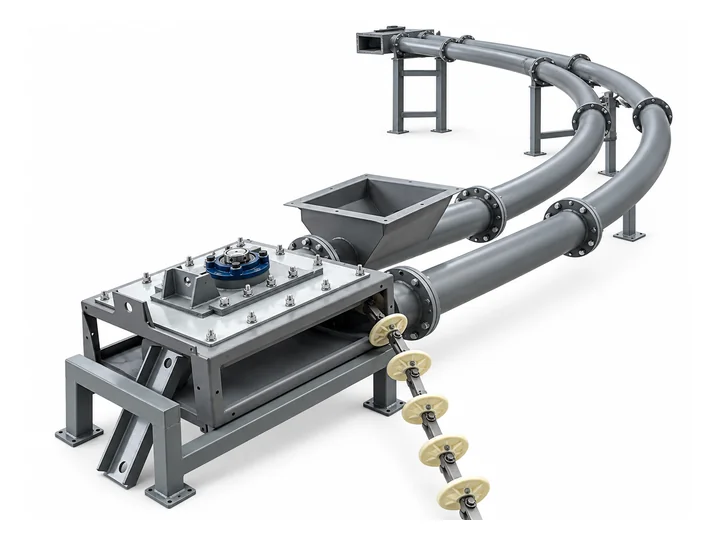
Transfer chemical powders, food ingredients and plastic granules through an enclosed pipe chain conveyor linking storage, mixing and packing.
Explore equipment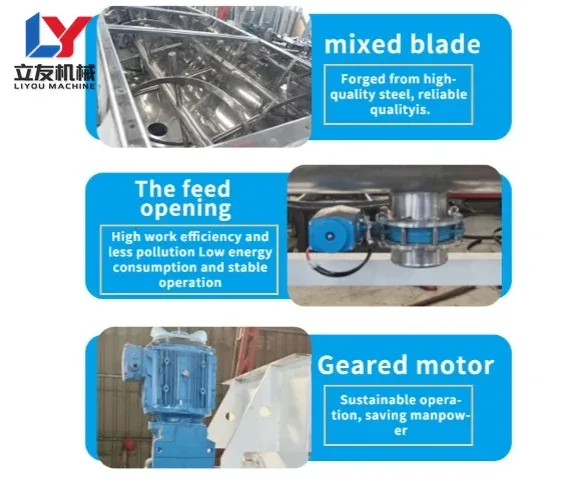
Blend dry powders and granules in a ribbon mixer before packing, forming or further processing.
Explore equipment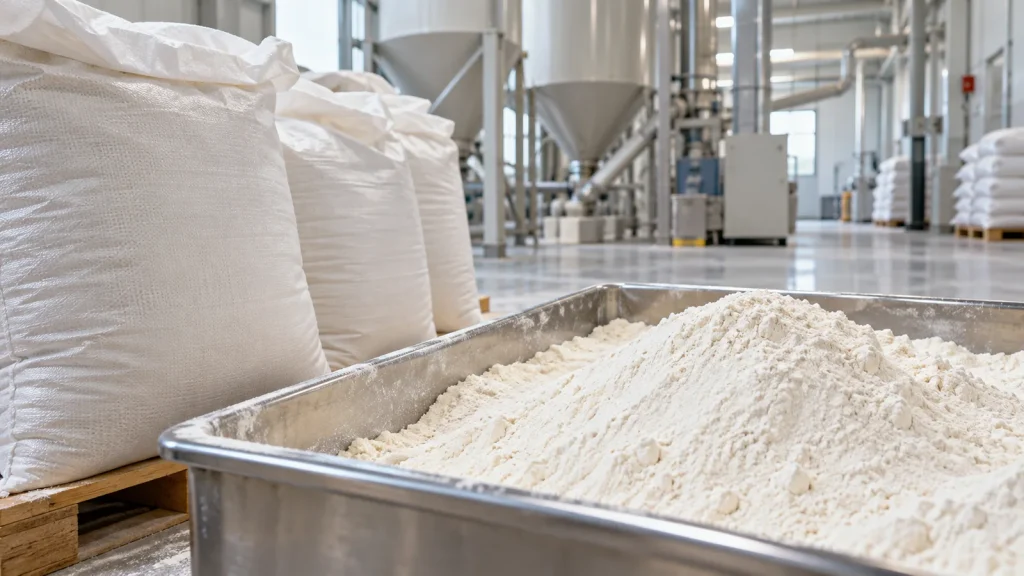
Remove oversize from flour and starch, grade sugar and salt, and transfer dry ingredients between sieving, blending and packing.
View solution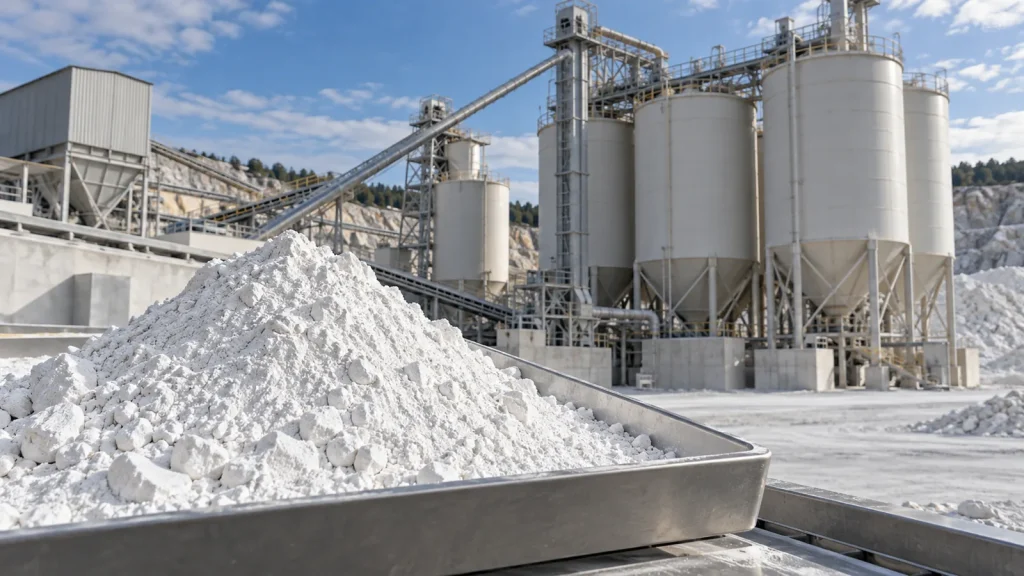
Screen calcium carbonate, resin and pigment powders; control agglomerates, mesh blinding and dust at enclosed transfer points.
View solution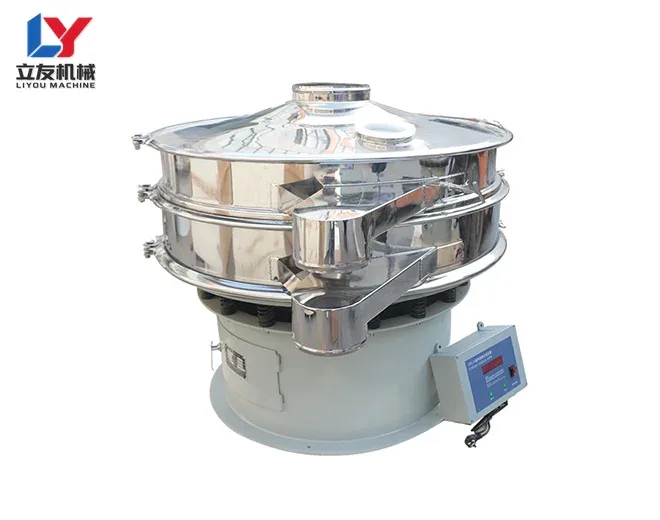
A controlled powder process needs defined particle separation and contained transfer.
View solution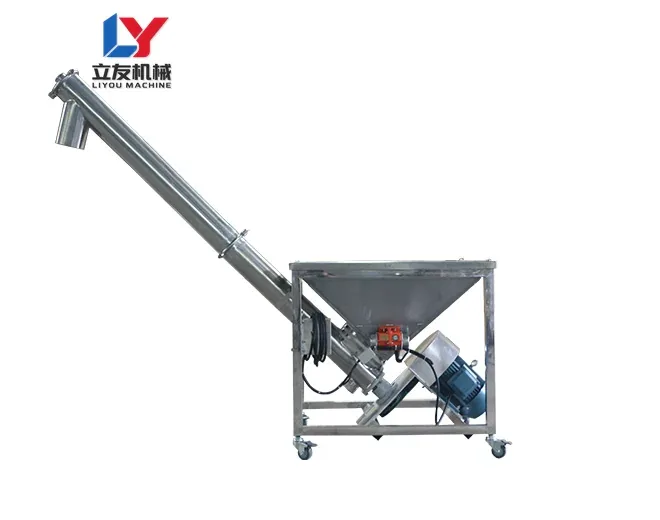
Powder conveying selection depends on more than distance.
Read guideA tubular chain conveyor uses discs carried by a chain.
Read guideUseful answers
The sustained output depends on the complete pickup, transport and receiver discharge cycle.
Start with your material
Share your material, throughput and process requirements. We will review the details needed for equipment selection.