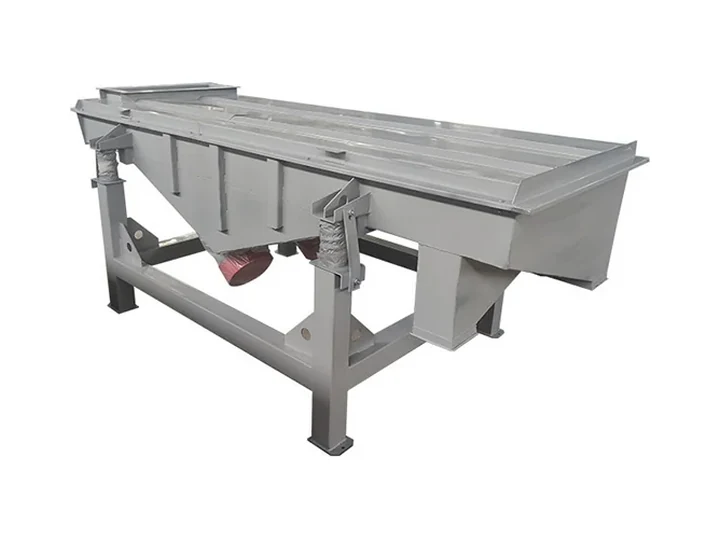
Linear Vibrating Screen
Grade sand, fertilizer granules and plastic pellets with a linear vibrating screen that separates fines, saleable fractions and oversize.
Explore equipmentIndustry solution
Separate fertilizer granules from fines and oversize, keep recycle streams distinct, and reduce breakage during conveying.
Discuss your application ↗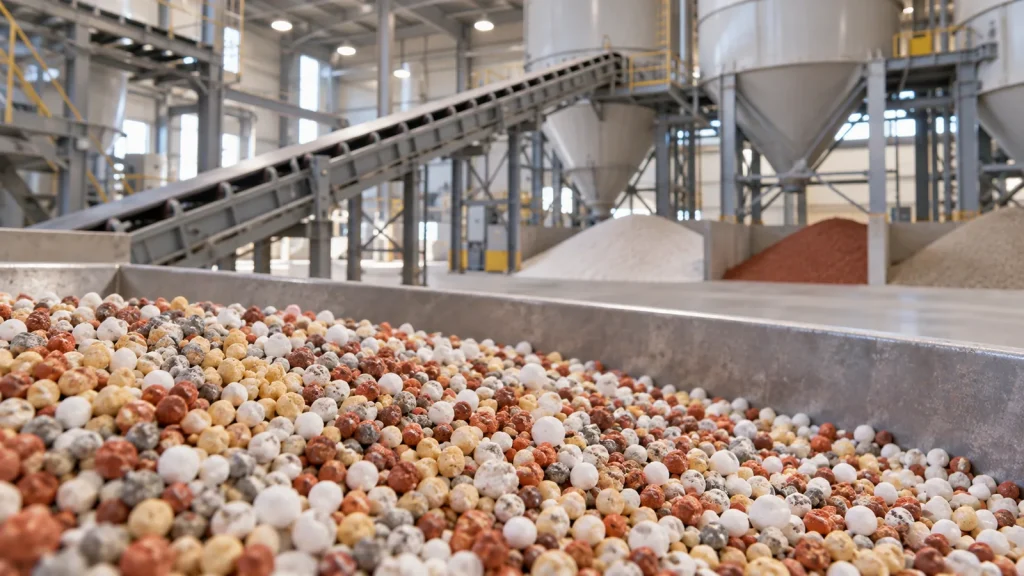
Granular fertilizer screening separates the target size band from undersized particles and oversized granules. On a two-cut screen, the upper deck retains oversize and the lower deck separates fines from accepted product. Each outlet needs its own chute or conveyor. Mixing the streams immediately after screening cancels the separation and sends out-of-grade material toward storage or packing.
Granule shape and strength affect how fertilizer travels across the deck and survives transfer. Weak granules produce fines when they hit a chute or moving component. Some fertilizer products absorb moisture and form cakes in storage. Screening can remove those oversized cakes, but it cannot reverse moisture damage inside the granule. A thick feed bed also lets small particles leave with accepted product before reaching the lower mesh.
| Material / observation | Separation / cause | Equipment / action |
|---|---|---|
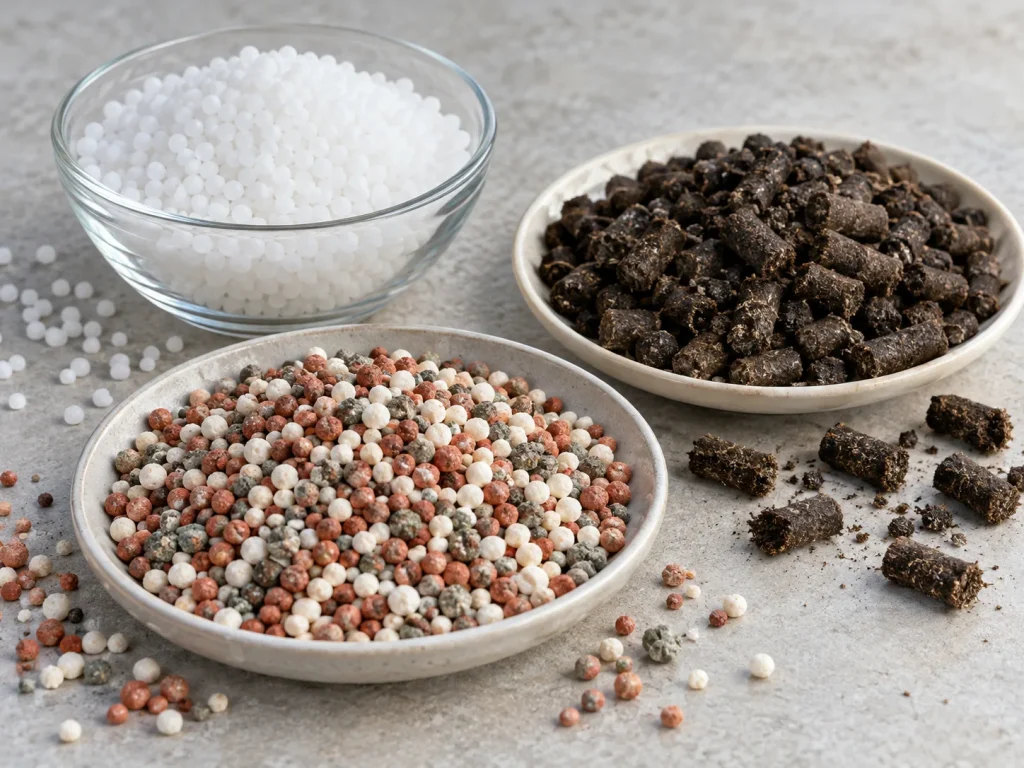
| Granular NPK | Split saleable granules, fines and oversized particles. | Multi-deck linear or gyratory screen |
| Granular urea | Grade granules and monitor new fines after transfer. | Gentle screening and controlled discharge |
| Compound fertilizer | Remove agglomerates and retain the required size band. | Linear, gyratory or tumbler screen |
| Powder fertilizer blends | Remove storage lumps; avoid loss of fine ingredients. | Powder screening with enclosed transfer |
Particles close to the opening need more opportunities to contact the mesh than much smaller particles. An overloaded deck can carry near-size material into the wrong stream. Stabilise the feed, spread it across the width and keep discharge chutes clear. Inspect screen panels for wear or broken wires: a local oversized opening changes the product cut even if the rest of the deck looks sound.
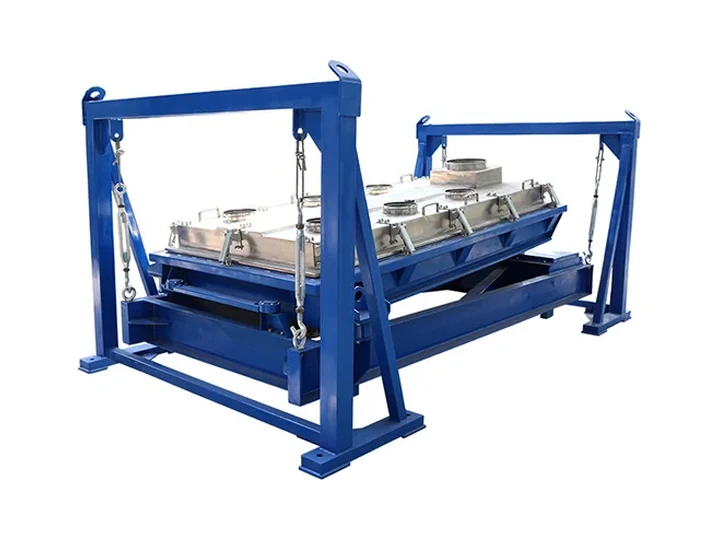
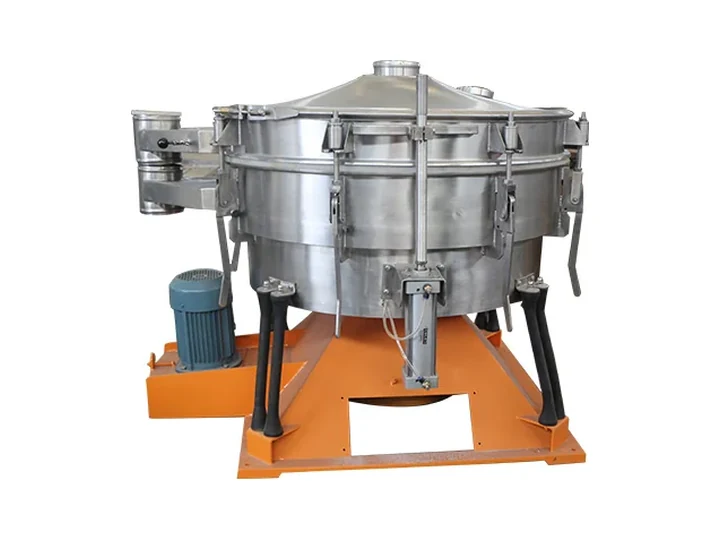
Linear and gyratory screens provide continuous granule grading. Multi-deck arrangements separate distinct fractions in one machine. Fines and oversize may return to earlier production stages when the fertilizer process uses recycle, but they remain separate from finished product. Oversize crushing and fines recycle have different duties; a common return conveyor should only be used where the upstream process actually accepts a combined stream.
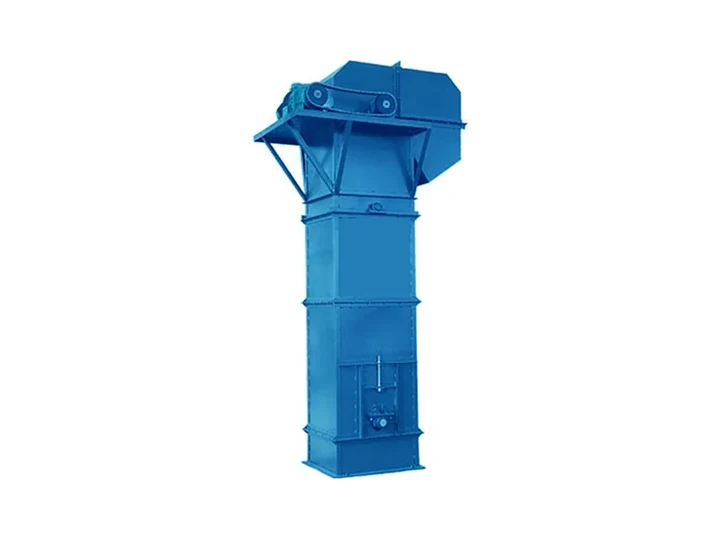
A long free fall onto a hard chute increases impact damage. Reduce unnecessary drop height, use a chute that guides rather than abruptly stops the stream, and avoid feeding faster than the next conveyor can accept. Compare the fines content immediately after screening with the fines content after the elevator or conveyor. A higher value downstream identifies handling damage rather than a screen cut error. Inspect elevator discharge and transfer chutes for buildup that causes repeated impacts.
Grade sand, fertilizer granules and plastic pellets with a linear vibrating screen that separates fines, saleable fractions and oversize.
Explore equipmentSeparate silica sand, fertilizer granules and pellets into distinct grades with a gyratory screen and dedicated fraction outlets.
Explore equipment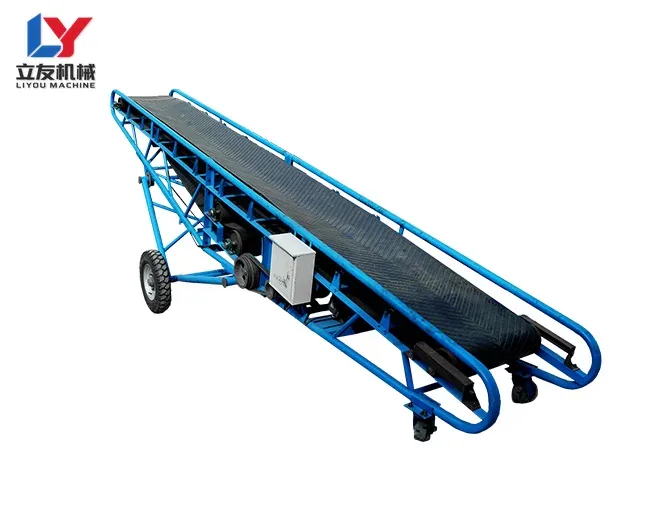
Move sand, aggregate, grain and other bulk solids between loading, processing and storage points with a belt conveyor.
Explore equipmentLift grain, sand and other bulk solids from a lower inlet to an elevated storage or processing point with a bucket elevator.
Explore equipmentSeparate fertilizer into fines, accepted granules and oversize, then identify transfer points that create new broken particles.
Read guideUseful answers
Granules can break at elevator discharge, chute impacts or overloaded transfers. Compare samples before and after each transfer.
Two cut points create oversize, accepted granules and fines, with a separate discharge for each stream.
Start with your material
Share your material, throughput and process requirements. We will review the details needed for equipment selection.