Building-material solids
- Material form
- Bulk solid feed
- Typical application
- Receiving and transfer between processing stages
- Handling considerations
- Check lump size, abrasiveness and loading impact
Conveying Equipment
Need to move hot bulk material? Evaluate steel pan conveyor suitability against inlet temperature, exposure time, loading and route. Confirmed operating speed: 0.3 m/s.
Tell us your material and required throughput.
Compare Conveying Equipment ↗Yes—an apron conveyor can be a suitable option for hot bulk solids when its complete configuration is designed for the actual thermal duty. A steel pan carrying surface is one reason to consider this conveyor type, but steel pans alone do not establish the temperature rating of the chains, bearings, lubricant or drive.
If you need to transfer hot material between production stages, start with the material temperature at the conveyor inlet, its highest expected temperature and how long it remains on the pans. LIYOU reviews hot-material enquiries against those conditions before confirming the equipment configuration.
A steel pan apron conveyor is an option to evaluate when the carrying surface must be assessed for a hot or abrasive duty. It is not automatically a replacement for every belt conveyor. For a comparison, provide the proposed belt specification, material temperature, exposure time, lump size and route. A heat-resistant belt system and a steel pan system must each be assessed against their own approved operating limits.
No. The confirmed operating speed is 0.3 m/s, but speed is not a temperature rating. Route length affects the time material spends on the carrying surface, while loading depth and the material condition affect the duty. Capacity at this speed also needs to be checked separately; the catalogue capacity references are not guaranteed outputs for every hot-material application.
Send the material name, normal and peak inlet temperatures, bulk density, lump size, required throughput, operating hours and a route sketch showing the receiving and discharge heights. Describe any current problems, such as pan distortion, material sticking, chain wear or bearing overheating. This gives the technical team a defined problem to evaluate instead of selecting a conveyor from the material temperature alone.
Send your hot-material conveying requirements for a LIYOU configuration review. The quotation should state the agreed material conditions and operating scope before manufacture.
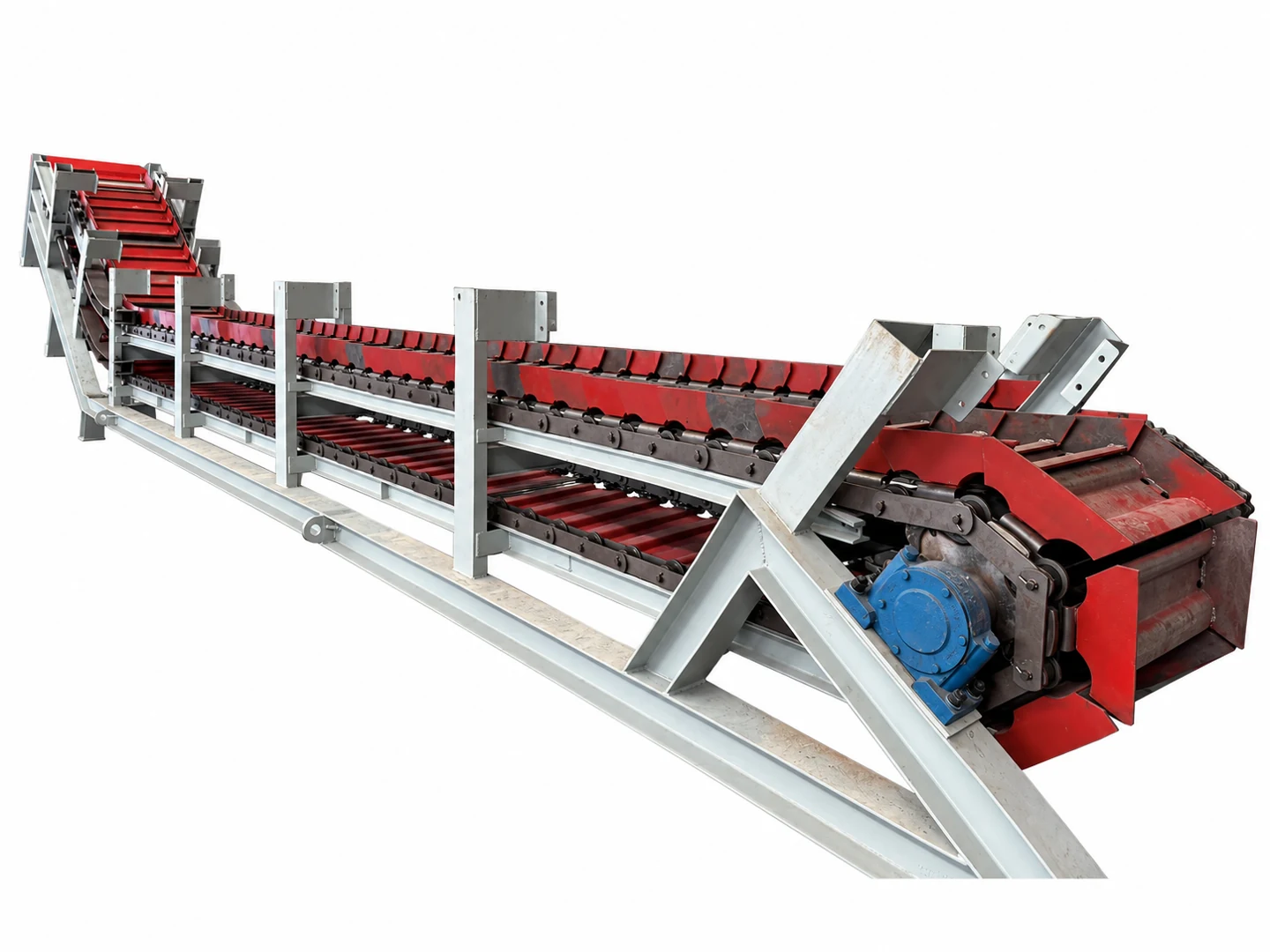
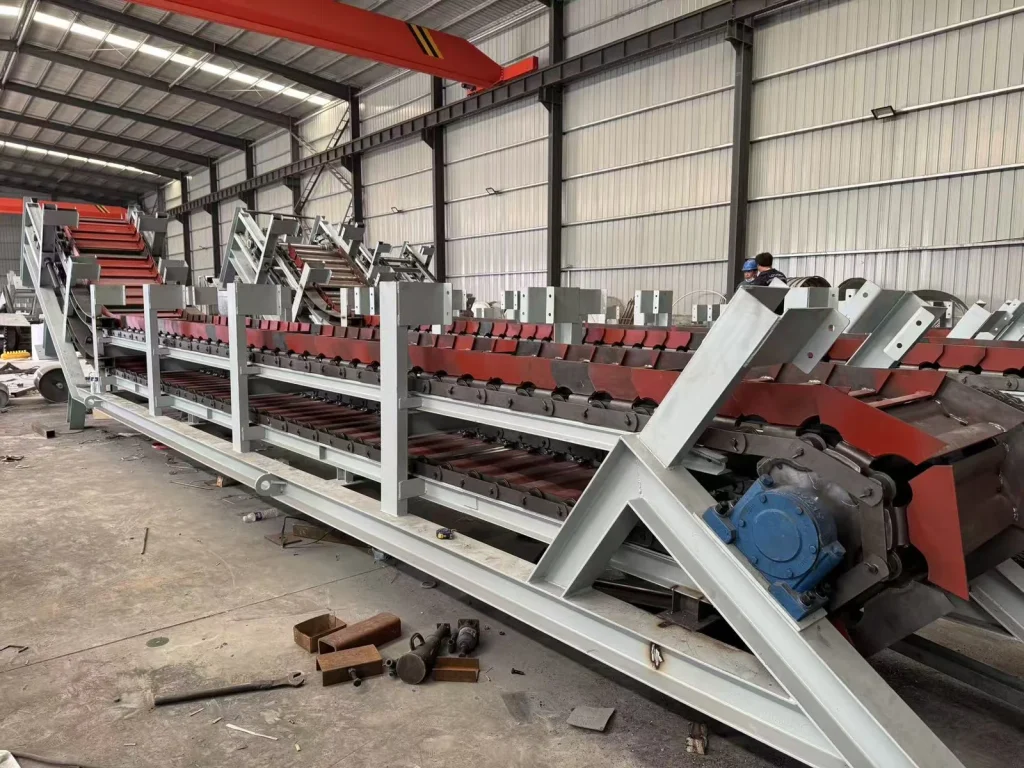
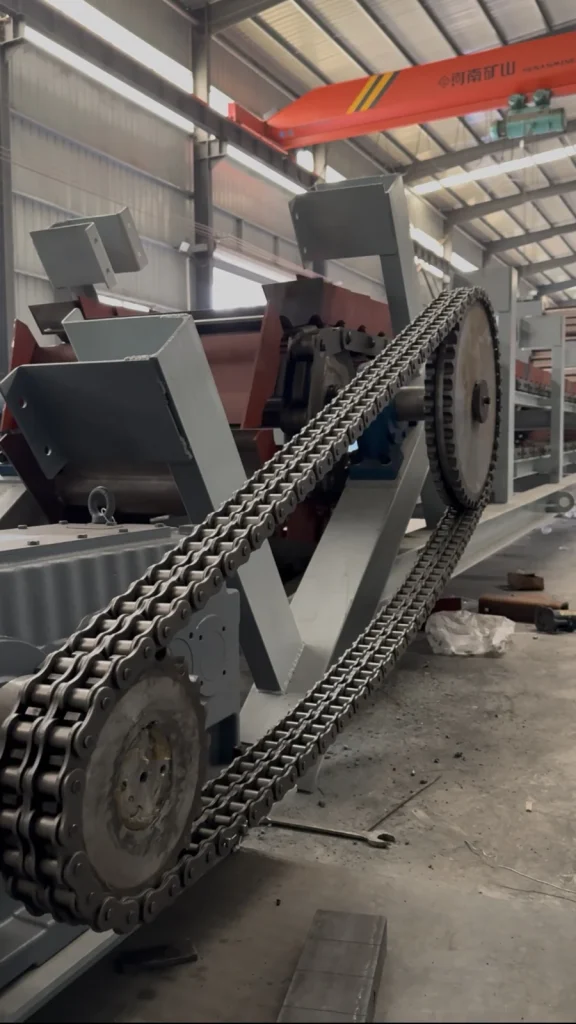
The drive turns a sprocket shaft that moves the traction chain. Steel pans attached to the chain form the load-carrying surface. Support rollers and the frame carry the load along the route, while the return run brings the pans back to the receiving end. The drive, chain, pan joints and guide arrangement need to work together through the transition between horizontal and inclined sections.
The supplied photographs show the pan edges, rollers, bearing housings and chain transmission. These details help define inspection access and layout requirements. They should be assessed alongside a dimensioned arrangement drawing before manufacture.
Material behavior and process conditions guide the equipment configuration.
Operating speed: 0.3 m/s. The model and lump-size references below are transcribed from the supplied LIYOU catalogue. The capacity column is a catalogue reference, not a guaranteed output at the corrected operating speed.
| Catalogue model | Catalogue capacity reference (t/h) | Listed material lump size (mm) | Operating speed (m/s) |
|---|---|---|---|
| BL400 | 20 | 130 | 0.3 |
| BL500 | 25 | 150 | 0.3 |
| BL650 | 35 | 200 | 0.3 |
| BL800 | 55 | 280 | 0.3 |
Confirm throughput at 0.3 m/s using the material bulk density, usable loaded cross-section and incline. Motor power and reducer selection depend on the final route and traction duty and will be specified for the agreed configuration. Do not select a drive from the capacity figure alone.
For heated material, provide the normal and peak material temperatures, exposure time and ambient conditions. The temperature capability must be established for the selected construction.
LIYOU can review these details against the conveyor arrangement before proposing an equipment scope. Use the apron conveyor enquiry form to send the material information and drawing.
Choose by material behaviour and route, not by equipment name alone. An apron conveyor uses linked metal pans. A belt conveyor uses a continuous belt carrying surface, while a screw conveyor moves material with a rotating screw. Compare the material-contact requirements, loading conditions, incline and maintenance access before choosing between them.
For a predominantly vertical lifting duty, assess a bucket elevator alongside the available receiving and discharge layout. This comparison is a selection starting point, not a claim that one machine can replace another in every application.
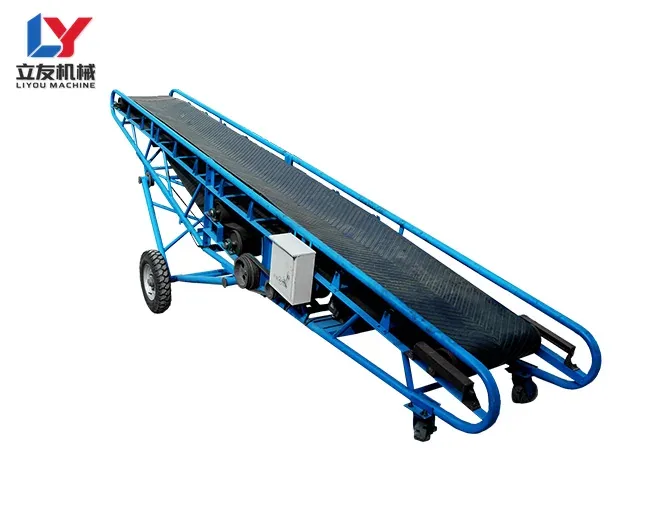
Move sand, aggregate, grain and other bulk solids between loading, processing and storage points with a belt conveyor.
Explore equipment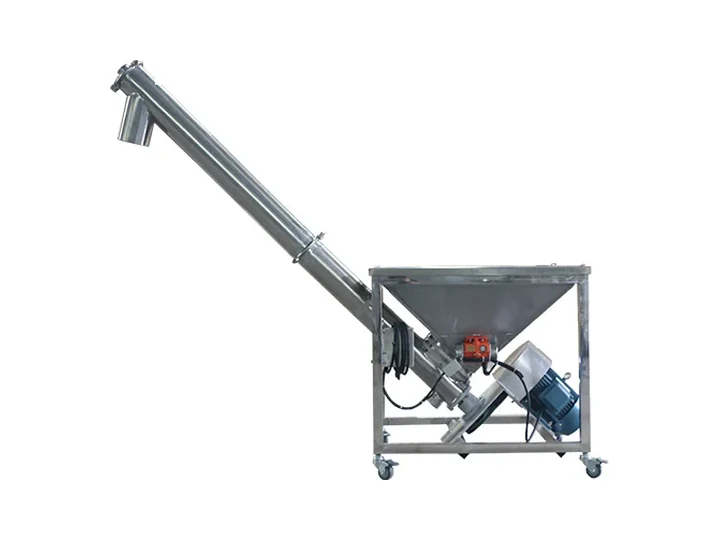
Transfer dry powders and granules between hoppers, mixers and packing equipment with a screw conveyor sized for the feed and incline.
Explore equipment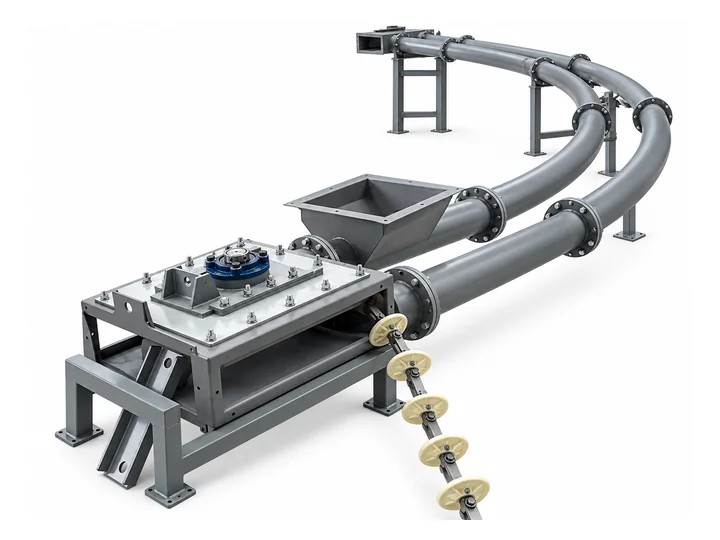
LIYOU tubular chain conveyors provide continuous, enclosed transfer of powders, granules and small-sized bulk solids. Horizontal, inclined and vertical conveying sections can be combined in a single circuit to connect storage, processing and packing equipment.
Explore equipment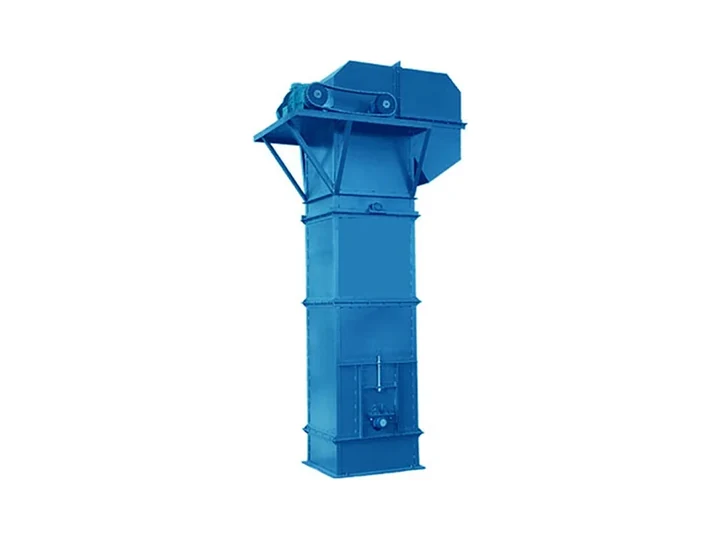
Lift grain, sand and other bulk solids from a lower inlet to an elevated storage or processing point with a bucket elevator.
Explore equipmentUseful answers
An apron conveyor transports bulk solids on linked steel pans driven by a traction chain. Suitability depends on the material, loading and route.
Yes. The supplied photographs show that arrangement. The incline, transition and discharge height must be selected for the actual feed.
The operating speed confirmed for this product is 0.3 m/s.
Not automatically. Throughput at 0.3 m/s must be checked using material bulk density, effective loaded cross-section and incline.
Yes, when the complete configuration is selected for the actual thermal duty. Steel pans alone do not establish the temperature rating of chains, bearings, lubricant or the drive. Provide normal and peak inlet temperature, exposure time, loading and route.
Provide the material, bulk density, lump size, moisture, temperature, required throughput, receiving and discharge elevations, route drawing and electrical supply.
No. Operating speed is not a temperature rating. Material temperature, contact time, loading and component operating conditions need a separate review.
Start with your material
Share your material, throughput and process requirements. We will review the details needed for equipment selection.