Soy milk
- Material form
- Liquid with suspended solids
- Typical application
- Separate larger particles from liquid feed
- Handling considerations
- Mesh, hygienic construction and cleaning access
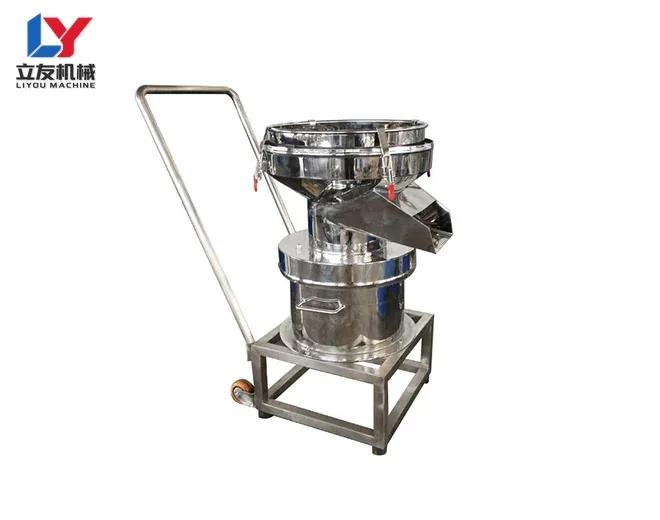
Screening Equipment
Screen small powder batches or strain suitable liquids with a 450 filter sieve before collection, mixing or filling.
A compact mesh separates retained solids from the accepted powder or liquid.
Mechanical screening gives the batch a defined aperture rather than relying on hand picking or an unspecified strainer.
Remove oversized solids from suitable low-viscosity liquid batches before filling. Viscosity and solids loading determine drainage through the mesh.
Check-sieve flour, starch or similar dry ingredients before mixing. This unit separates particles by size; it does not remove dissolved substances or sterilize the product.
A vibratory drive moves the screen assembly, allowing suitable fines or liquid to pass while retaining oversize. The installed mesh and feed arrangement determine the actual separation.
Applications & Suitable Materials
Soy milk
Starch slurry
Fruit juice
Technical Specifications
Model Effective diameter (mm) Overall dimensions (mm) Power (kW) Voltage (V) Weight (kg) 450 450 500 × 450 × 600 0.18 220 / 380 40
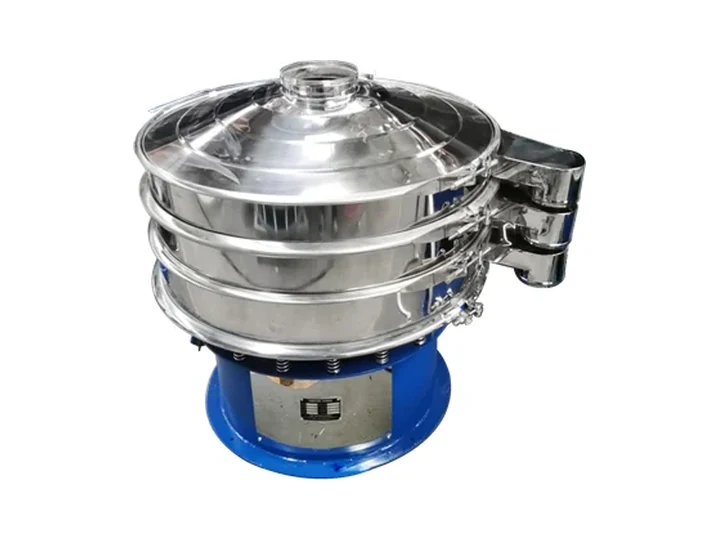
Remove lumps and grade powders with a rotary vibrating screen for flour, starch, mineral fillers and chemical ingredients.
Explore equipment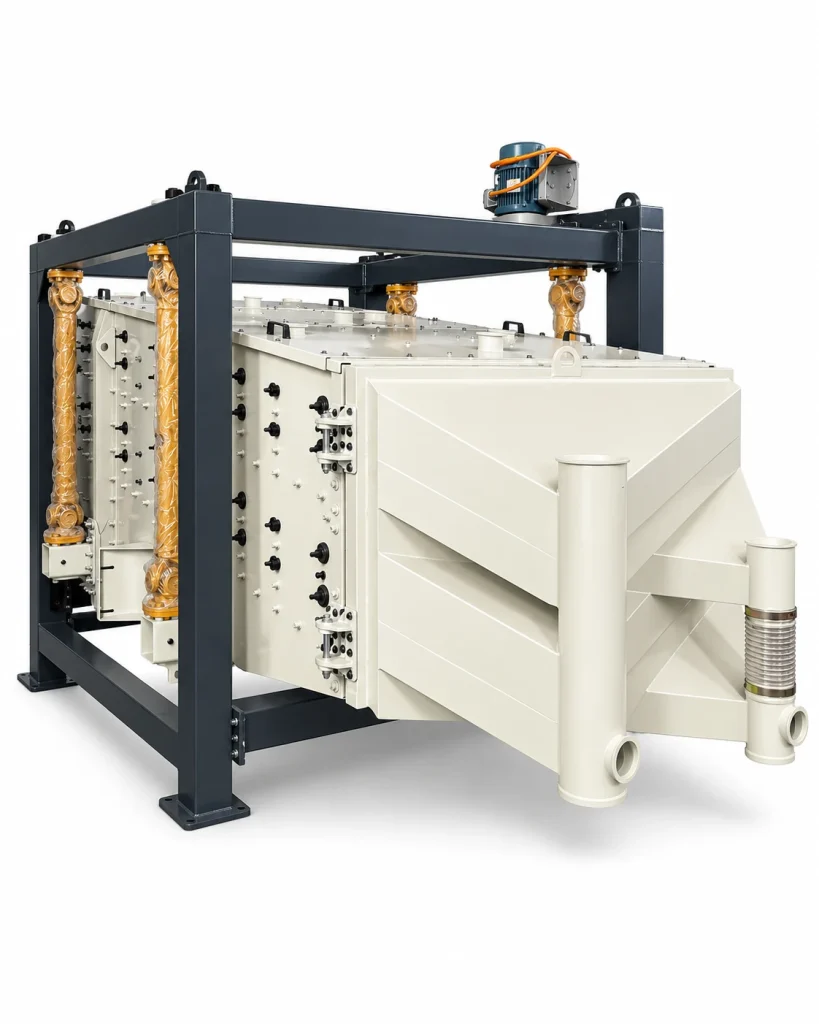
Compare screen motion, mesh openings and material properties to select equipment for the required size separation.
Read guide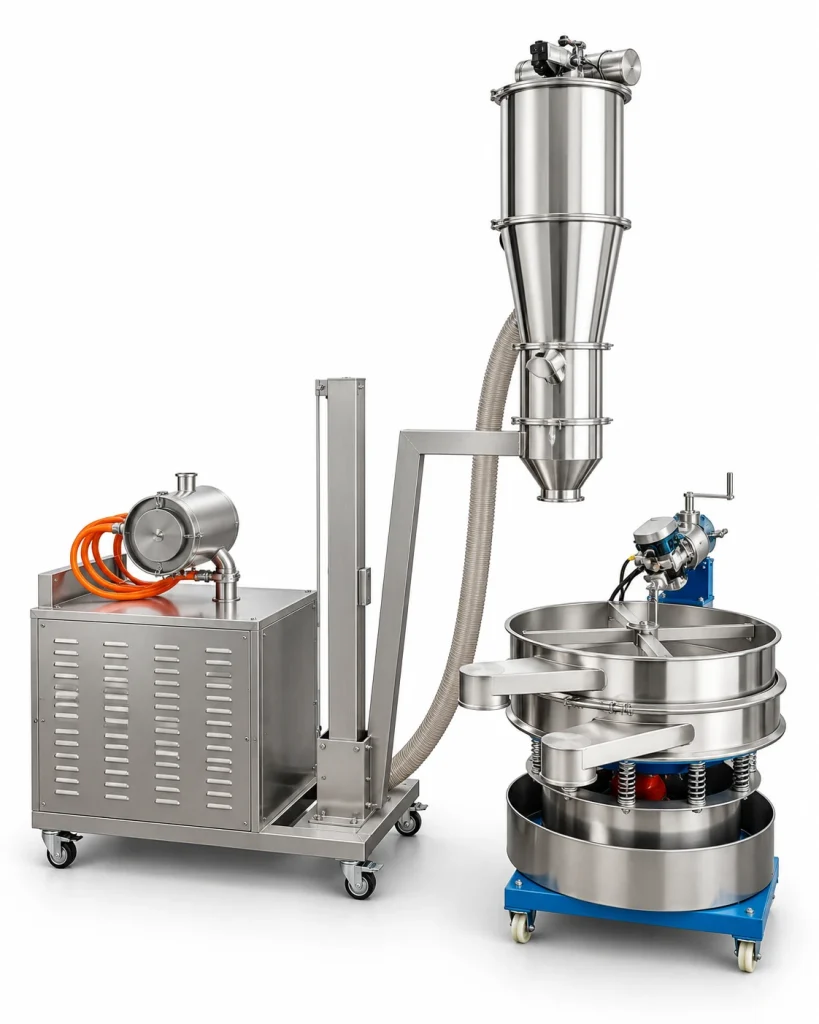
Compare rectangular and circular screening decks, feed distribution, discharge layout and screen-change access.
Read guide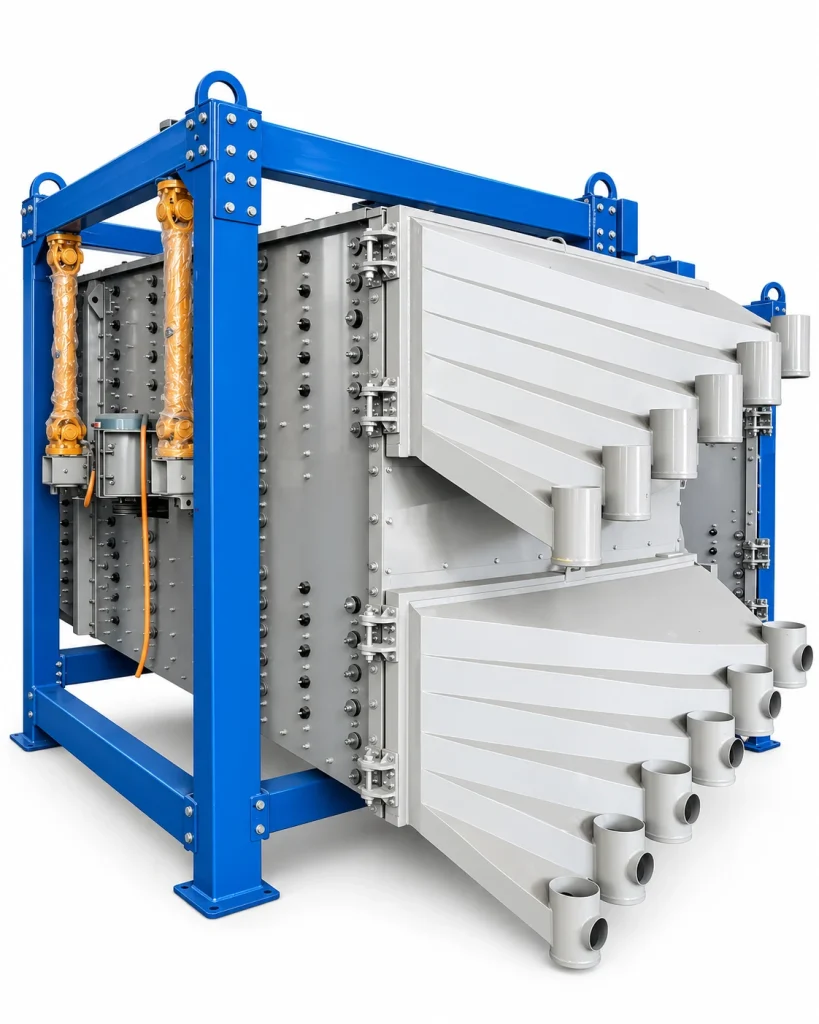
Understand feed rate, bulk density and screen loading, then check output capacity against the required particle-size separation.
Read guide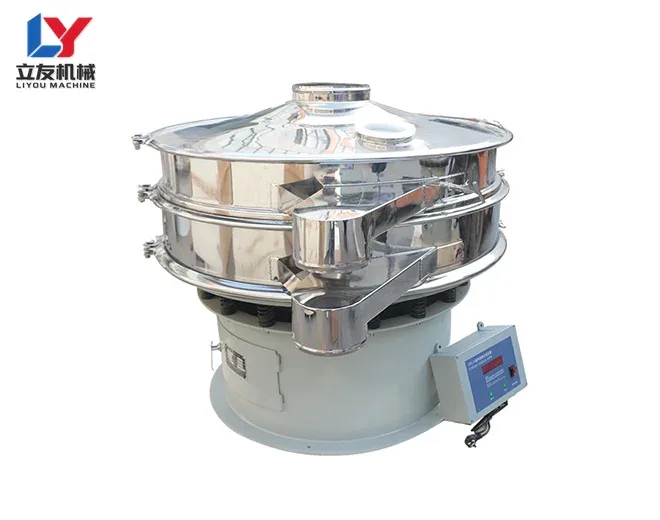
Screen blinding can arise from particles lodged in openings, sticky coatings or cohesive agglomerates.
Read guideUseful answers
The catalogue lists a 450 mm effective diameter. Mesh aperture and the feed properties determine separation and usable output.
Start with your material
Share your material, throughput and process requirements. We will review the details needed for equipment selection.