Starch
- Material form
- Dry powder with soft agglomerates
- Typical application
- Remove larger particles while moving feed across the screen
- Handling considerations
- Scraper clearance and mesh compatibility
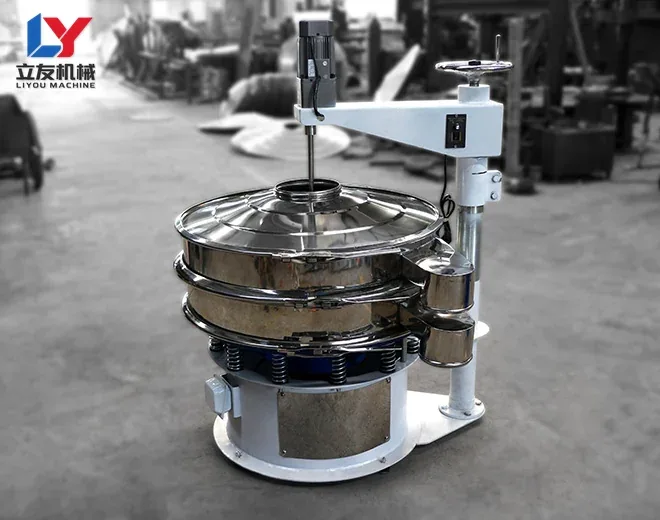
Screening Equipment
Keep material moving across a screening surface with a scraper vibrating screen that combines vibration with a sweeping element.
Compare Screening Equipment ↗A compatible scraper or brush moves material over the surface and limits local accumulation.
Sweeping assists movement toward discharge rather than leaving the whole task to vibration.
Screen a compatible dry powder where a mechanical sweeping element can maintain contact with the active screening area.
Assist movement across the mesh when the installed scraper design supports wet service. Hard particles trapped under the scraper can damage the mesh; scraper material and clearance must match the feed.
Vibration presents particles to the openings while a scraper or brush moves across the screening surface. Contact geometry, clearance and sweep speed determine whether the mesh is cleaned without damage.
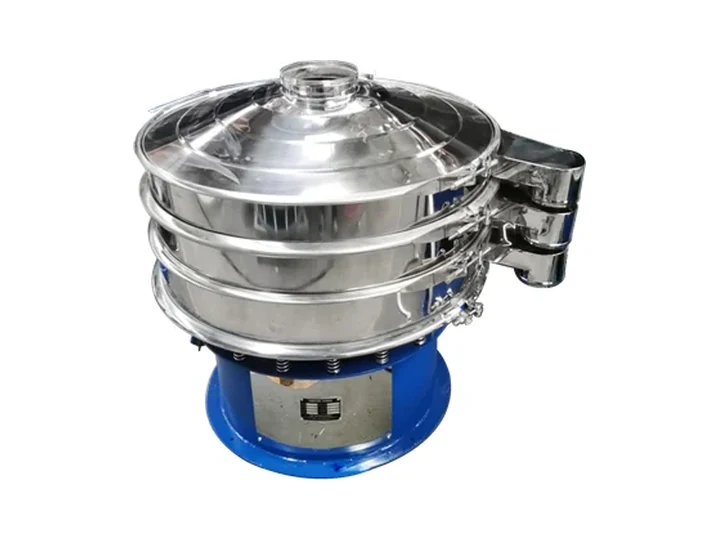
Remove lumps and grade powders with a rotary vibrating screen for flour, starch, mineral fillers and chemical ingredients.
Explore equipment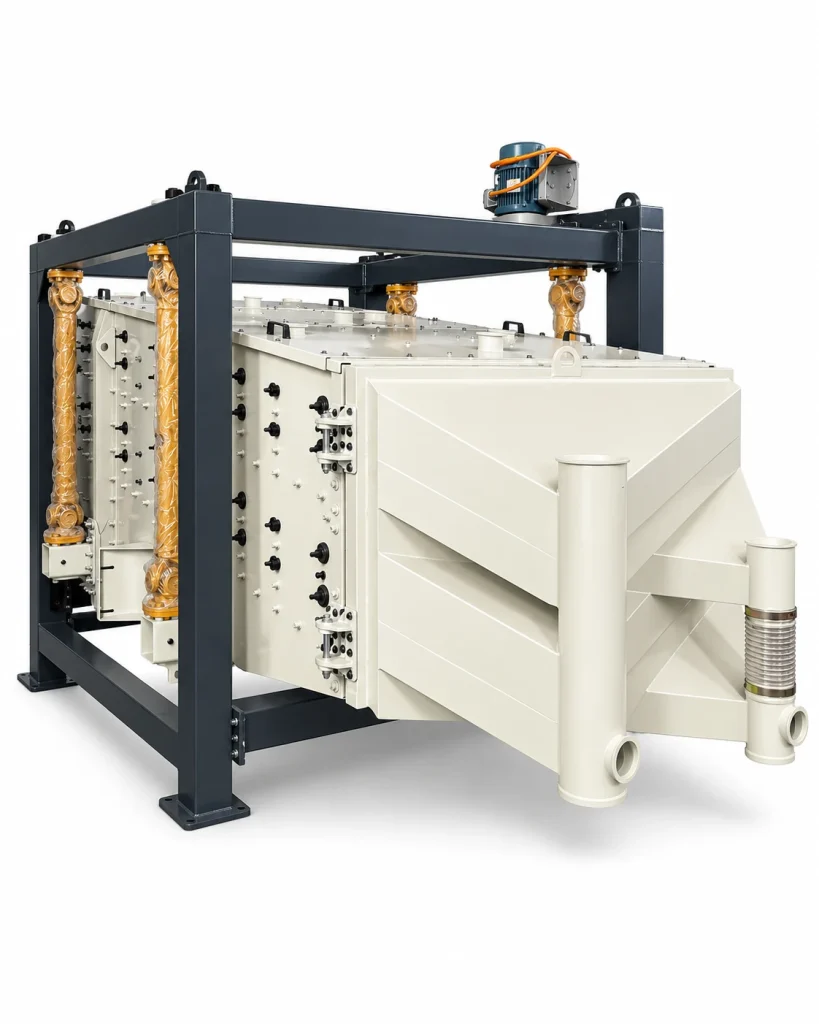
Compare screen motion, mesh openings and material properties to select equipment for the required size separation.
Read guide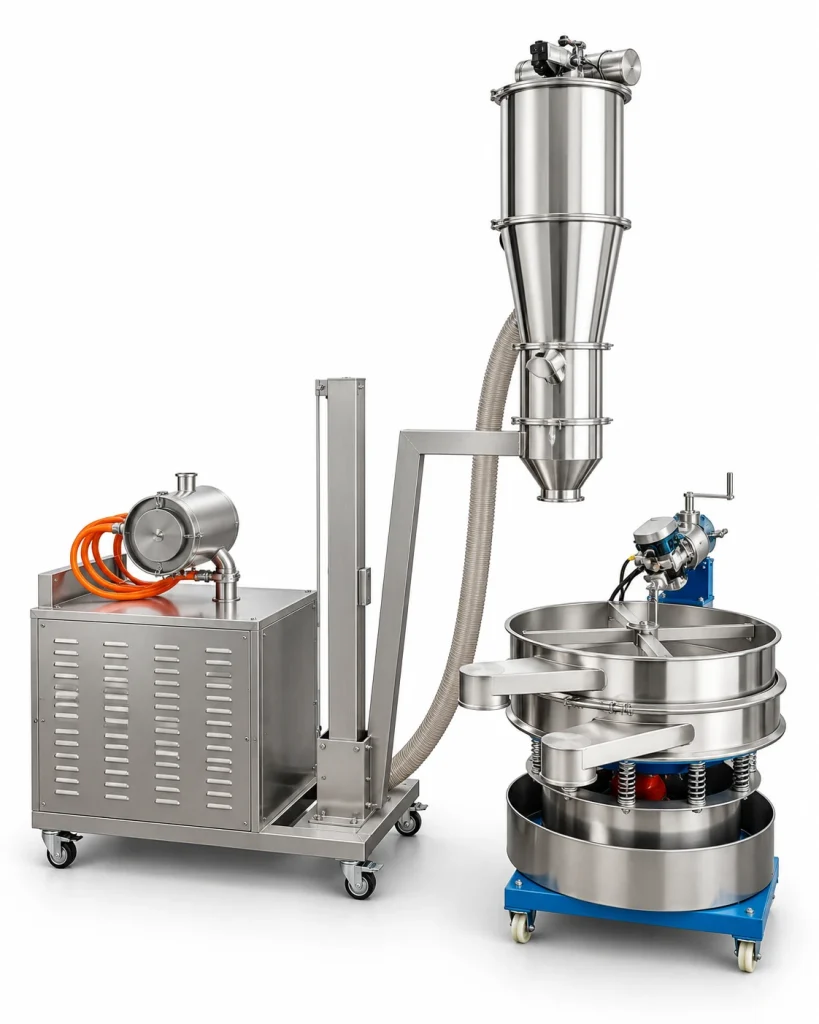
Compare rectangular and circular screening decks, feed distribution, discharge layout and screen-change access.
Read guide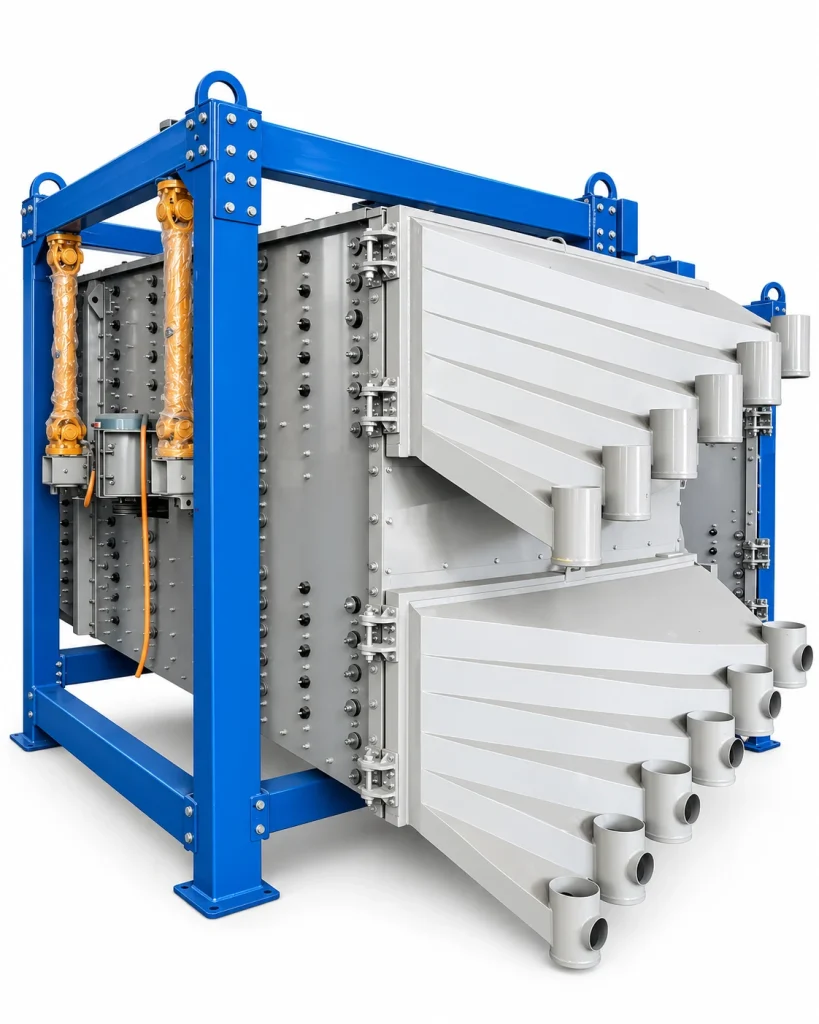
Understand feed rate, bulk density and screen loading, then check output capacity against the required particle-size separation.
Read guide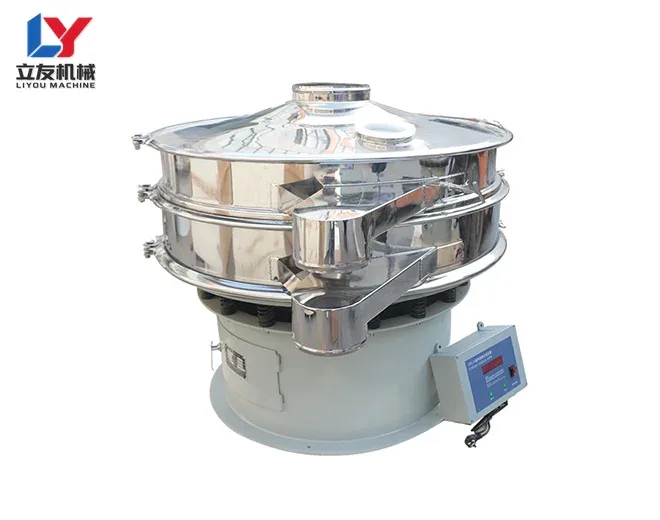
Screen blinding can arise from particles lodged in openings, sticky coatings or cohesive agglomerates.
Read guideUseful answers
Wet or adhesive material can coat both the mesh and the sweeping element. Mechanical sweeping does not dry the feed or remove oil from it.
Start with your material
Share your material, throughput and process requirements. We will review the details needed for equipment selection.