Sand and gravel
- Material form
- Mineral particles
- Typical application
- Separate coarse and fine fractions
- Handling considerations
- Maximum lump size, moisture and abrasion
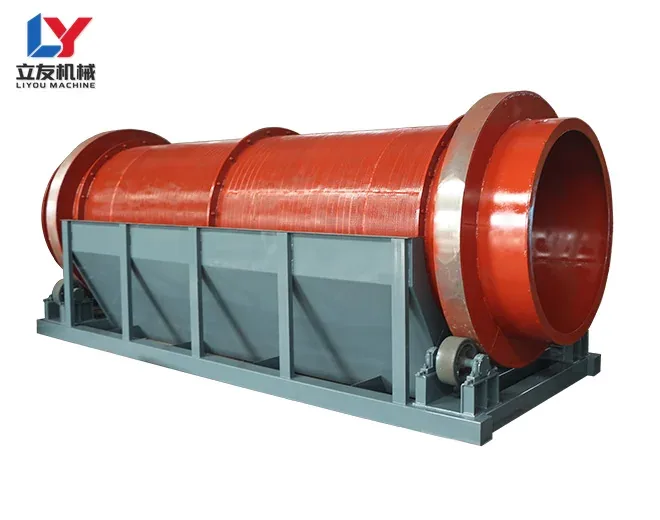
Screening Equipment
Separate fines from coarse bulk solids with a drum trommel screen as material moves through a rotating perforated cylinder.
Smaller particles fall through the drum openings while retained pieces travel toward the end discharge.
Drum rotation turns the material and exposes fresh surfaces to the screen along its length.
Separate coarse pieces from finer material before further handling, using openings suited to the desired product. Moist fibrous feed can wrap or block apertures.
Remove larger pieces from suitable bulk feed. A trommel separates by size, not by composition, so stones and other contaminants of accepted size can remain in the product.
Rotation lifts and redistributes the feed. Suitable particles pass through the drum wall while oversize advances to the end. Incline, rotation and internal features affect travel and residence time.
Applications & Suitable Materials
Sand and gravel
Compost
Wood chips
Technical Specifications
Model Catalogue capacity (t/h) Power (kW) Drum diameter (mm) Drum length (mm) Maximum feed size (mm) Undersize (mm) Overall dimensions (mm) GTS1015 50 3.0 1000 1500 ≤300 0–100 2600 × 1400 × 1700 GTS1020 100 4.0 1000 2000 ≤300 0–100 3390 × 1400 × 2140 GTS1225 160 5.5 1200 2500 ≤300 0–100 4146 × 1600 × 2680 GTS1530 250 7.5 1500 3000 ≤300 0–100 4460 × 1900 × 2820 GTS1545 350 11 1500 4500 ≤400 0–100 5960 × 1990 × 3080 GTS1848 450 15 1800 4800 ≤400 0–100 6500 × 2350 × 4000 GTS2055 600 22 2000 5500 ≤400 0–100 7500 × 2550 × 4800 GTS2265 800 30 2000 6500 ≤400 0–100 8500 × 2750 × 5000
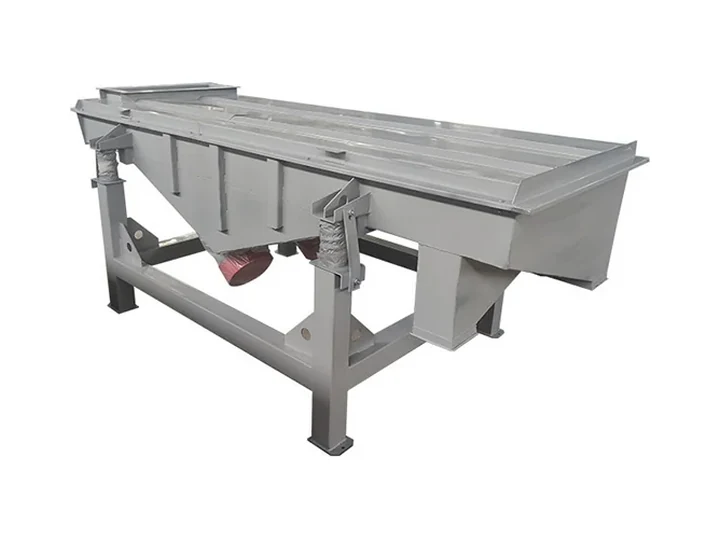
Grade sand, fertilizer granules and plastic pellets with a linear vibrating screen that separates fines, saleable fractions and oversize.
Explore equipment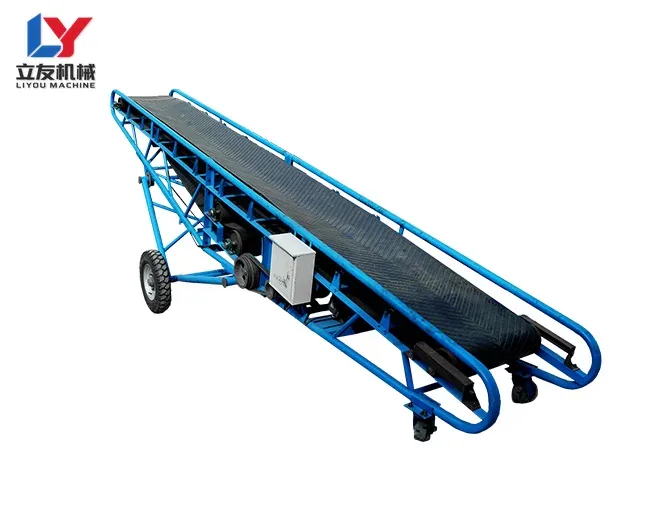
Move sand, aggregate, grain and other bulk solids between loading, processing and storage points with a belt conveyor.
Explore equipment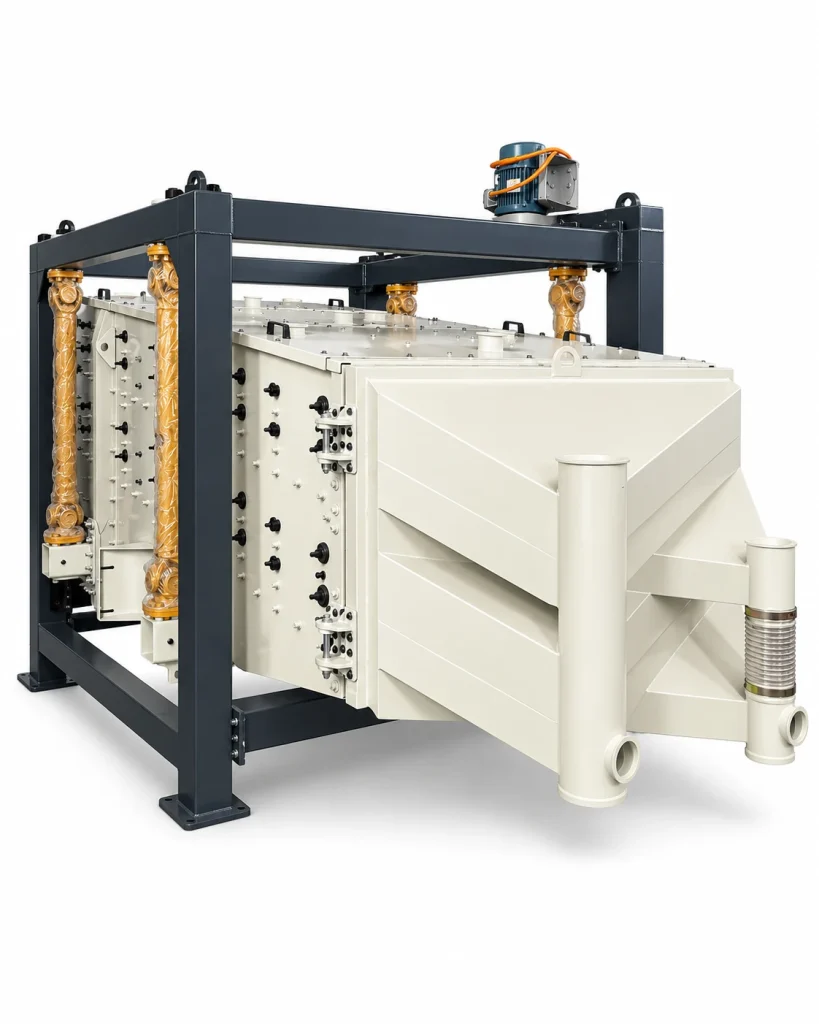
Compare screen motion, mesh openings and material properties to select equipment for the required size separation.
Read guide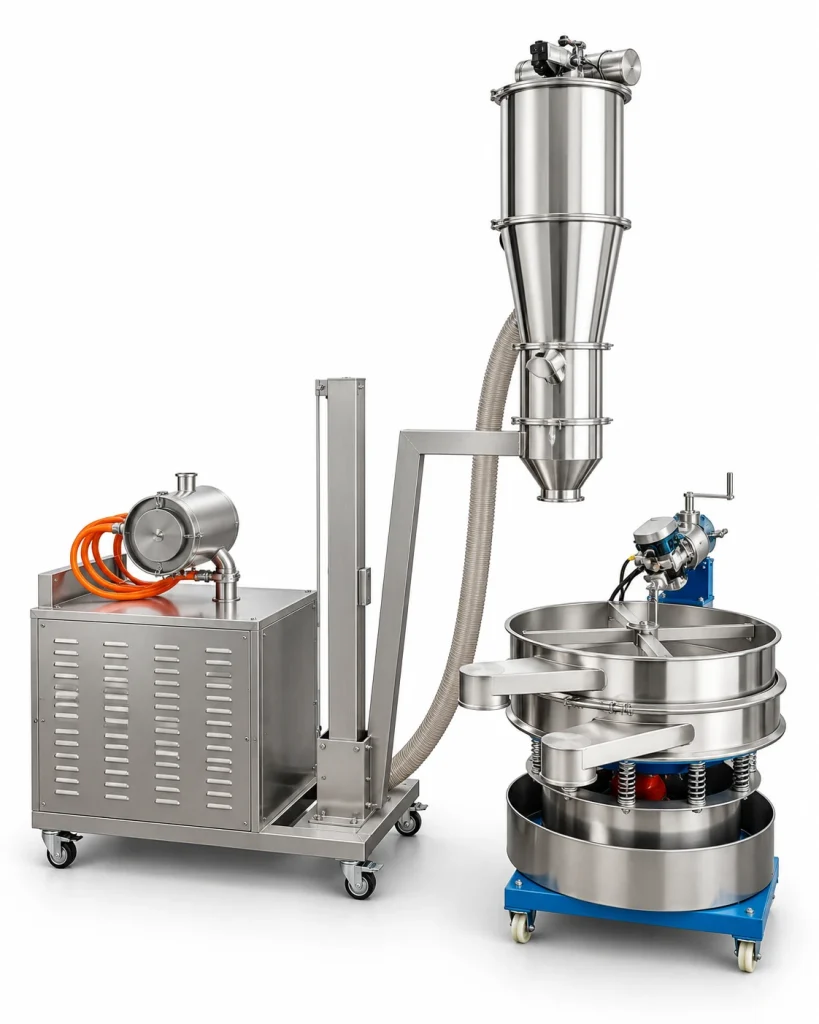
Compare rectangular and circular screening decks, feed distribution, discharge layout and screen-change access.
Read guide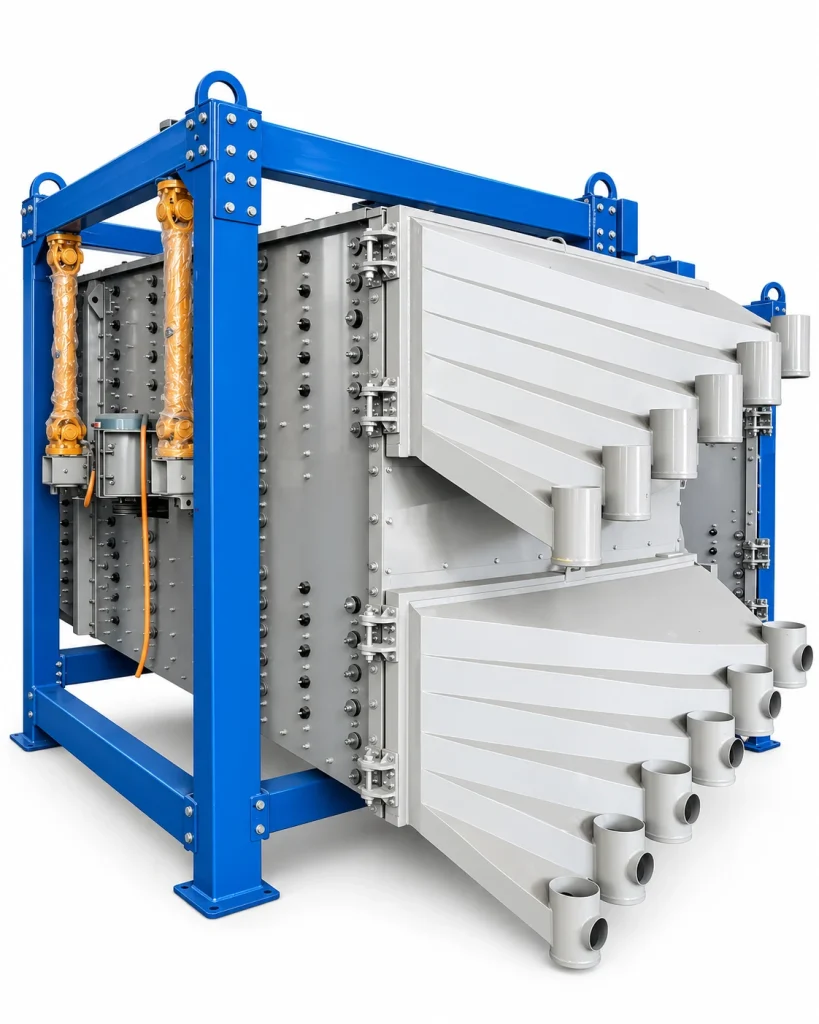
Understand feed rate, bulk density and screen loading, then check output capacity against the required particle-size separation.
Read guide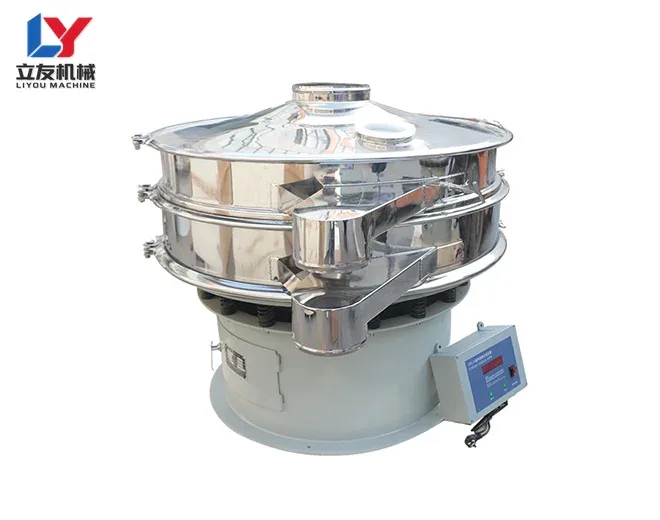
Screen blinding can arise from particles lodged in openings, sticky coatings or cohesive agglomerates.
Read guideUseful answers
It influences how long the material encounters openings, together with rotation, slope and the internal arrangement.
Start with your material
Share your material, throughput and process requirements. We will review the details needed for equipment selection.