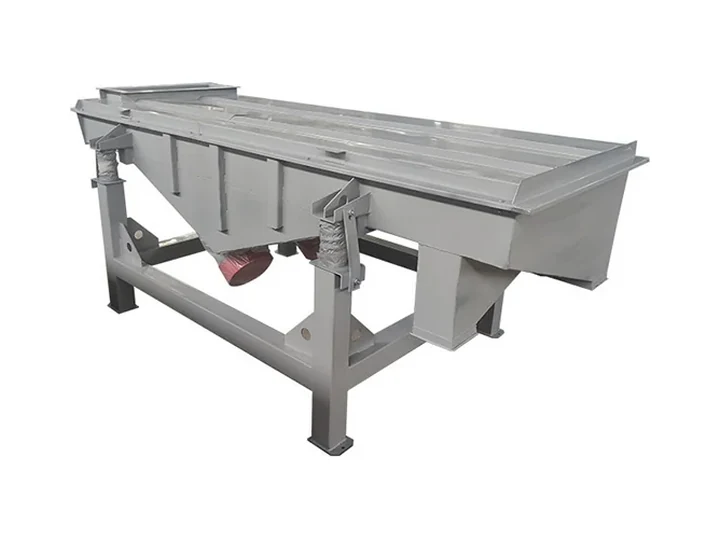
Linear Vibrating Screen
Grade sand, fertilizer granules and plastic pellets with a linear vibrating screen that separates fines, saleable fractions and oversize.
Explore equipmentIndustry solution
Grade sand and limestone, remove coarse particles from mineral powders, and move dry mortar ingredients without mixing separated fractions.
Discuss your application ↗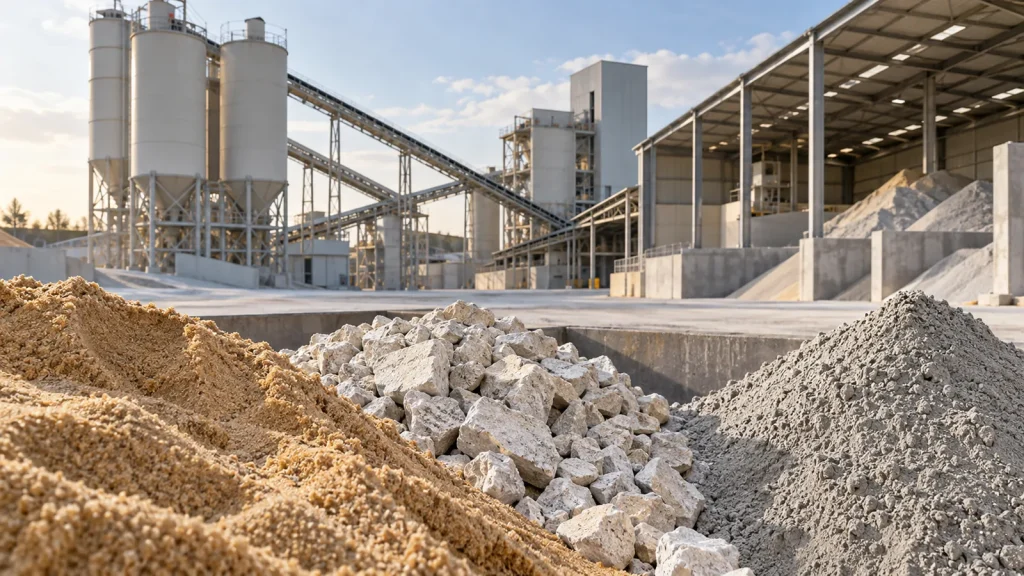
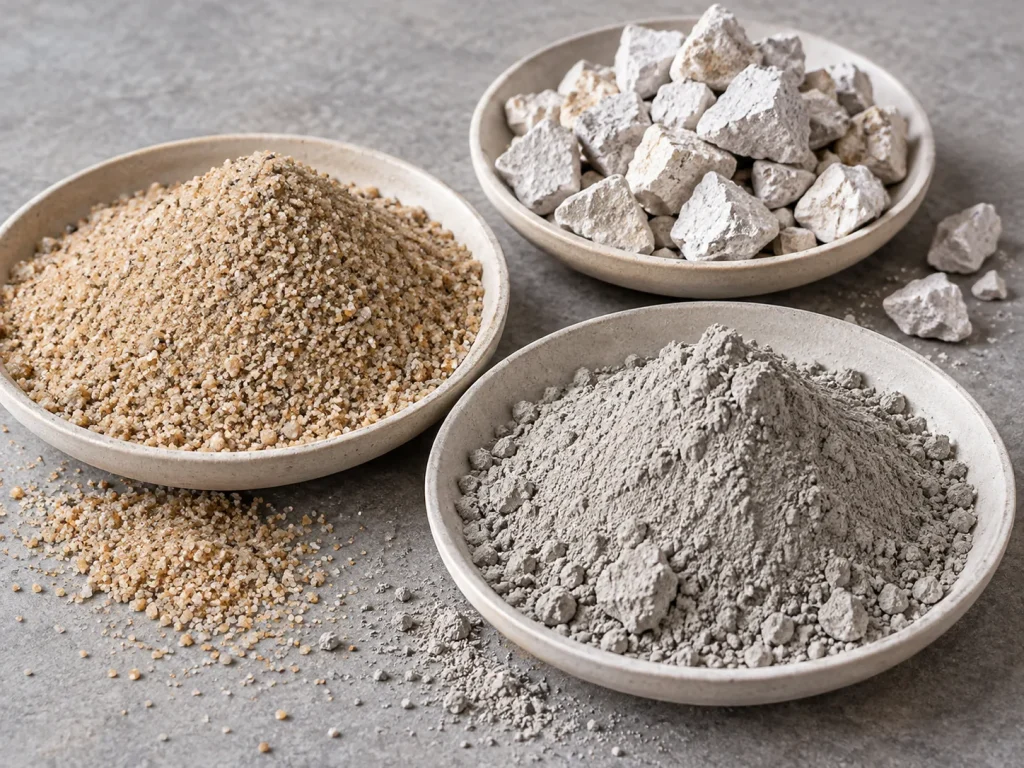
Dry mortar combines graded sand with binders and fine additives. Screening the sand limits oversized particles and divides it into useful size fractions before blending. Limestone granules can be graded in the same physical way. Calcium carbonate filler has a different duty: removing the coarse tail from a fine powder. The screen cut affects particle size, but it does not determine the strength or chemical performance of the finished building material.
Sand grains contact openings as individual particles when the feed is dry and evenly spread. Damp sand forms clumps and blinds the deck. Fine cementitious or mineral powders may aerate during charging and release dust at the outlet. A machine used to grade coarse sand is not automatically suited to fine powder screening. Keep the duties separate so a grain-size screen is not expected to control powder chemistry or moisture damage.
| Material / observation | Separation / cause | Equipment / action |
|---|---|---|
| Dry sand | Split sand fractions for dry mortar and other mixtures. | Linear or gyratory screen |
| Limestone granules | Remove oversize and separate usable size bands. | Linear grading screen |
| Calcium carbonate filler | Remove coarse particles before blending. | Rotary or ultrasonic-assisted screen |
| Dry mortar ingredients | Keep graded sand and powder ingredients in their intended streams. | Screens, screws and suitable elevators |
Oversized particles can enter accepted sand through a torn mesh, a worn opening or a bypass gap at the edge seal. A blocked deck can send good sand into rejects. Inspect the deck and compare outlet samples rather than judging separation by visible vibration alone. Replace damaged panels and restore sealing before adjusting the feed. Feed onto a protected inlet area to reduce direct impact on the mesh.
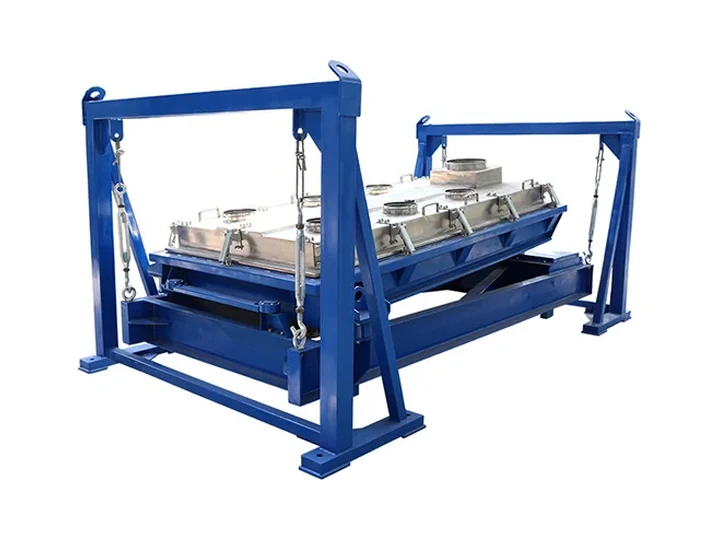
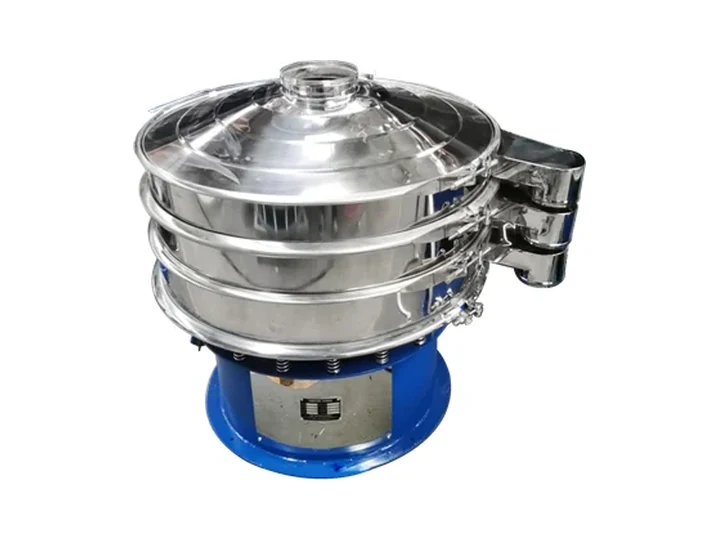
Linear or gyratory screens separate sand into distinct outlets. Rotary vibrating screens remove coarse particles from compatible dry mineral powders. Each grade needs an isolated bin or transfer path. Even an accurate screen produces a mixed final stream if chutes leak or separated grades are discharged into the same storage bin. Cleanout access beneath the screen is necessary to remove buildup that narrows the outlet.
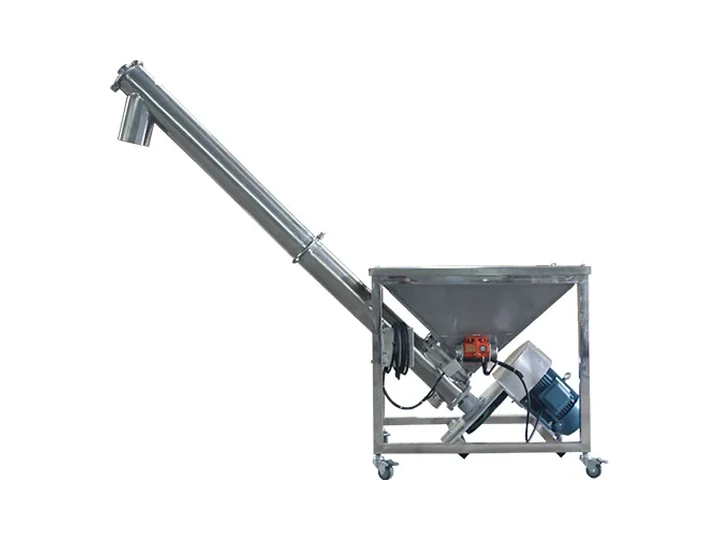
A screw conveyor transfers compatible powders in an enclosed trough or tube. Abrasive sand increases wear on flight edges and the casing, especially at heavily loaded inlet sections. Bucket elevators lift suitable dry material to storage or batching levels. Seal connections at feeding and discharge points: a closed conveyor body alone does not stop dust escaping from an open hopper. Inspect bearings, seals and worn conveying surfaces as part of routine maintenance.
Grade sand, fertilizer granules and plastic pellets with a linear vibrating screen that separates fines, saleable fractions and oversize.
Explore equipmentSeparate silica sand, fertilizer granules and pellets into distinct grades with a gyratory screen and dedicated fraction outlets.
Explore equipment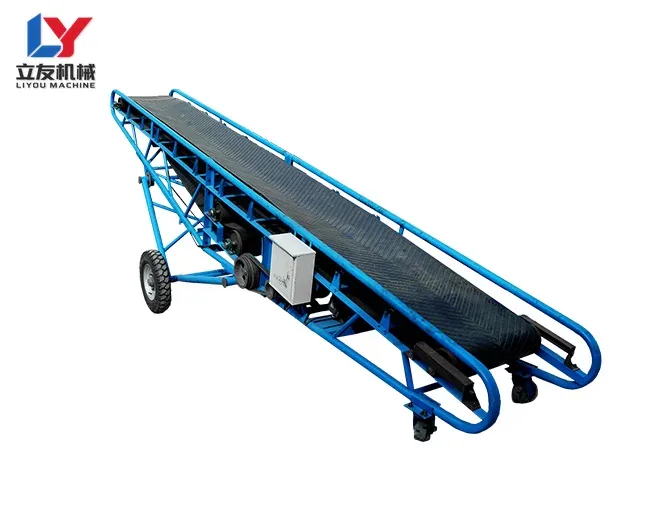
Move sand, aggregate, grain and other bulk solids between loading, processing and storage points with a belt conveyor.
Explore equipmentTransfer dry powders and granules between hoppers, mixers and packing equipment with a screw conveyor sized for the feed and incline.
Explore equipment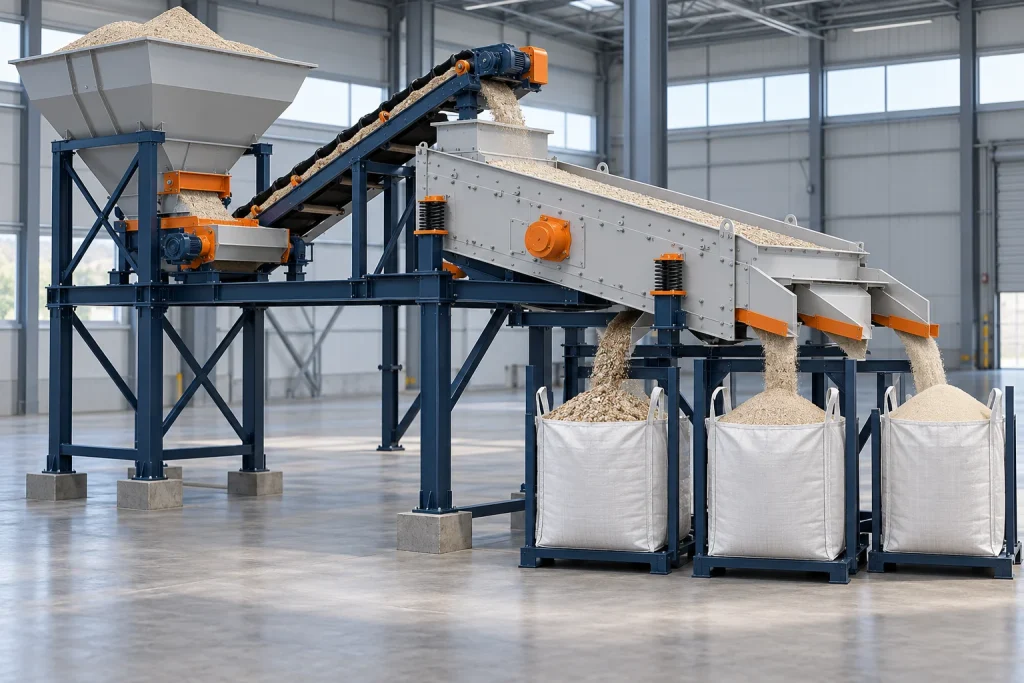
Application concept
How dry silica sand screens separate size fractions, why near-size grains are misplaced, and how mesh wear changes the cut.
Read guideUseful answers
It controls sand size distribution. Mortar performance also depends on formulation, binder properties and other production factors.
Check worn mesh, torn panels, edge bypass and cross-contamination in discharge chutes.
Start with your material
Share your material, throughput and process requirements. We will review the details needed for equipment selection.