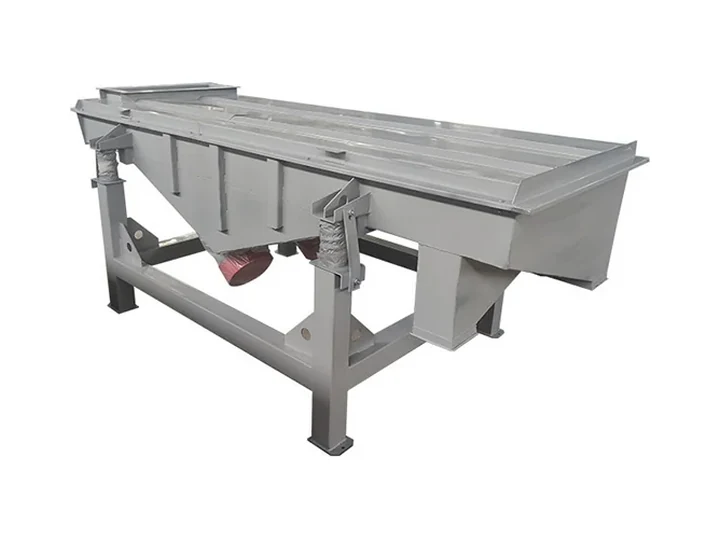
Linear Vibrating Screen
Grade sand, fertilizer granules and plastic pellets with a linear vibrating screen that separates fines, saleable fractions and oversize.
Explore equipmentIndustry solution
Classify dry silica sand, quartz and mineral granules into size fractions while controlling uneven feed, blocked mesh and wear.
Discuss your application ↗
Dry mineral screening separates particles according to the openings in the screening surface. Silica sand grading divides the feed into usable size bands; crushed quartz screening removes oversize or creates several fractions. A screen cannot separate quartz from another mineral solely because their chemistry differs. For size grading, each cut point must lead to an isolated discharge so accepted grades do not mix after leaving the deck.
Dry sand spreads across the deck. Damp fines stick to larger grains and can pass as agglomerates or coat openings. Flat and elongated crushed particles do not behave like rounded sand of the same nominal size. A feed rich in particles close to the cut point is harder to separate than one dominated by much smaller or much larger particles. Consistent feed distribution gives those near-size particles more chances to contact the screen.
| Material / observation | Separation / cause | Equipment / action |
|---|---|---|
| Silica sand | Separate specified size fractions and remove coarse particles. | Linear or gyratory screen |
| Crushed quartz | Control oversize and monitor wear at feed impact points. | Linear screen with suitable screening surface |
| Limestone / dolomite granules | Split usable grades and undersize. | Linear or gyratory screen |
| Fine mineral filler | Remove coarse tail and manage mesh coating. | Rotary or ultrasonic-assisted fine screen |

Blinding is a coating of fines across the openings. Pegging occurs when individual particles lodge in the apertures. Wear enlarges openings or damages the supporting surface. Cleaning a worn panel will not restore the correct size cut; replacing a sound panel will not cure damp feed. Inspect the screening surface and the retained fraction to identify the fault before changing vibration or increasing feed.
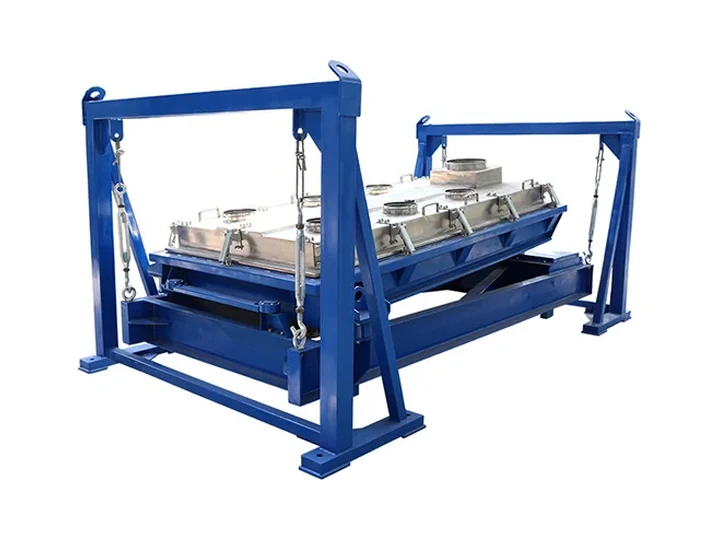
Linear screens move material along the deck and discharge retained fractions at defined points. Gyratory screens spread suitable dry mineral feeds for size classification. More decks create more cuts, but every added cut needs its own collection path. Chutes must remain clear and sealed from adjacent grades. Product contamination can occur below the screen if two streams share a leaking partition.
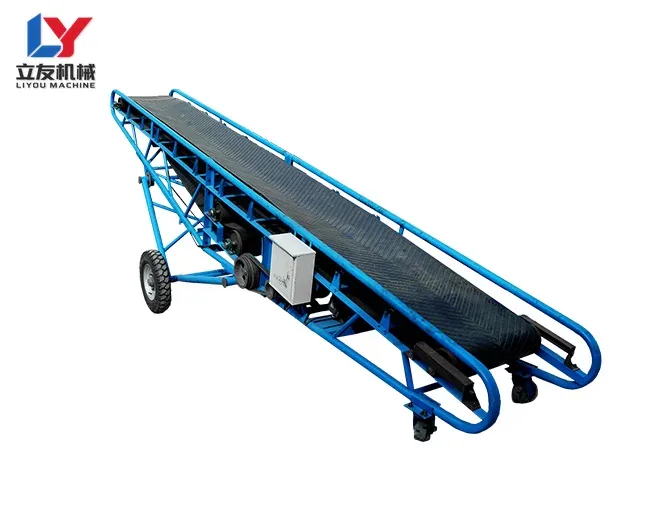
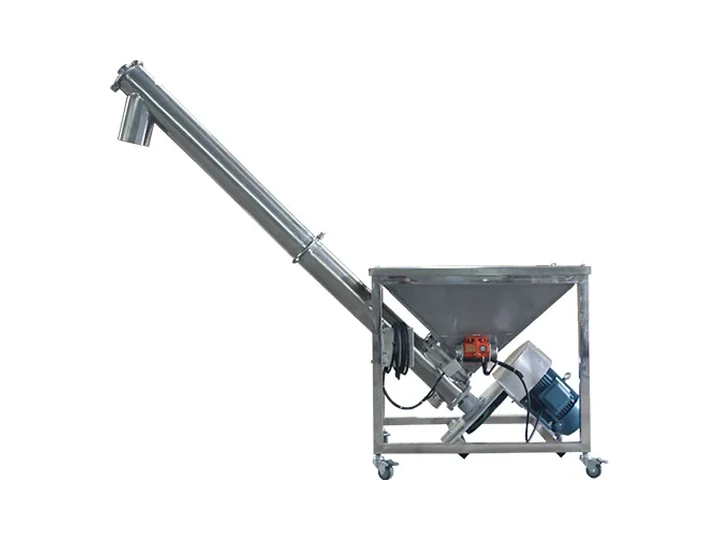
Sand and crushed minerals wear inlet plates, chute bends and screw flight edges. Feed impact should strike a replaceable wear surface rather than an unsupported mesh area. Inspect wear liners before they expose the structure underneath. Belt conveyors suit many aggregate transfer duties; screws suit compatible short enclosed routes, with wear-resistant construction where needed. Silica-bearing dust requires effective site dust controls at transfers and access points.
Grade sand, fertilizer granules and plastic pellets with a linear vibrating screen that separates fines, saleable fractions and oversize.
Explore equipmentSeparate silica sand, fertilizer granules and pellets into distinct grades with a gyratory screen and dedicated fraction outlets.
Explore equipmentMove sand, aggregate, grain and other bulk solids between loading, processing and storage points with a belt conveyor.
Explore equipment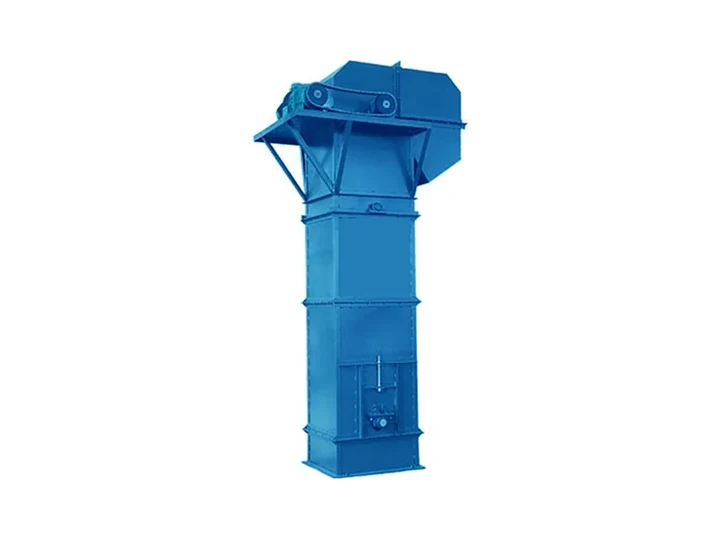
Lift grain, sand and other bulk solids from a lower inlet to an elevated storage or processing point with a bucket elevator.
Explore equipment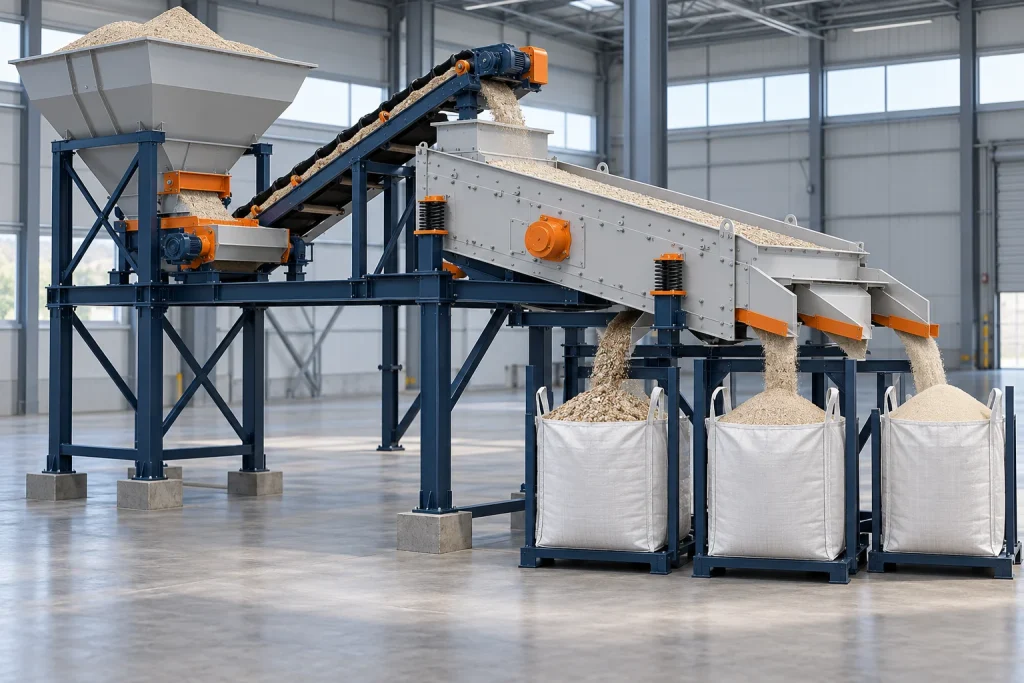
Application concept
How dry silica sand screens separate size fractions, why near-size grains are misplaced, and how mesh wear changes the cut.
Read guideUseful answers
Dry size screening does not wash away clay coatings or separate every fine agglomerate. Washing or another treatment may be needed.
Inspect for worn or broken mesh, bypass at seals and mixing between discharge chutes.
Start with your material
Share your material, throughput and process requirements. We will review the details needed for equipment selection.