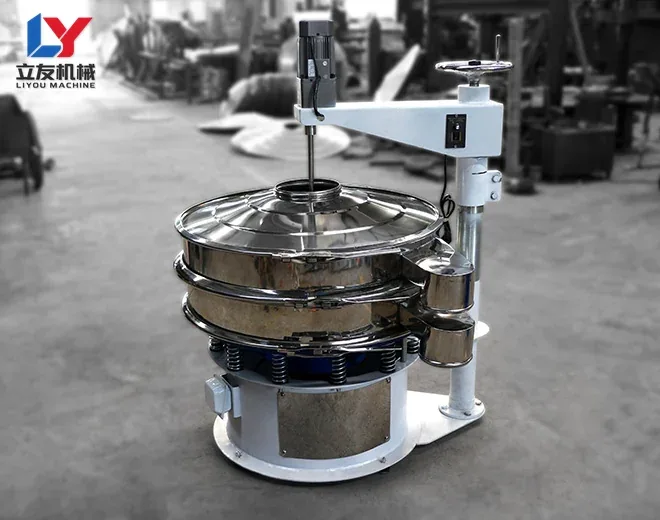
Scraper Vibrating Screen
Keep material moving across a screening surface with a scraper vibrating screen that combines vibration with a sweeping element.
Explore equipmentEquipment category
Compare screening equipment by the material, separation task and required throughput. Start with particle size, moisture and target fractions to identify a suitable screen configuration.
Get equipment advice ↗Explore the equipment
Keep material moving across a screening surface with a scraper vibrating screen that combines vibration with a sweeping element.
Explore equipment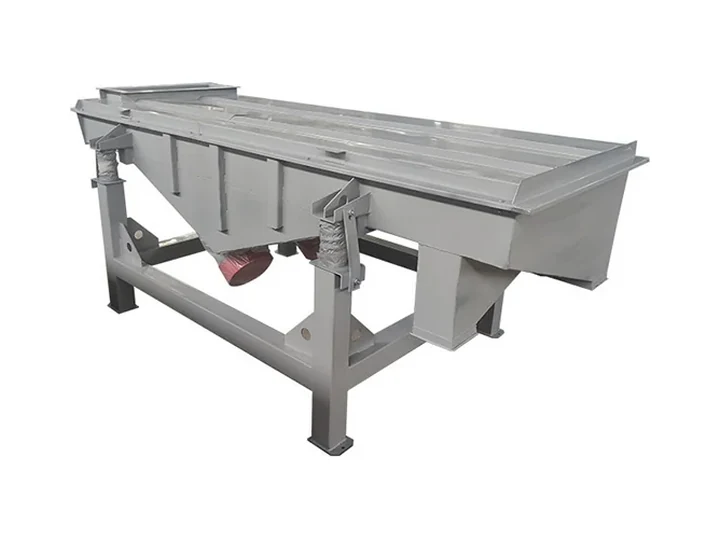
Grade sand, fertilizer granules and plastic pellets with a linear vibrating screen that separates fines, saleable fractions and oversize.
Explore equipmentLinear screens move material across a rectangular deck. Rotary screens use a circular screening surface. Tumbler and gyratory designs apply different motion patterns. Ultrasonic assistance may be considered where fine particles cause mesh blinding.
Screening tasks include grading material into size fractions, removing oversized particles and separating unwanted particles. Suitability must be confirmed for the specific material and process.
Share the material composition, particle shape, bulk density, moisture and flow behavior. These properties affect transport across the screen and separation performance.
Define the required size cuts and throughput first. Evaluate feed distribution, available space, contact materials, dust containment and maintenance access. Confirm performance using representative material where testing is needed.
Compare the separation mechanism, access for mesh replacement and integration with upstream feeding and downstream conveying. Request a configuration review rather than selecting by machine dimensions alone.
| Selection factor | Information to provide | Why it matters |
|---|---|---|
| Separation task | Required fractions and rejected material | Defines the screening objective |
| Feed properties | Particle distribution, bulk density and moisture | Supports the configuration review |
| Process demand | Throughput and working hours | Defines the operating requirement |
| Site interfaces | Feed layout, discharges and available space | Supports integration planning |
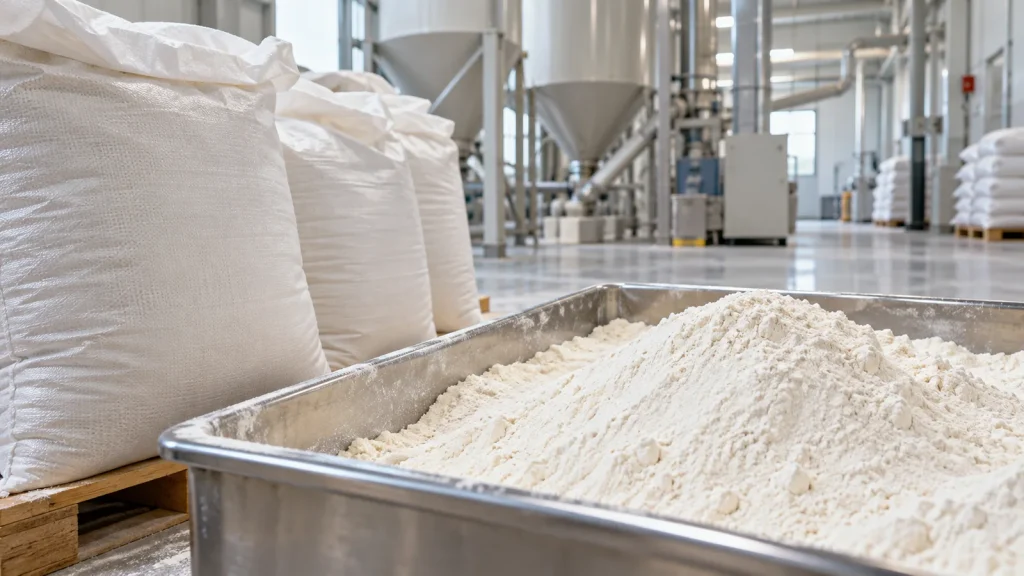
Remove oversize from flour and starch, grade sugar and salt, and transfer dry ingredients between sieving, blending and packing.
View solution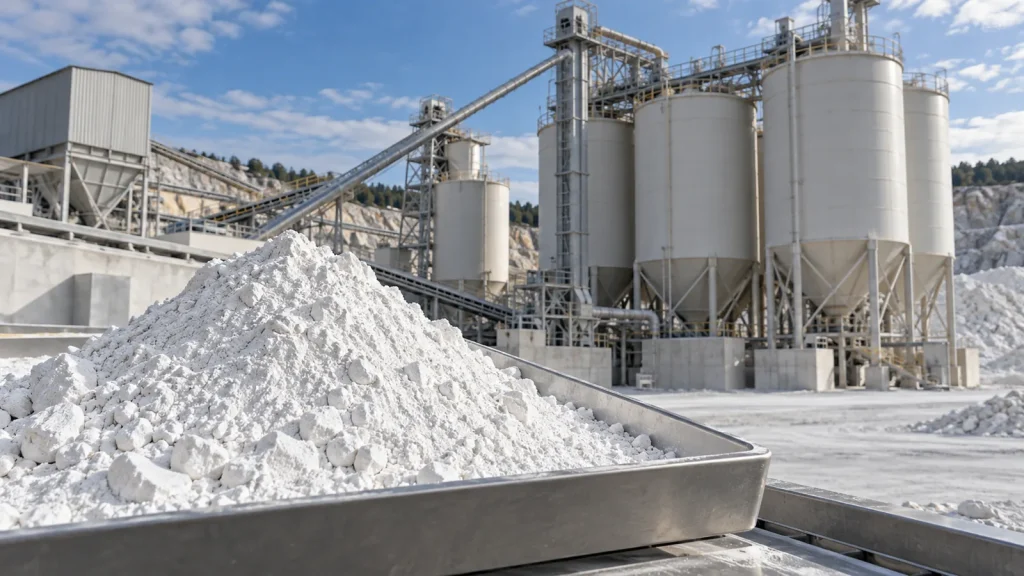
Screen calcium carbonate, resin and pigment powders; control agglomerates, mesh blinding and dust at enclosed transfer points.
View solution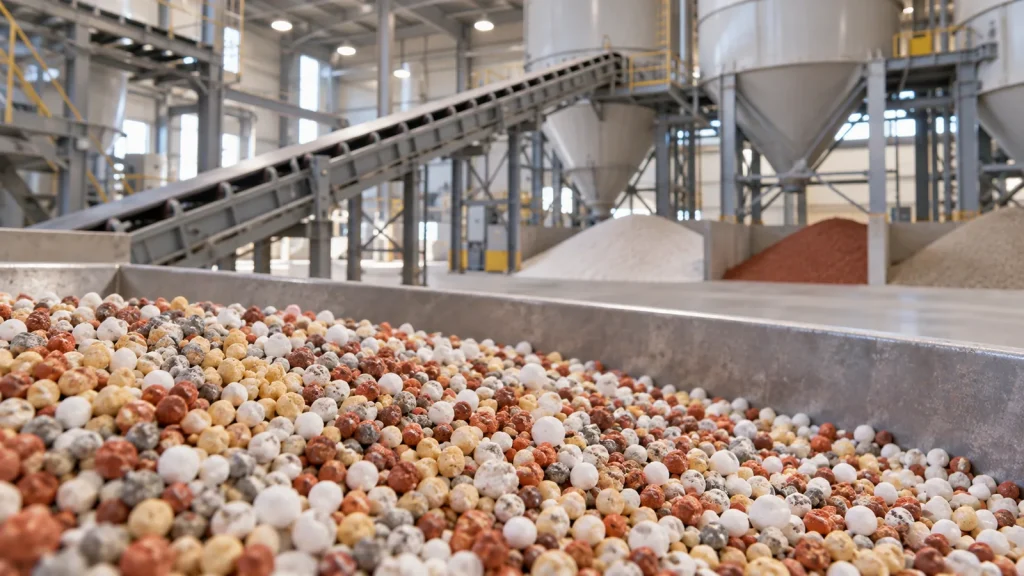
Separate fertilizer granules from fines and oversize, keep recycle streams distinct, and reduce breakage during conveying.
View solution
Classify dry silica sand, quartz and mineral granules into size fractions while controlling uneven feed, blocked mesh and wear.
View solution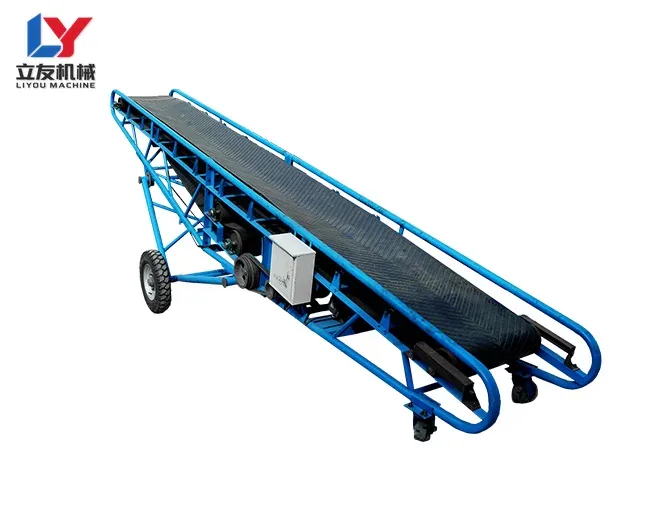
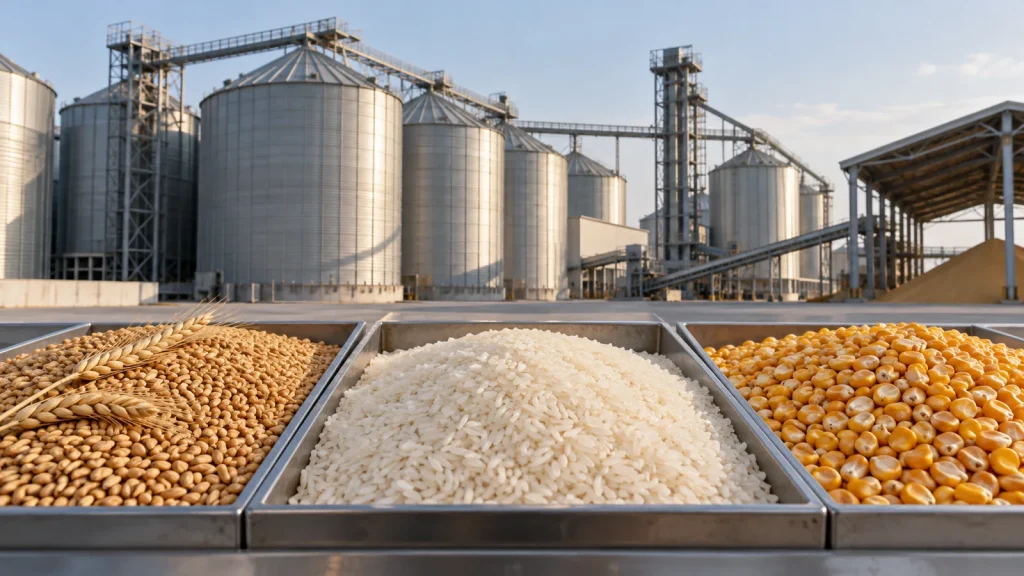
Remove oversized debris and undersize from wheat, corn and rice, then convey the cleaned grain with attention to breakage and carryover.
View solutionUseful answers
Material, bulk density, moisture, input size, required size cuts, throughput and operating conditions provide a useful starting point.
Yes. Review feeding consistency, discharge arrangements and the capacity of connected equipment as part of the process layout.
Start with your material
Share your material, throughput and process requirements. We will review the details needed for equipment selection.