SCREENING · CONVEYING · BULK MATERIAL HANDLINGBULK MATERIAL HANDLING

Screening Equipment

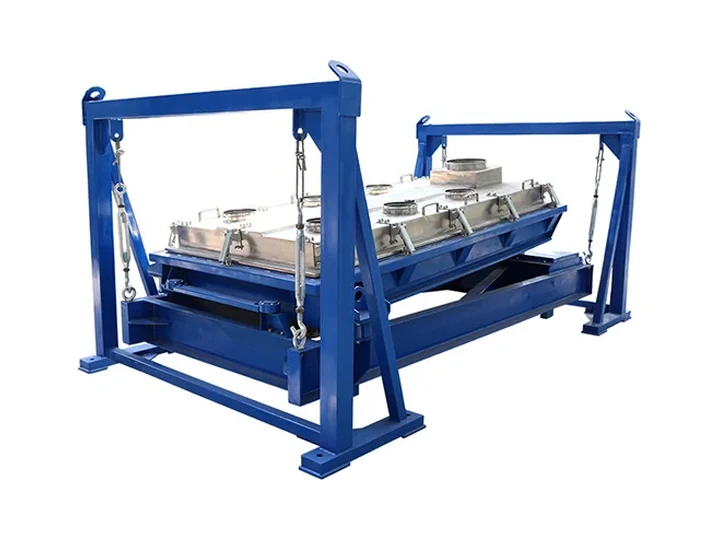
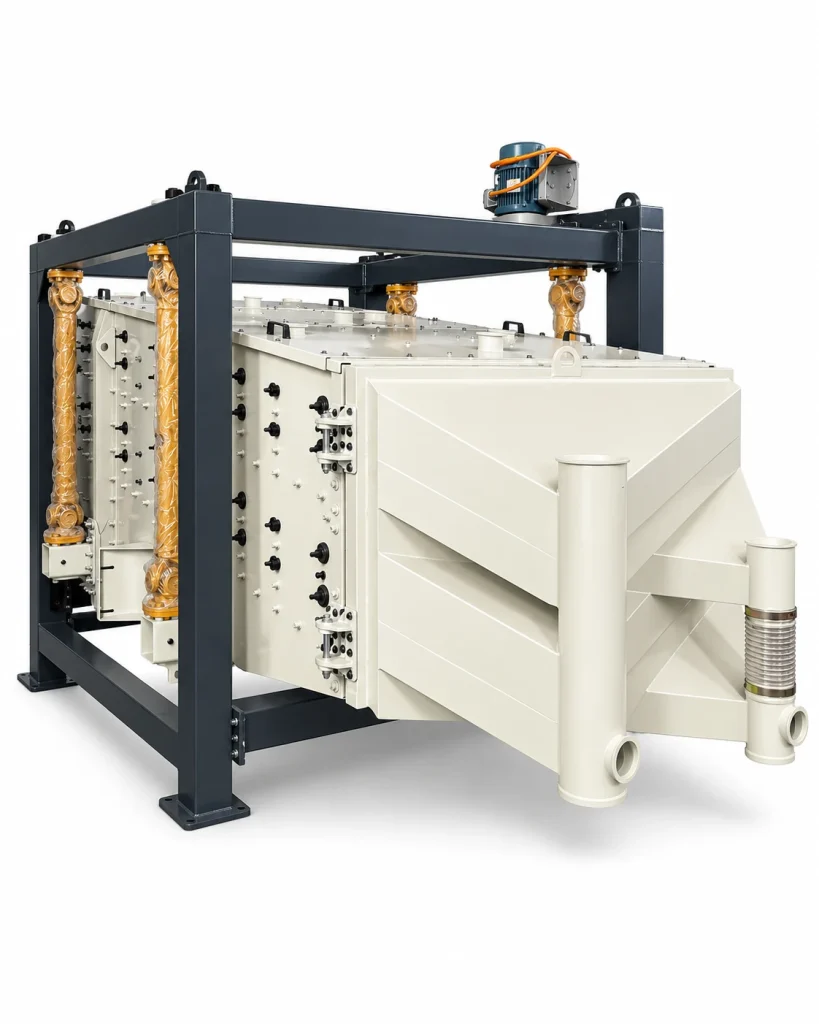
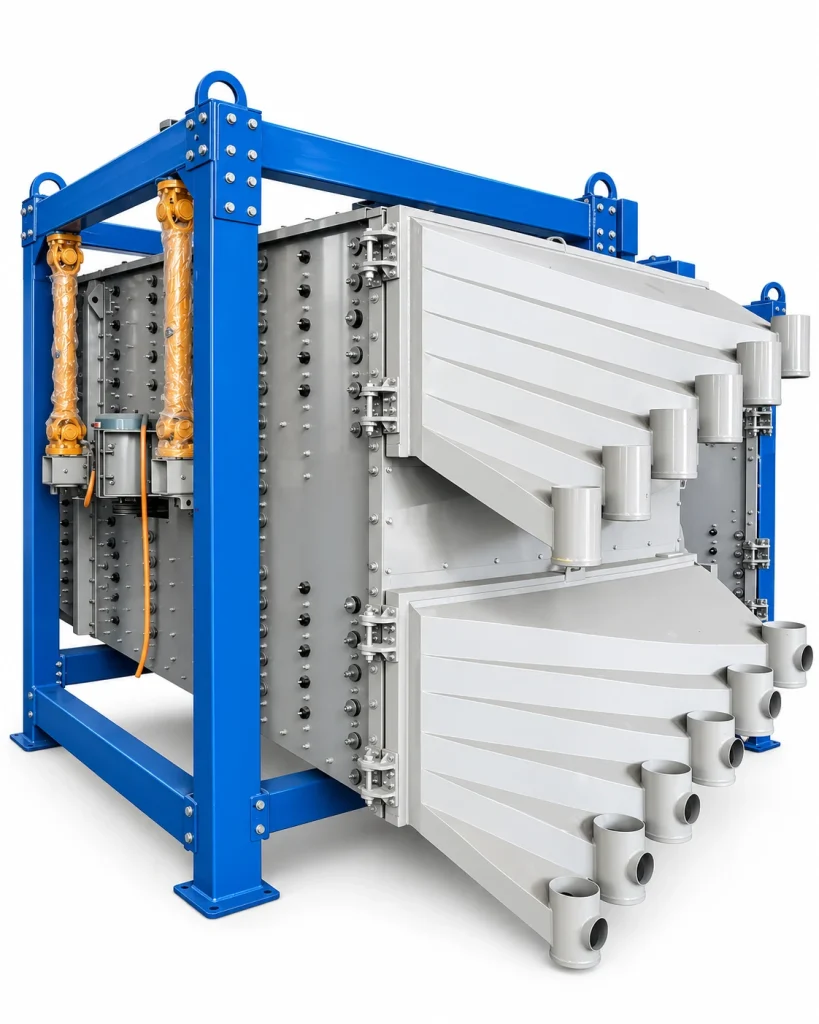
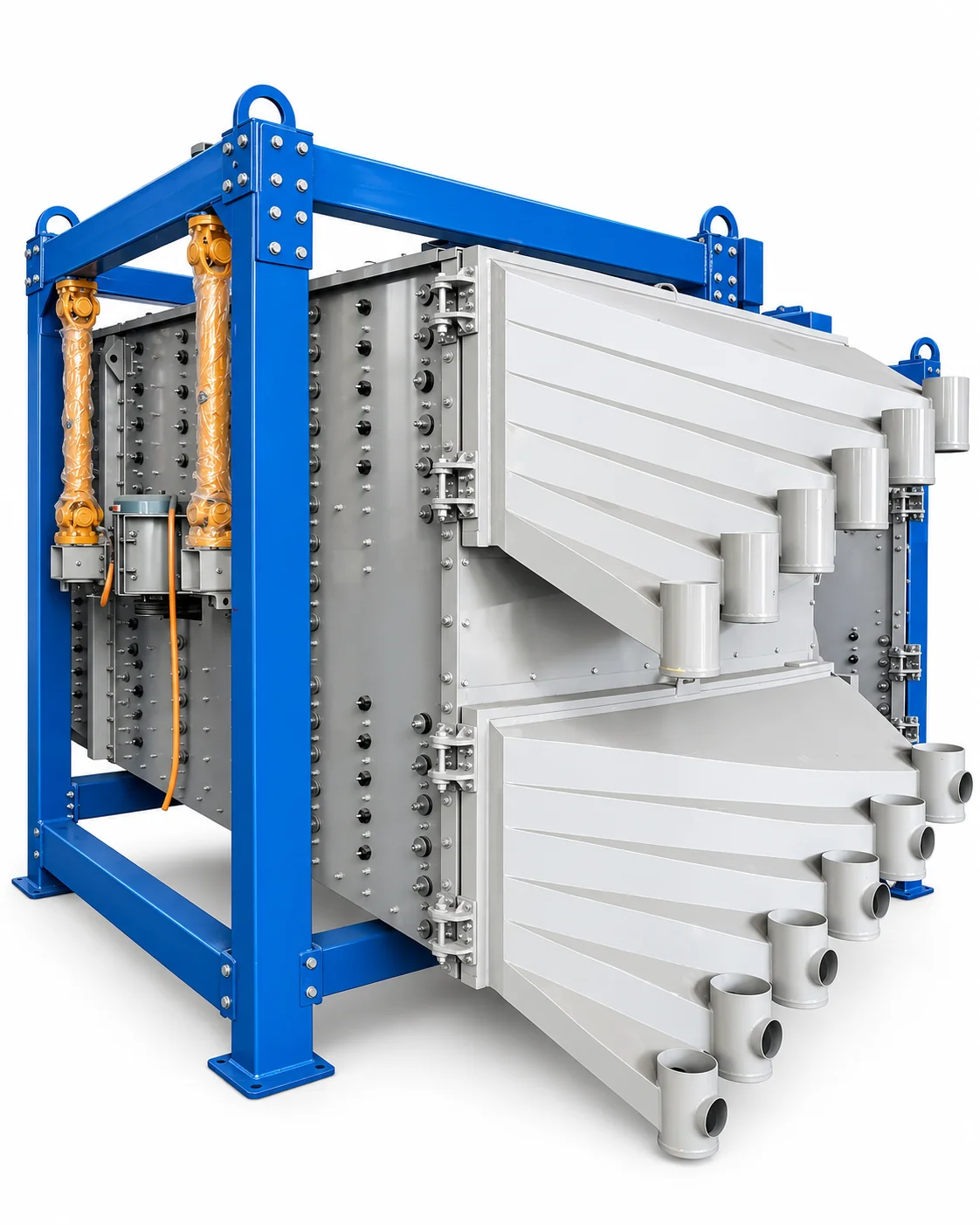
Square Gyratory Screen

Classify dry sand, chemical granules and fertilizer into controlled size fractions. Compare FYBS models and the FY-2040 dual five-deck configuration.

Catalogue models
FYBS1535, FYBS2040
Drawing configuration
FY-2040 (Dual 5)
Drawing motor power
7.5 kW
Separation
Dry multi-fraction grading
Compare Screening Equipment ↗

What the square gyratory screen solves

A square gyratory screen separates dry bulk solids into controlled particle-size fractions. Use it when a packing line receives too much fine dust, oversize particles enter a finished product, or one feed needs several saleable grades. Rectangular screen decks and separate outlet paths let each fraction be collected, stored or returned for reprocessing.

  • Off-size material in finished bags: remove oversize and fines before the packing hopper.
  • Mixed sand grades: assign each mesh cut to its own silo or bagging route.
  • Unnecessary disposal: keep oversize and undersize streams separate so the process can return suitable material to crushing or granulation.
  • Frequent mesh blockage: use the specified bouncing-ball cleaning arrangement, with feed moisture and loading controlled.

Where it fits in a production line

  • Dry silica sand: dryer and cooler → controlled feeder → square gyratory screen → graded silos → packing. Dust extraction and wear inspection are important at the inlet and discharge.
  • Fertilizer: granulator and cooler → screen → finished-product bin, fines return and oversize rework. Check breakage with the actual granules.
  • Chemical crystals: drying or storage → screening → mixer or bagging machine. Select seals and contact materials for the chemical and its moisture sensitivity.
  • Plastic pellets: pellet cooling → fines and oversize separation → storage or packaging. Provide cleanout access when changing resin or color.

Working principle

An eccentric drive moves the suspended rectangular screen box in a horizontal gyratory motion. Feed spreads over the mesh; particles smaller than the opening pass through, while larger particles travel to their discharge. Successive meshes produce additional size cuts. Bouncing balls beneath the mesh help dislodge particles caught in the openings.

A dual-stack arrangement divides the feed between parallel screening paths. Ten screen decks in a dual five-deck arrangement do not automatically mean eleven finished grades: the discharge arrangement determines which fractions are combined or kept separate.

Selection factors that affect separation

  • Particle-size distribution: provide the percentage close to every target cut, not only the largest particle.
  • Feed rate and bulk density: specify normal and peak t/h, kg/m³ and feeder control. A stable, distributed feed prevents local overloading.
  • Moisture and temperature: damp or sticky feed can blind the mesh; drying, cooling or another separation process may be required.
  • Mesh and cleaning balls: select aperture, wire diameter and ball material together. Ball wear must not contaminate the product.
  • Installation: allow screen-frame removal clearance, flexible inlet/outlet connections and access around the suspension. Size the support structure for operating loads.

Applications & Suitable Materials

These are process applications for dry materials. Select contact materials, mesh, cleaning and dust controls for the actual duty.

Silica sand and quartz sand

Material form
Dry mineral grains
Typical application
Separate saleable size grades after drying and before silo storage or packing
Handling considerations
Control residual moisture, oversize loading and abrasive wear
Feldspar, limestone and calcium carbonate

Material form
Dry mineral granules or powders
Typical application
Remove oversize and split mineral feed before blending
Handling considerations
Fine cohesive powders need sample testing; control dust and mesh blinding

Soda ash and sodium bicarbonate

Material form
Dry chemical crystals or granules
Typical application
Remove storage lumps and fines before batching or bagging
Handling considerations
Check hygroscopicity, corrosion compatibility and dust extraction

Urea and compound fertilizer

Material form
Dry fertilizer granules
Typical application
Separate fines, finished granules and oversize after cooling
Handling considerations
Define acceptable breakage and route off-size material to rework

Industrial salt and sodium sulfate

Material form
Dry crystals
Typical application
Classify crystal sizes before packaging
Handling considerations
Check moisture, salt corrosion and contact-material selection

Detergent granules and resin granules

Material form
Dry manufactured granules
Typical application
Remove agglomerates and fine dust before final packing
Handling considerations
Confirm product temperature, static behavior and cleanout requirements

PE, PP and PET pellets

Material form
Dry plastic pellets
Typical application
Remove fines and oversized or fused pellets after cooling
Handling considerations
Specify allowable pellet loss, static control and changeover cleaning

Sugar and food salt

Material form
Dry food crystals
Typical application
Size grading before blending or packing
Handling considerations
Requires a dedicated hygienic contact-material and cleaning configuration; the Q235 drawing is not a food-grade specification

Grain and animal-feed granules

Material form
Dry grain or formed feed
Typical application
Remove fines and large foreign material before packing
Handling considerations
Check particle damage, sanitation and dust controls

Activated carbon and graphite

Material form
Dry carbon particles
Typical application
Separate coarse particles from target fractions
Handling considerations
Test dustiness and friability; assess combustible dust requirements

FY-2040 dual five-deck configuration

The attached LIYOU drawing specifies a suspended FY-2040 (Dual 5) with Q235 construction, a 7.5 kW motor and 1950 × 4000 mm screen frames. Its screening-area notation is 7.8 m² × 10 decks, with 480 cleaning balls × 10 decks. These are configuration details, not a guaranteed throughput.

The illustrated outlet grades are >5 mm, 1.5–5 mm, 1.0–1.5 mm, 0.5–1.0 mm, 0.15–0.5 mm and <0.15 mm. They describe this drawing only; specify your own cut sizes when ordering.

Drawing dimensions include 5300 mm overall plan length, 2650 mm width, a Ø245 mm feed inlet and Ø159 mm outlets. The views show 3250 mm and 3226 mm vertical dimensions; use the final approved installation drawing for height and civil works.

View the FY-2040 dimensional drawing ↗

Technical Specifications

LIYOU catalogue specifications
ModelScreen dimensions (m)Screen angle (°)DecksMotor power (kW)Stroke (mm)
FYBS15351.5 × 3.55–81–95.525–60
FYBS20402 × 45–81–97.525–60

Operating checks and maintenance

  • Fine material in the coarse outlet: inspect blocked mesh, feed surges and excessive bed depth.
  • Coarse particles in the fine outlet: stop and check torn mesh, frame seating and bypass at seals.
  • Unequal discharge from parallel stacks: check feed splitting and individual mesh condition.
  • Abnormal noise or movement: inspect suspension joints, fasteners, flexible connections and lubrication against the maintenance instructions.
  • Before restarting after a product change: clean the decks, ball trays and discharge paths, then verify each outlet with a sample.

Related equipment

Technical resources

Useful answers

Frequently asked questions

What capacity can the square gyratory screen handle?

Capacity depends on bulk density, moisture, particle-size distribution, mesh openings and the required separation quality. Send a representative sample and normal/peak feed rate; the catalogue does not provide a universal t/h rating.

Does a dual five-deck design produce eleven grades?

No. Parallel stacks can make the same cuts and combine matching fractions. The supplied FY-2040 drawing shows six illustrated size fractions; outlet routing must match the required process.

Can this machine screen wet or sticky material?

The described configuration is for dry bulk solids. Wet, sticky or strongly cohesive feed can blind the mesh and needs sample testing or a different process.

Can Q235 be used for food or corrosive chemicals?

The attached Q235 configuration should not be treated as a hygienic or corrosion-resistant specification. Contact materials, seals, cleaning access and surface finish must be selected for the application.

What information is needed for a quotation?

Send material name, bulk density, moisture, temperature, feed-size distribution, target size fractions, normal and peak throughput, working hours, voltage and an installation layout.

Start with your material

Let's build the right solution.

Share your material, throughput and process requirements. We will review the details needed for equipment selection.

Additional technical details (optional)

WhatsAppGet a quote ↗
Chat on WhatsApp