Silica sand
- Material form
- Dry sand grains
- Typical application
- Classify grains into defined fractions
- Handling considerations
- Moisture, abrasion and screen openings
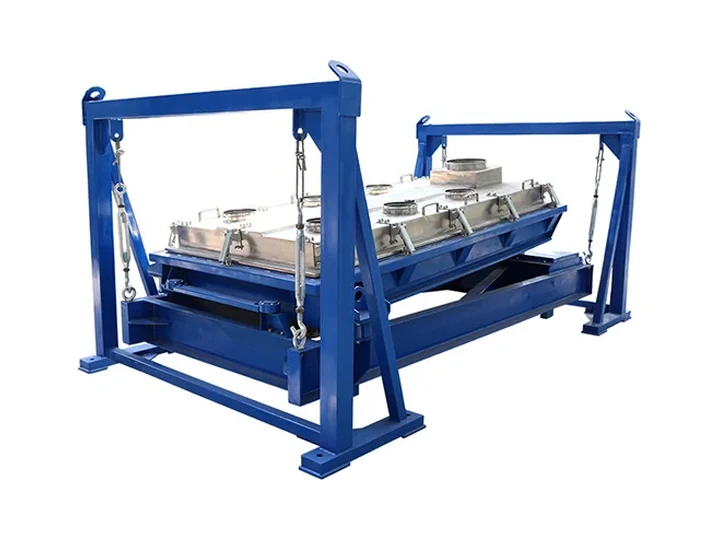
Screening Equipment
Separate silica sand, fertilizer granules and pellets into distinct grades with a gyratory screen and dedicated fraction outlets.
Compare Screening Equipment ↗Horizontal motion spreads the feed and gives particles repeated contact with the mesh.
Isolate fines and oversize from the accepted fraction, so each stream can be packaged or returned separately.
Classify dry sand ahead of grade-specific storage or bagging, keeping mesh selection tied to the required particle distribution.
Screen dried and cooled granules before packing. Keep fines and large granules on separate rework routes; screening does not correct weak granules that break during later conveying.
An eccentric drive produces horizontal gyratory movement in the screening box. The motion spreads the incoming feed over the mesh and advances it along the screening surface. Particles smaller than the selected openings pass through, while retained particles continue to their discharge. Deck support, screen cleaning and outlet sealing maintain the separation path.
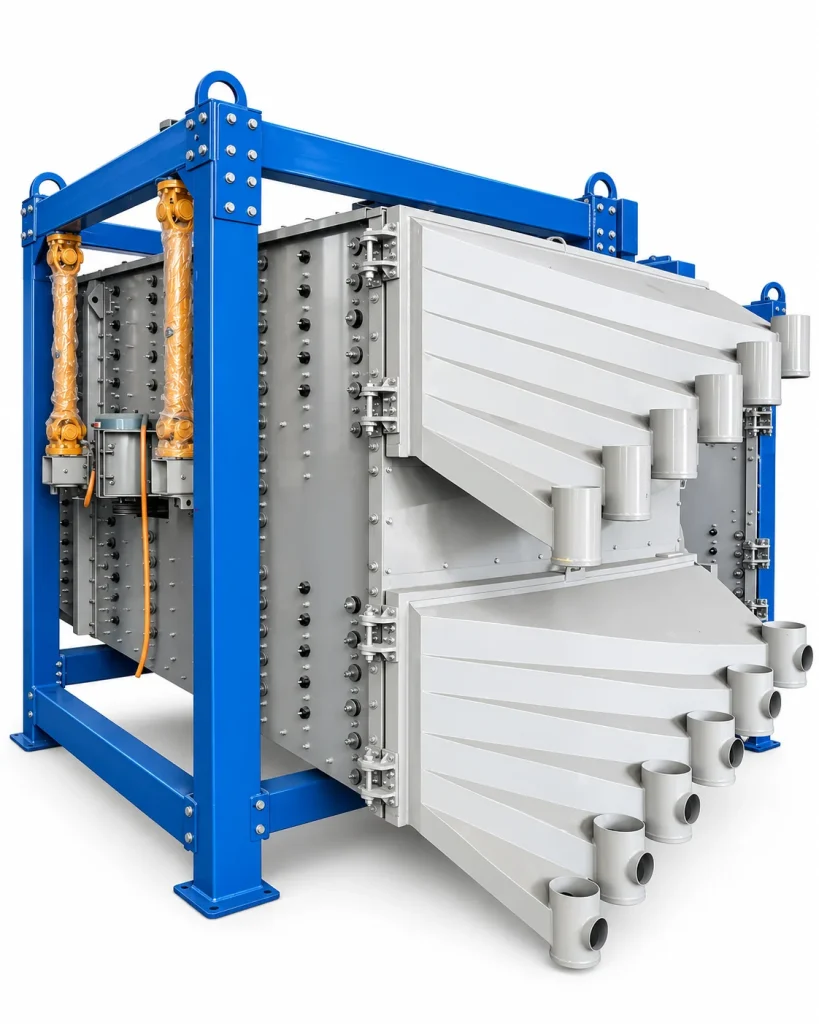
Classify dry sand, chemical granules and fertilizer into controlled size fractions. Compare FYBS models and the FY-2040 dual five-deck configuration.
Explore equipment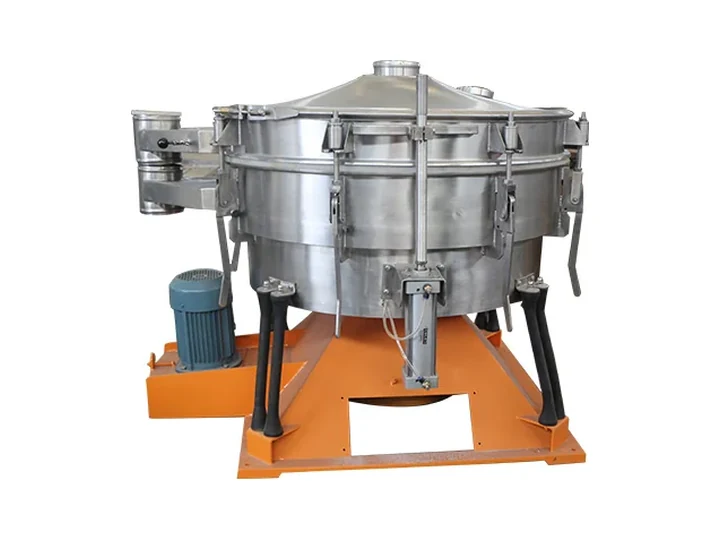
Classify fine powders and delicate granules with a tumbler screen, using extended mesh contact to separate closely sized fractions.
Explore equipment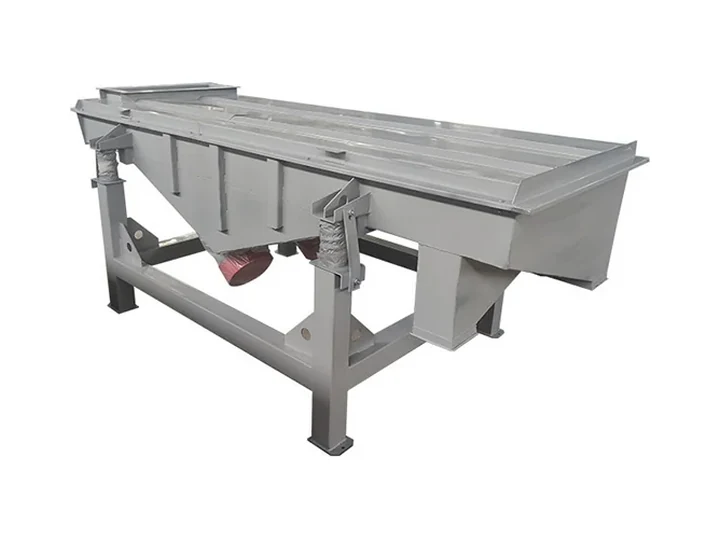
Grade sand, fertilizer granules and plastic pellets with a linear vibrating screen that separates fines, saleable fractions and oversize.
Explore equipment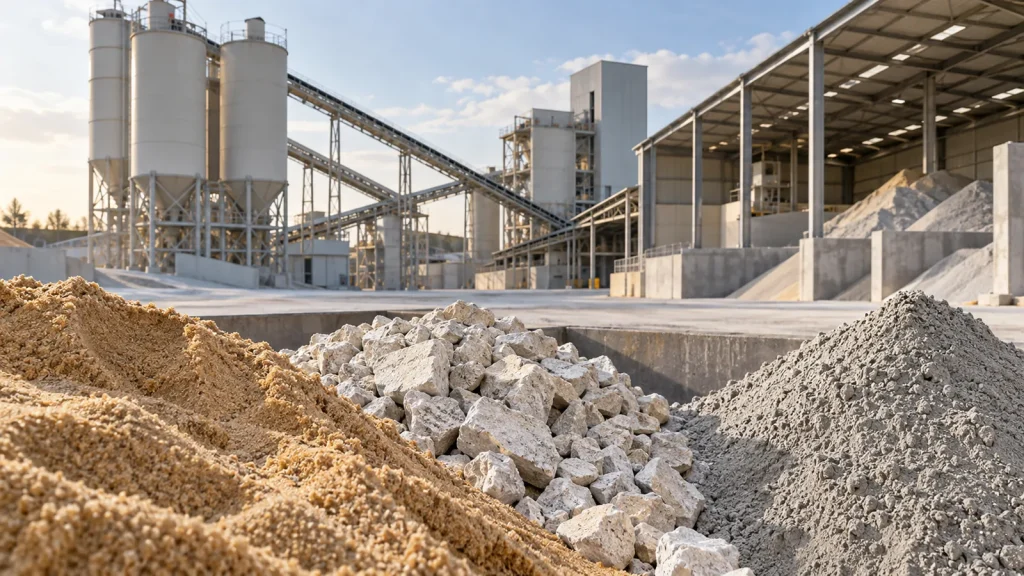
Grade sand and limestone, remove coarse particles from mineral powders, and move dry mortar ingredients without mixing separated fractions.
View solution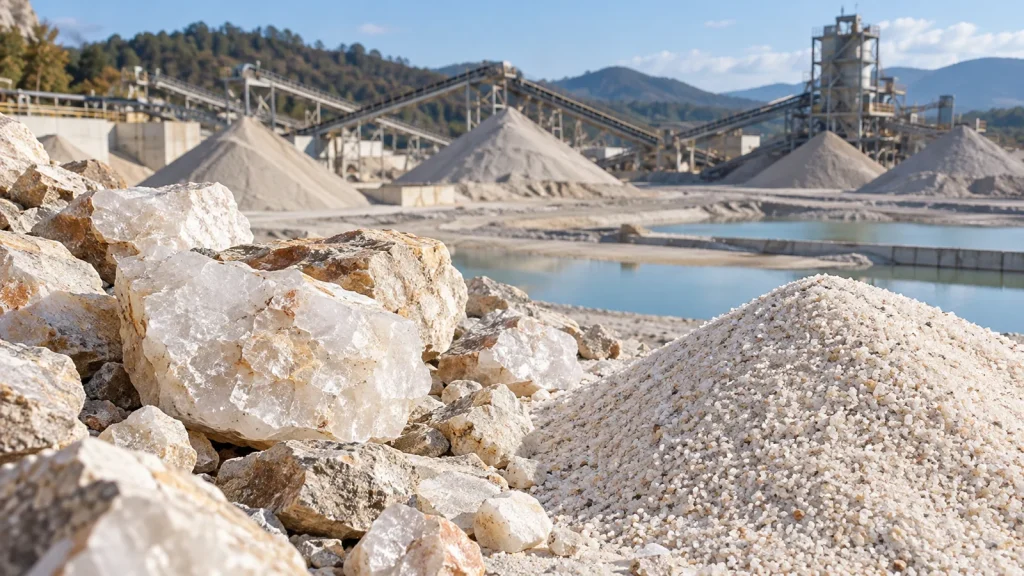
Classify dry silica sand, quartz and mineral granules into size fractions while controlling uneven feed, blocked mesh and wear.
View solution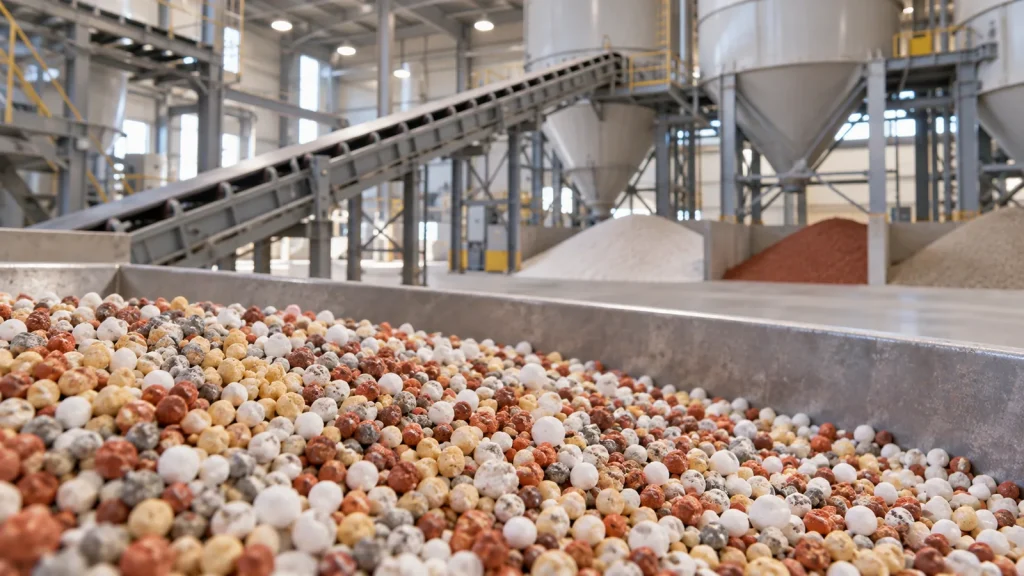
Separate fertilizer granules from fines and oversize, keep recycle streams distinct, and reduce breakage during conveying.
View solution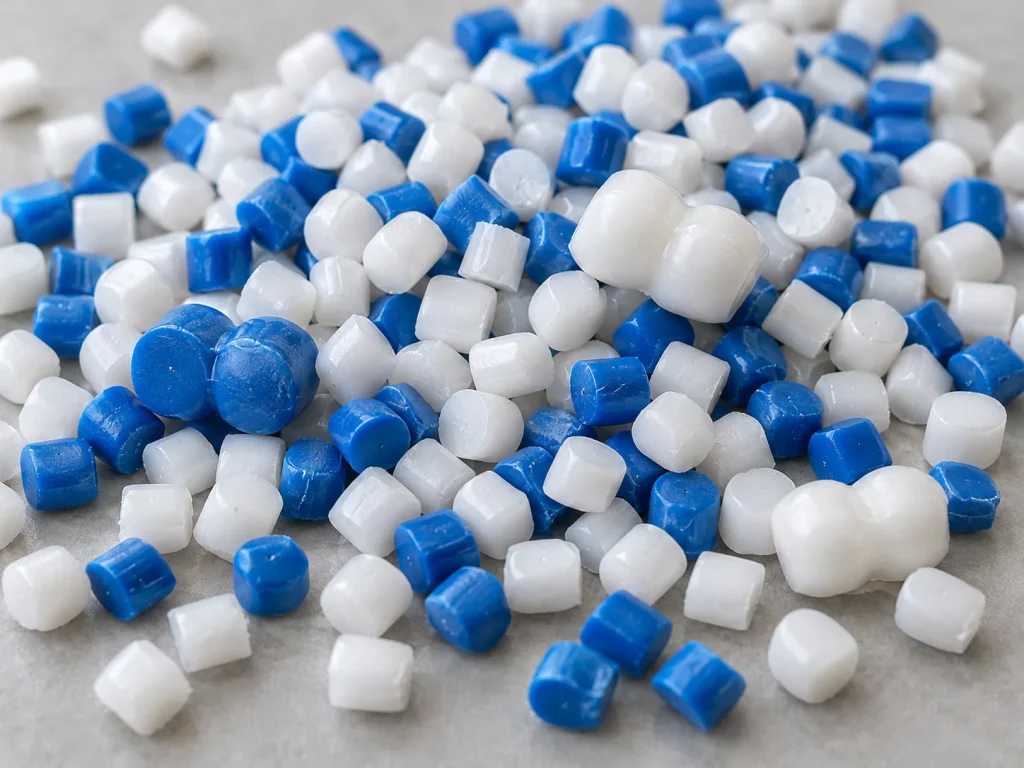
Separate fused plastic pellets and small fragments, keep useful pellets out of rejects, and limit contamination during grade changes.
Read guideSeparate fertilizer into fines, accepted granules and oversize, then identify transfer points that create new broken particles.
Read guide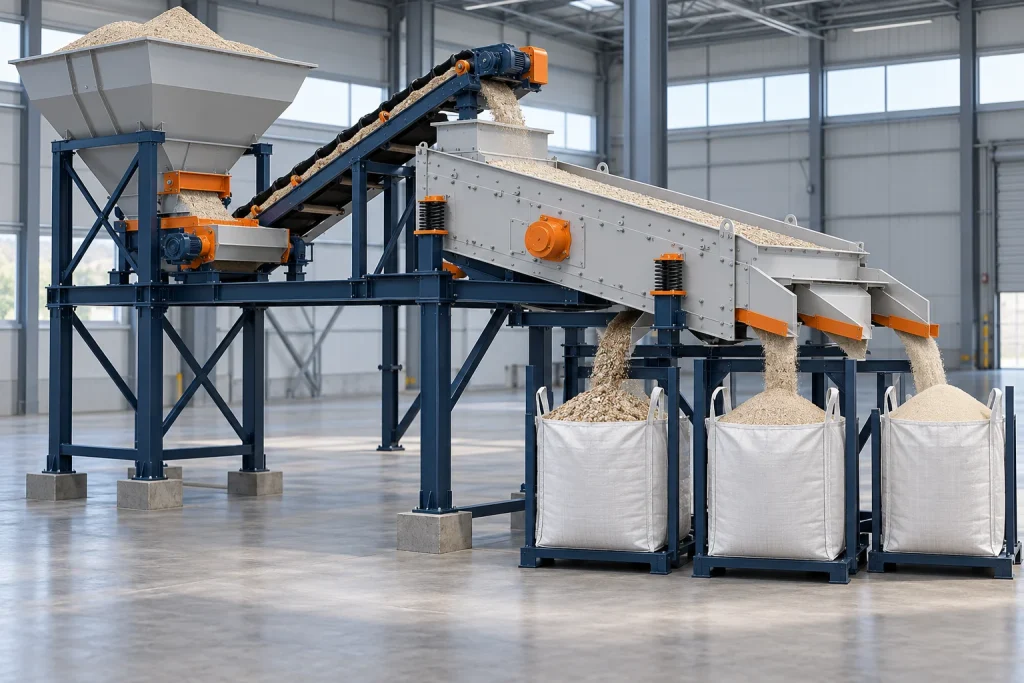
Application concept
How dry silica sand screens separate size fractions, why near-size grains are misplaced, and how mesh wear changes the cut.
Read guide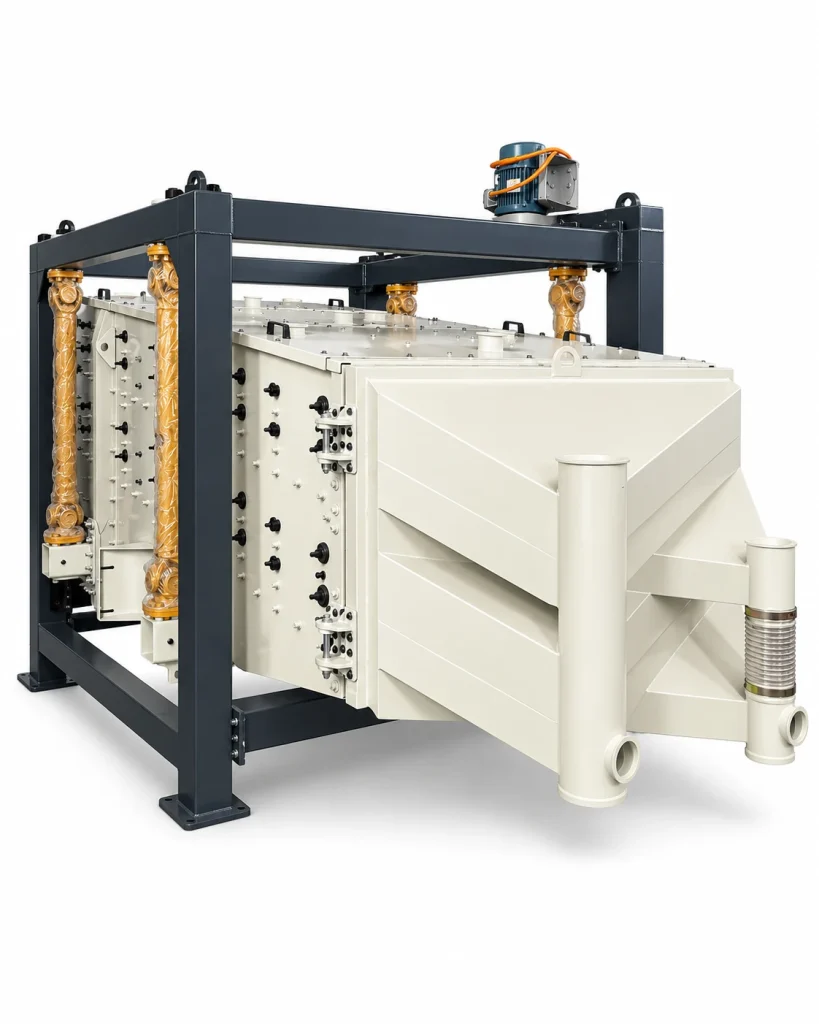
Compare screen motion, mesh openings and material properties to select equipment for the required size separation.
Read guideUseful answers
The required product fractions and cut sizes determine deck count. Feed grading, near-size content and mesh cleaning influence the usable screening area.
Start with your material
Share your material, throughput and process requirements. We will review the details needed for equipment selection.