Sugar
- Material form
- Dry crystals
- Typical application
- Separate crystal size fractions
- Handling considerations
- Moisture, friability and desired fraction boundaries
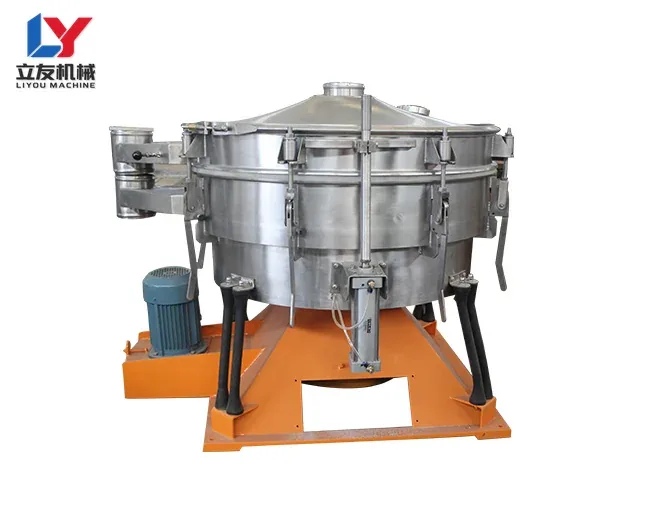
Screening Equipment
Classify fine powders and delicate granules with a tumbler screen, using extended mesh contact to separate closely sized fractions.
Controlled tumbling gives near-size particles repeated opportunities to reach and pass the mesh.
The tumbling path offers an alternative to more aggressive screening motion, with breakage dependent on the product and machine settings.
Separate dry calcium carbonate, silica flour or similar mineral powders into specified fractions before blending or bagging.
Grade sugar crystals, salt or dry seasoning ingredients where particle distribution affects mixing and finished texture. Cohesive deposits require a suitable mesh-cleaning arrangement.
An eccentric drive produces a combined radial and tangential movement. Particles follow a changing path across the deck instead of moving only in a straight line. Settings influence how long the particles remain available for passage through the mesh. Deck cleaning devices address obstruction of apertures and do not replace control of the feed condition.
Applications & Suitable Materials
Sugar
Salt
Calcium carbonate
Polymer granules
Technical Specifications
Model Diameter (mm) Screen area (m²) Space requirement (m³) Maximum decks Power (kW) YBS 1000 1040 0.71 1.2 5 1.5 YBS 1200 1250 1.11 1.6 5 2.2 YBS 1600 1580 1.83 2.5 5 2.2 / 4 YBS 2000 1880 2.62 4 5 2.2 / 4 YBS 2200 2100 3.46 4.84 5 3 / 4 YBS 2600 2650 5.31 7 5 5.5
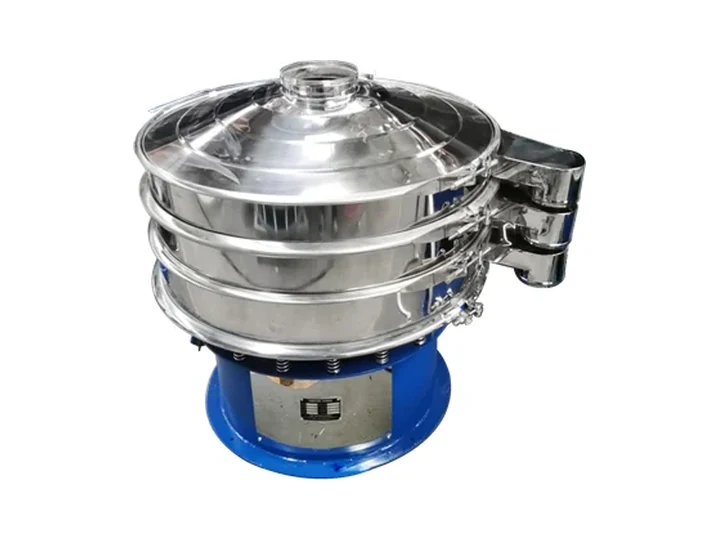
Remove lumps and grade powders with a rotary vibrating screen for flour, starch, mineral fillers and chemical ingredients.
Explore equipment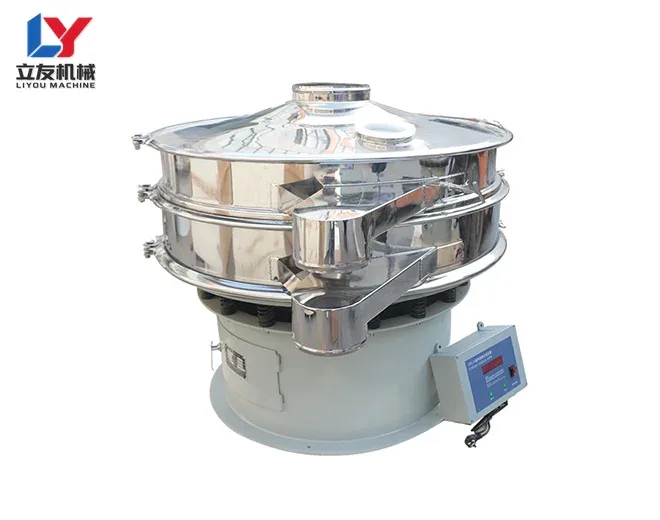
Keep fine-powder screening openings clear with an ultrasonic vibrating screen for coating powders, mineral fillers and other cohesive dry powders.
Explore equipment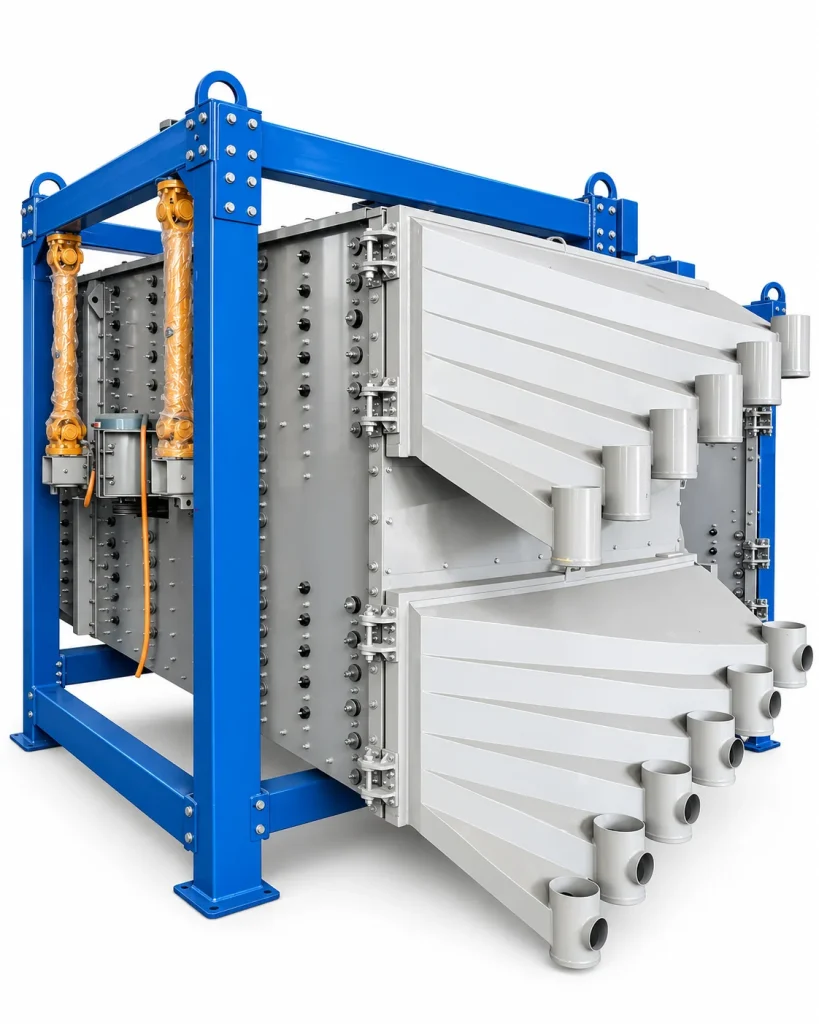
Classify dry sand, chemical granules and fertilizer into controlled size fractions. Compare FYBS models and the FY-2040 dual five-deck configuration.
Explore equipment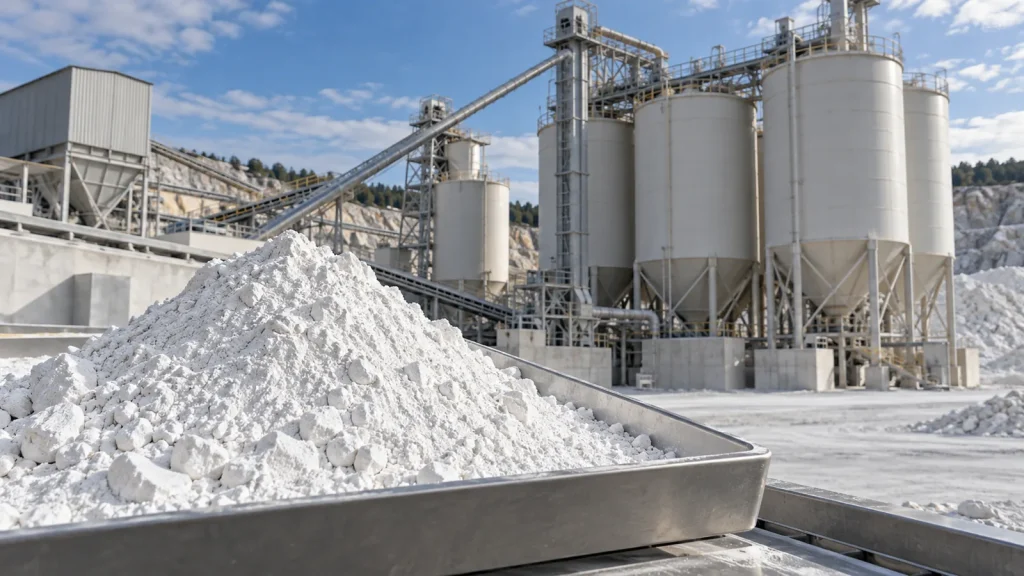
Screen calcium carbonate, resin and pigment powders; control agglomerates, mesh blinding and dust at enclosed transfer points.
View solution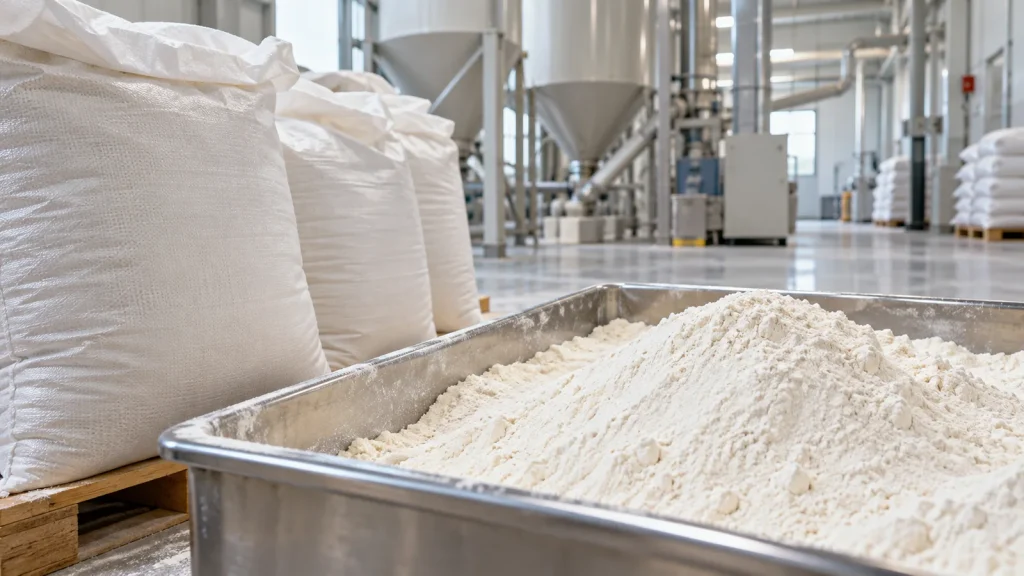
Remove oversize from flour and starch, grade sugar and salt, and transfer dry ingredients between sieving, blending and packing.
View solution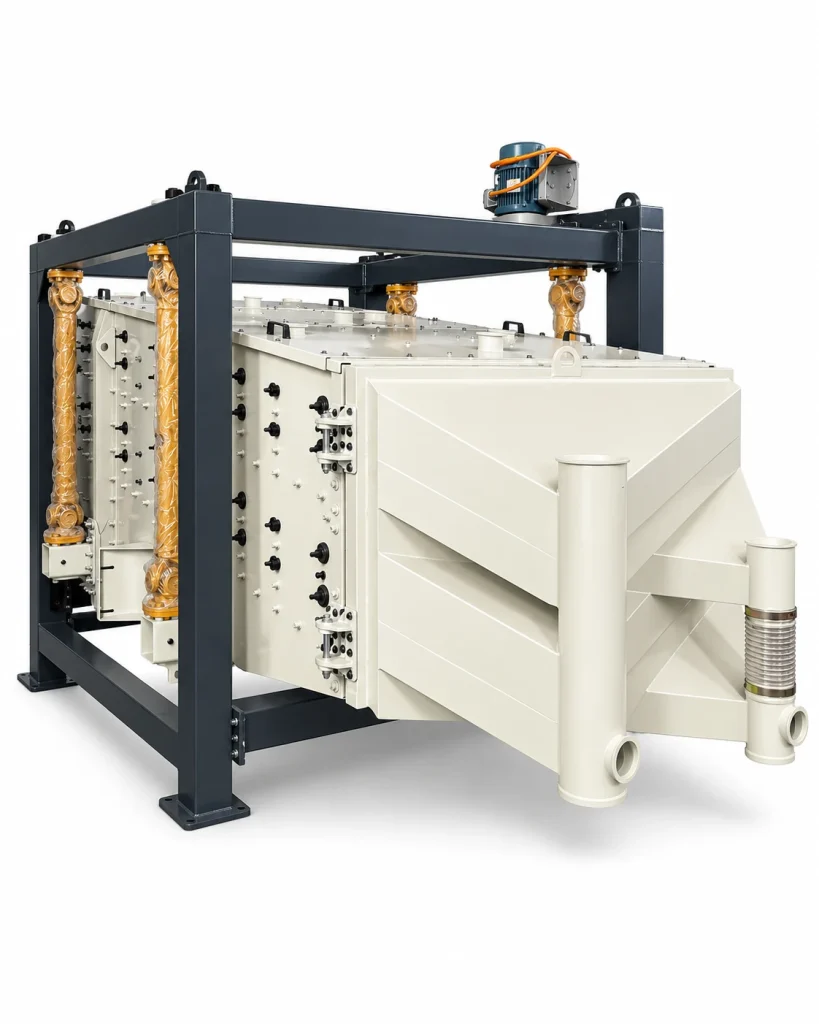
Compare screen motion, mesh openings and material properties to select equipment for the required size separation.
Read guide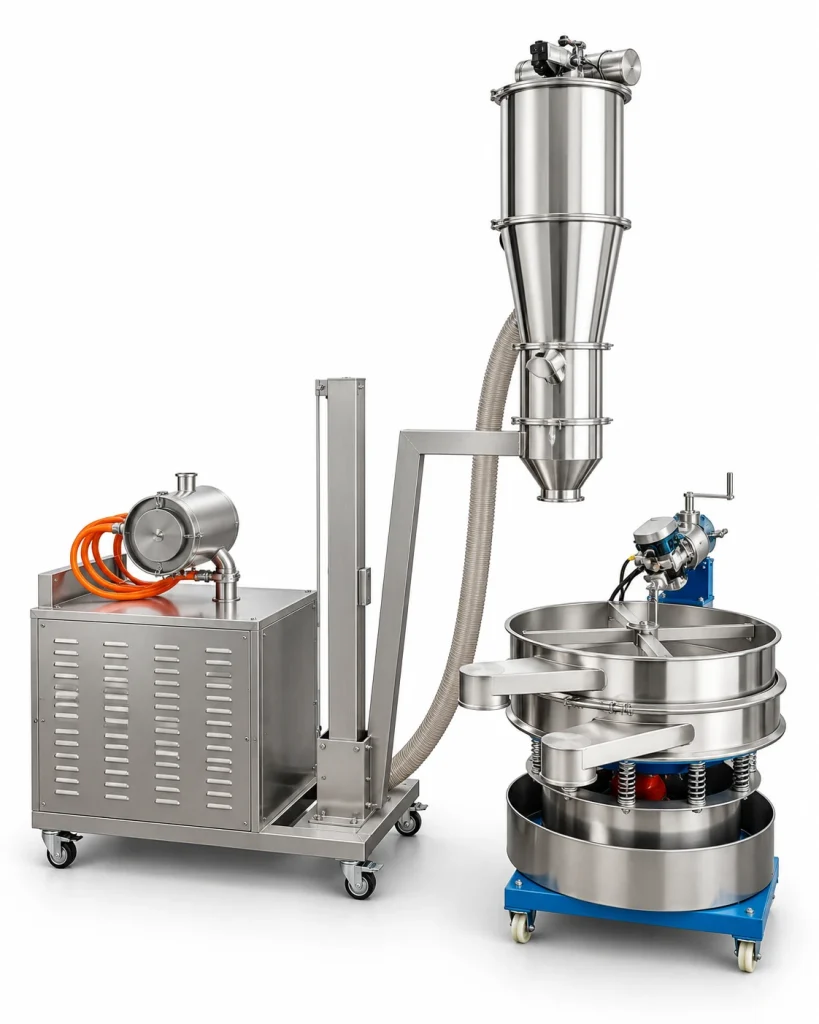
Compare rectangular and circular screening decks, feed distribution, discharge layout and screen-change access.
Read guide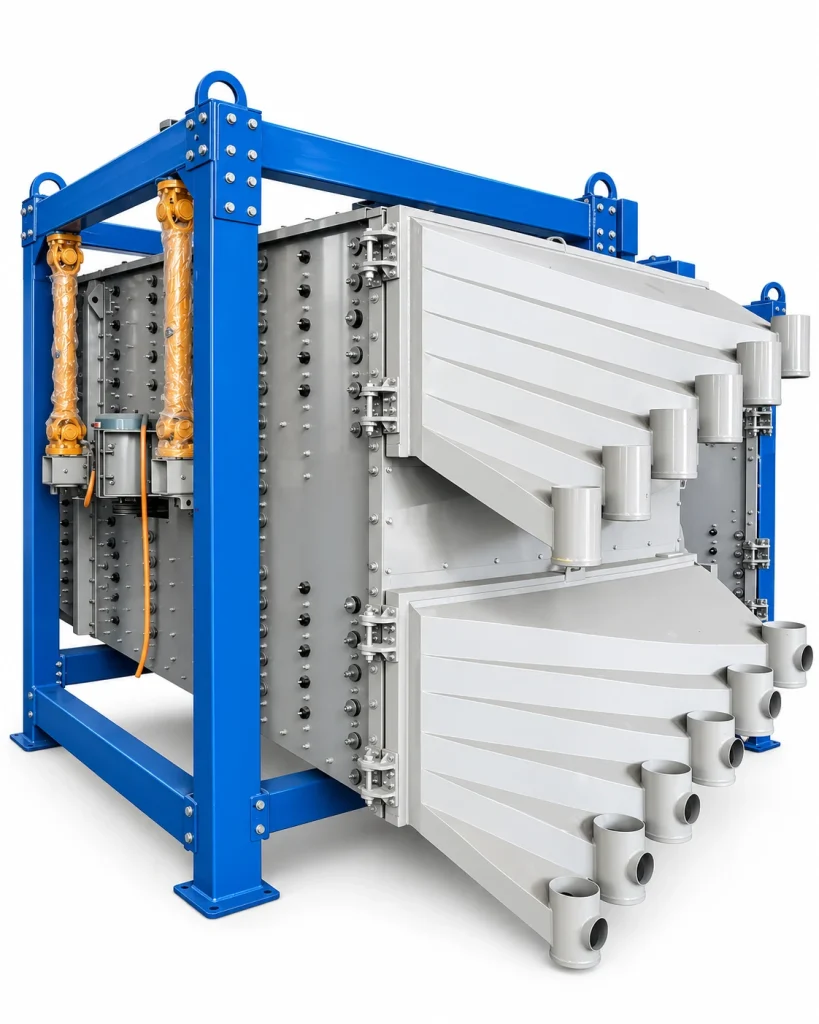
Understand feed rate, bulk density and screen loading, then check output capacity against the required particle-size separation.
Read guideScreen blinding can arise from particles lodged in openings, sticky coatings or cohesive agglomerates.
Read guideUseful answers
A tumbler uses an eccentric mechanism to produce a tumbling path and control residence on the mesh. A rotary vibrating screen uses a vibratory motor with eccentric weights.
Start with your material
Share your material, throughput and process requirements. We will review the details needed for equipment selection.