Flour
- Material form
- Dry food powder
- Typical application
- Remove oversized particles before blending
- Handling considerations
- Hygiene, mesh opening and dust containment
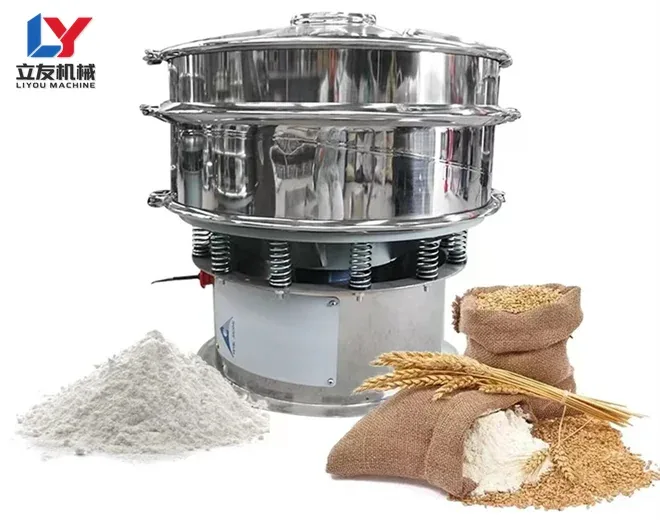
Screening Equipment
Remove lumps and grade powders with a rotary vibrating screen for flour, starch, mineral fillers and chemical ingredients.
Retain oversized particles on the mesh while accepted powder passes to the next stage.
Stacked decks give separate size outlets, reducing the need to sieve the same batch repeatedly on different machines.
Check-sieve flour, starch or salt after bag emptying and before blending. Screen access and product-contact surfaces determine how readily the machine can be cleaned between recipes.
Grade calcium carbonate or other dry fillers before packaging. A sieve separates by size; foreign material smaller than the aperture will still pass.
Adjustable eccentric weights on a vertical vibratory motor generate motion in more than one direction. The resulting path distributes particles around the circular screen. Fines pass through the mesh and oversize travels to its outlet; changing the weight arrangement alters the residence time and movement pattern.
Applications & Suitable Materials
Flour
Starch
Salt
Calcium carbonate
Technical Specifications
Model Effective diameter (mm) Screen area (m²) Mesh (mesh count) Decks Motor power (kW) 400 380 0.1 2–400 1–3 0.25 600 580 0.23 2–400 1–3 0.55 800 780 0.41 2–400 1–3 0.75 1000 970 0.65 2–400 1–3 1.1 1200 1170 0.99 2–400 1–3 1.5 1500 1470 1.58 2–400 1–3 2.2 1800 1770 2.32 2–400 1–3 3.0
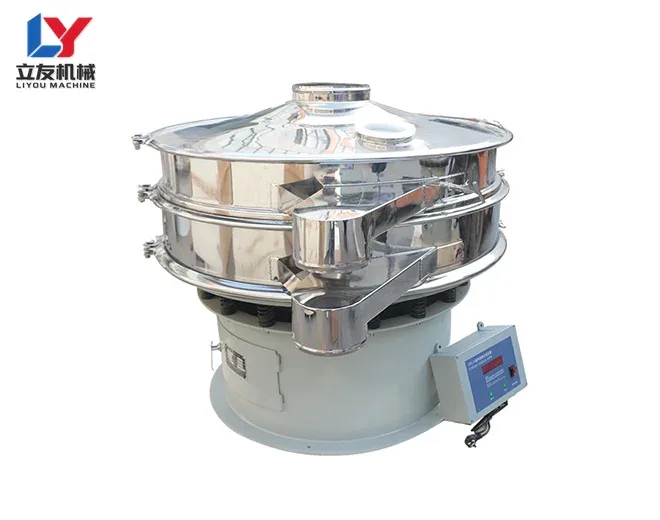
Keep fine-powder screening openings clear with an ultrasonic vibrating screen for coating powders, mineral fillers and other cohesive dry powders.
Explore equipment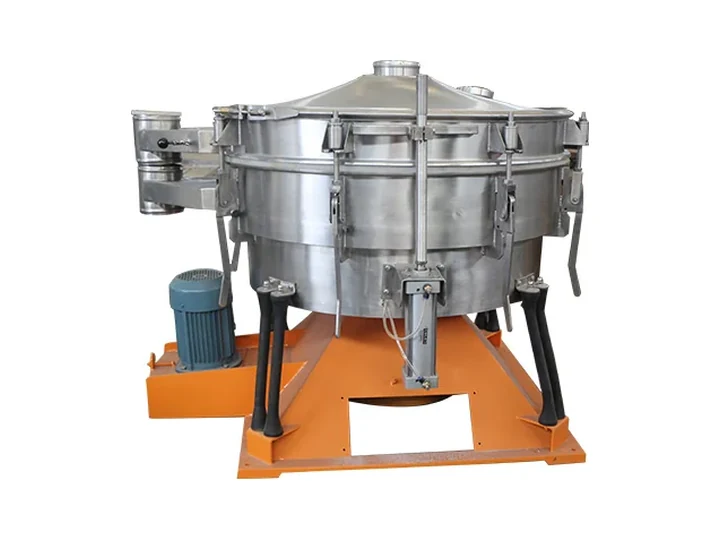
Classify fine powders and delicate granules with a tumbler screen, using extended mesh contact to separate closely sized fractions.
Explore equipment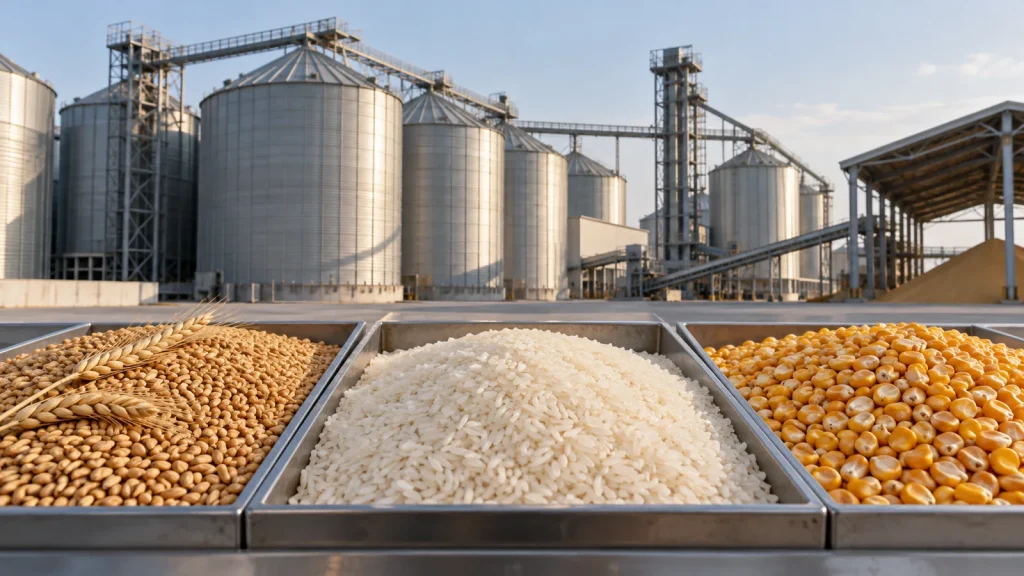
Remove oversized debris and undersize from wheat, corn and rice, then convey the cleaned grain with attention to breakage and carryover.
View solution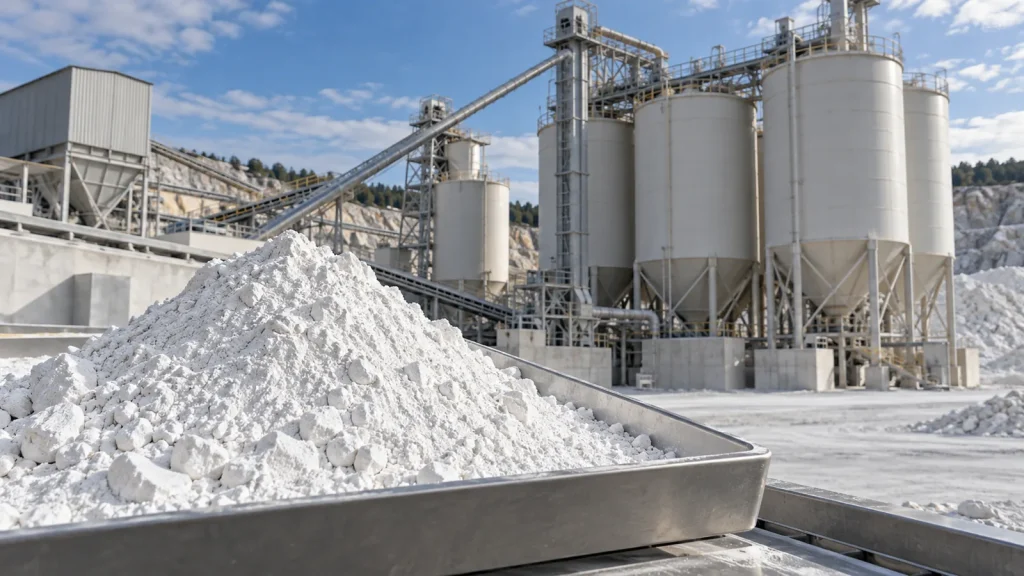
Screen calcium carbonate, resin and pigment powders; control agglomerates, mesh blinding and dust at enclosed transfer points.
View solution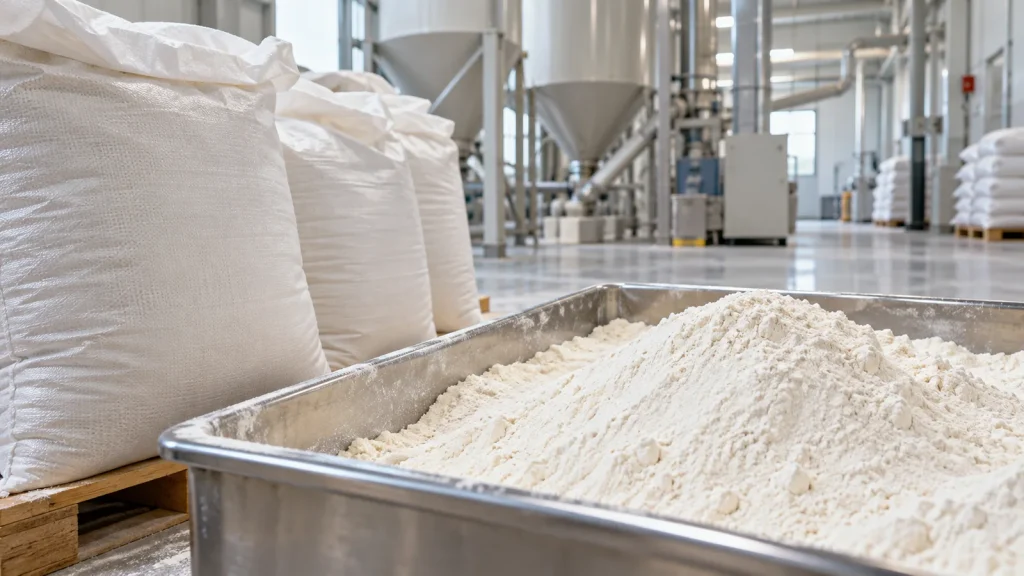
Remove oversize from flour and starch, grade sugar and salt, and transfer dry ingredients between sieving, blending and packing.
View solution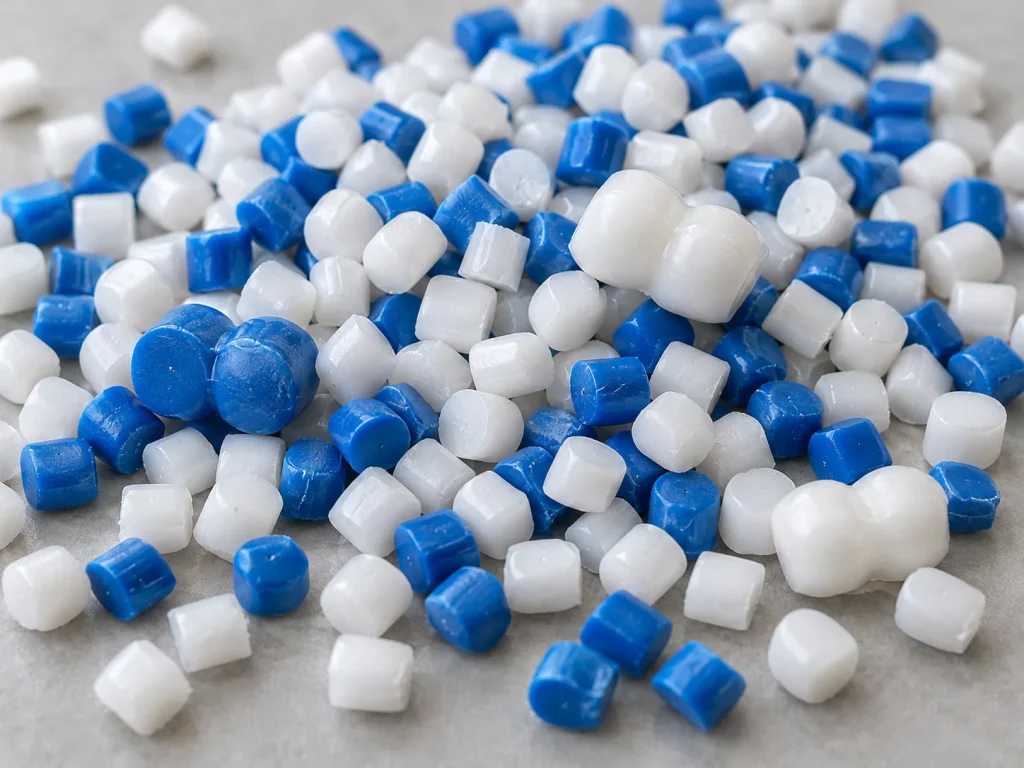
Separate fused plastic pellets and small fragments, keep useful pellets out of rejects, and limit contamination during grade changes.
Read guide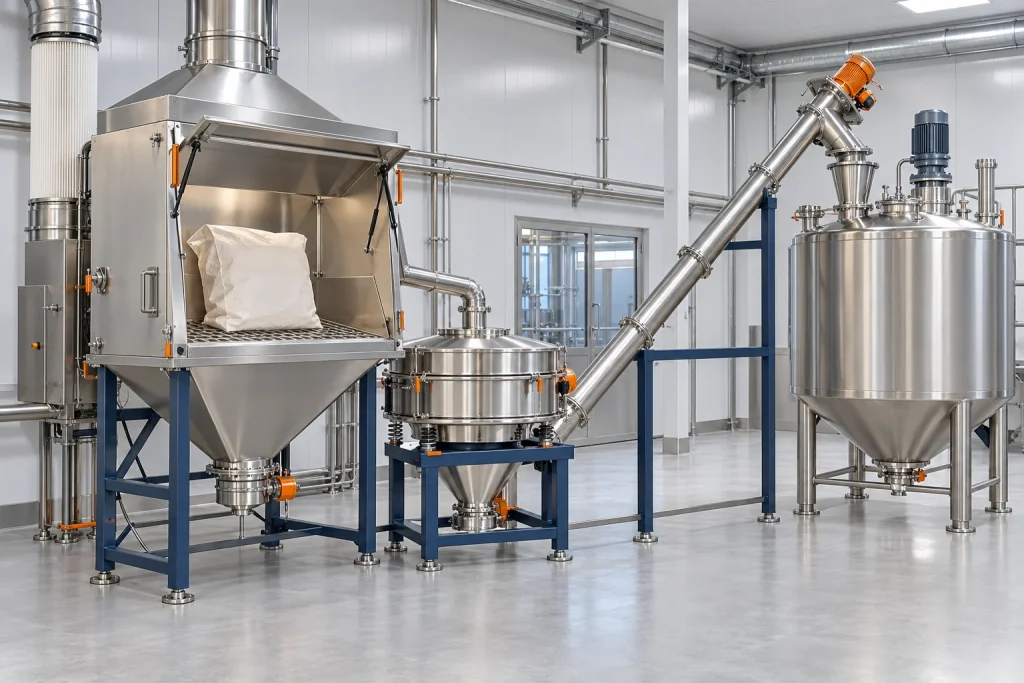
Application concept
What flour screening removes, how blocked mesh sends usable flour to rejects, and where to inspect the sieve before blending.
Read guide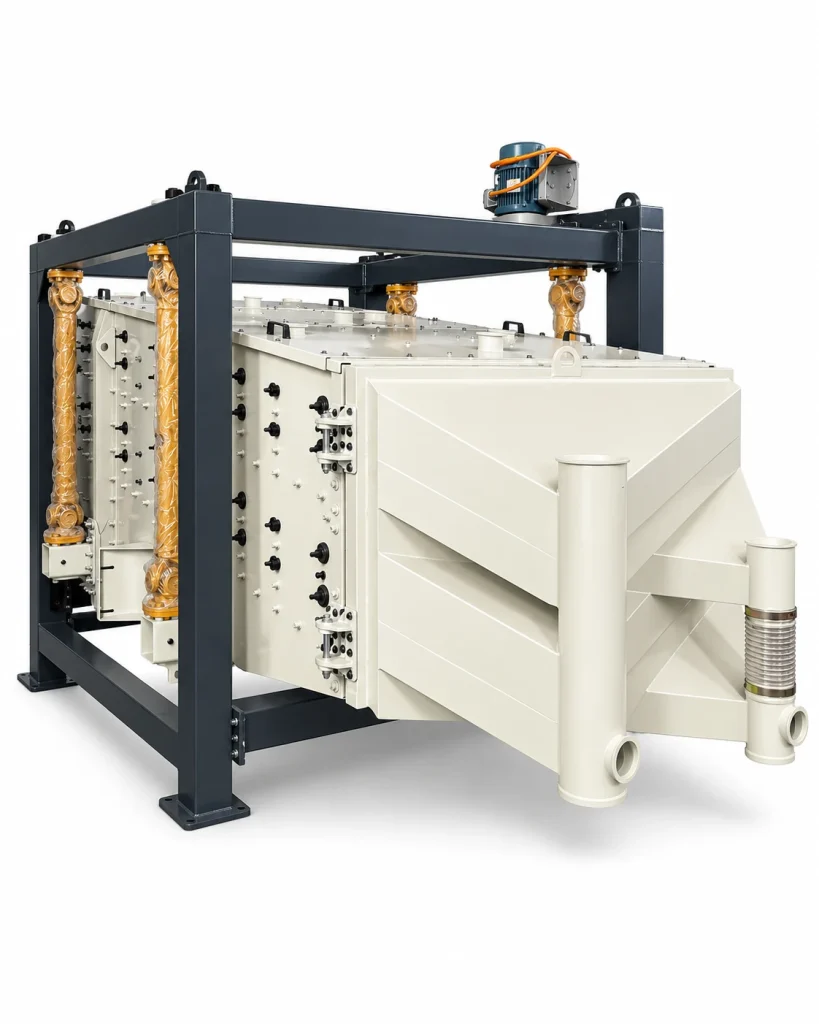
Compare screen motion, mesh openings and material properties to select equipment for the required size separation.
Read guide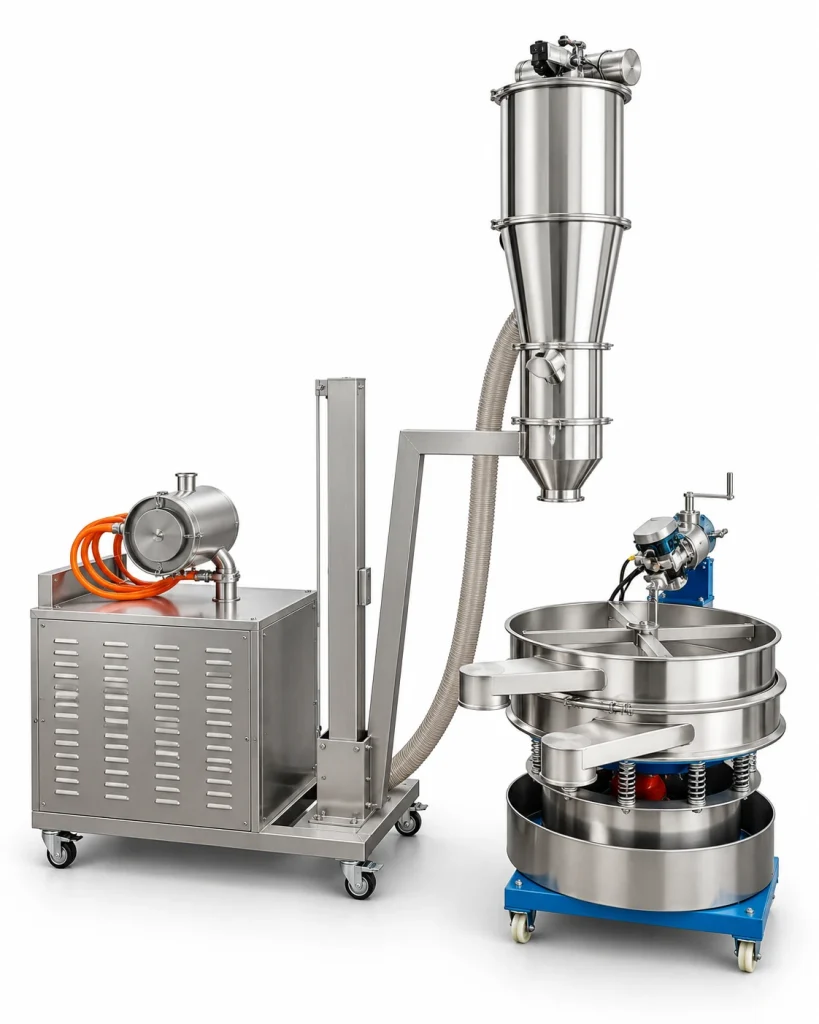
Compare rectangular and circular screening decks, feed distribution, discharge layout and screen-change access.
Read guideUseful answers
The number depends on the installed decks and outlets. Each deck needs a defined cut size and an outlet that can handle its fraction.
No. Contact grade, welds, seals, surface finish and the applicable documentation must all be specified.
Start with your material
Share your material, throughput and process requirements. We will review the details needed for equipment selection.