Application concept
Flour Screening and Impurity Removal in Food Processing
What flour screening removes, how blocked mesh sends usable flour to rejects, and where to inspect the sieve before blending.
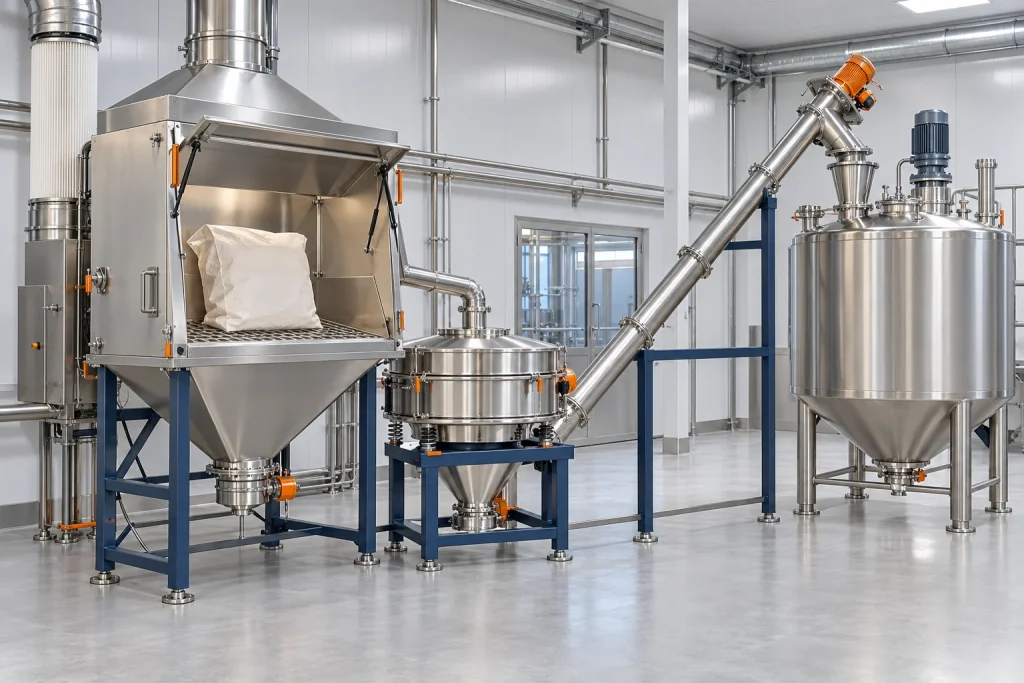
Illustrative plant profile: flour feeding before batch mixing
Consider a bakery ingredient plant emptying flour sacks before a batch mixer. The task is to intercept coarse foreign matter and oversize lumps while transferring accepted flour through an enclosed route. This is a worked application scenario rather than a reported customer installation.
Problem at the process stage
A sack dumped at once creates a feed surge. A coated mesh and a restricted outlet then send usable flour to the reject stream. Open transfer joints can release dust, and retained flour around gaskets can carry into a later ingredient batch.
Equipment arrangement
An enclosed bag-tip hopper with a suitable extraction connection feeds a compatible safety sifter. Accepted flour moves by an enclosed screw transfer to the receiving vessel. The reject stream is collected independently; screens, gaskets and access points must match the ingredient and cleaning procedure.
Acceptance checks
Inspect reject samples and both sides of the mesh, then observe the actual sack-emptying feed surge. Check the accepted-product outlet and joint seals. During changeover, inspect the underside of the mesh, gasket seats and discharge pockets; screening does not replace separate metal control or allergen-cleaning validation.
What a flour sieve actually removes
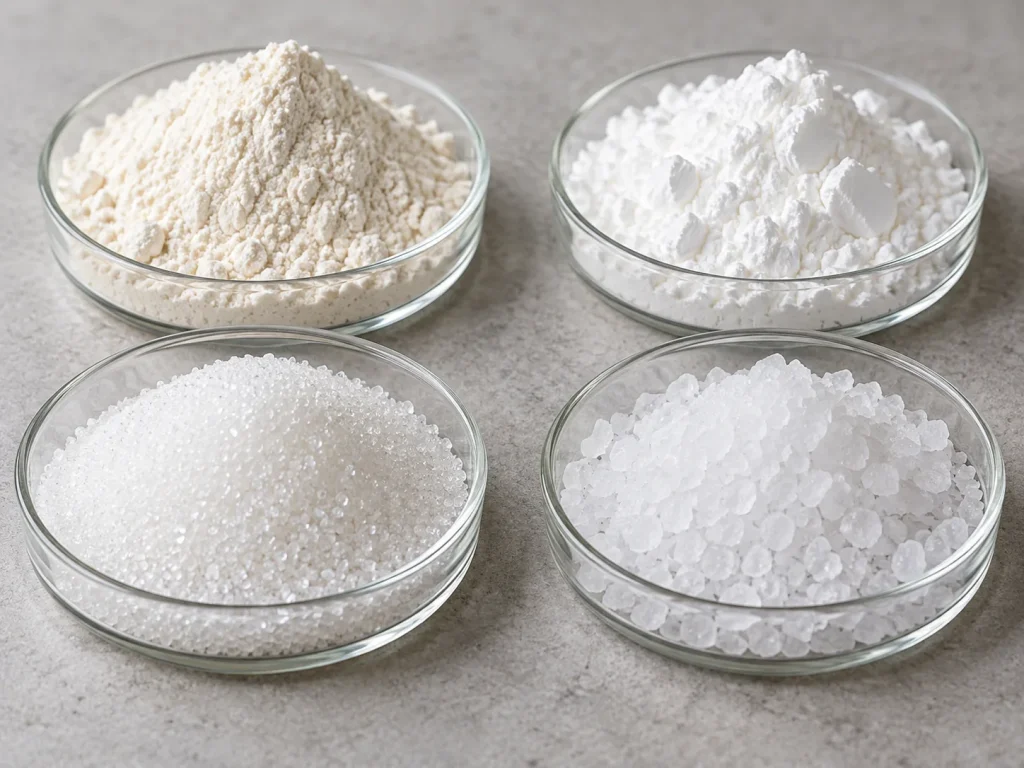
A flour sieve retains material larger than its openings before flour enters a mixer or packing stage. This can include coarse agglomerates and oversized foreign matter. It does not identify contaminants by composition: a small contaminant can pass with the flour. Magnets and metal detectors address different risks and are not substitutes for the screen. Keep the accepted flour and reject container separate.
Why flour coats fine mesh
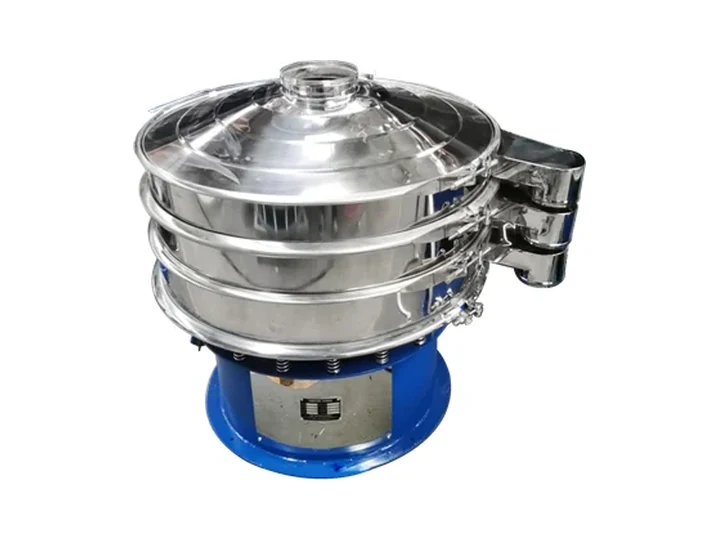
Fine particles can adhere to the wires and reduce open area. A thick feed bed then moves across the top while good flour leaves through the reject outlet. Bag dumping produces short feed surges that can overload the mesh even when the hourly average is modest. A controlled inlet stream and an unobstructed accepted-product outlet help maintain a shallow bed.
| Material / observation | Separation / cause | Equipment / action |
|---|---|---|
| Coarse foreign matter | Retained only when larger than the aperture | Inspect and isolate rejects |
| Soft flour lumps | May remain oversize or break during handling | Do not treat every lump as contamination |
| Flour in the reject outlet | Mesh coating, deep bed or obstructed discharge | Inspect mesh and feed before increasing vibration |
Check the mesh rather than just the motor
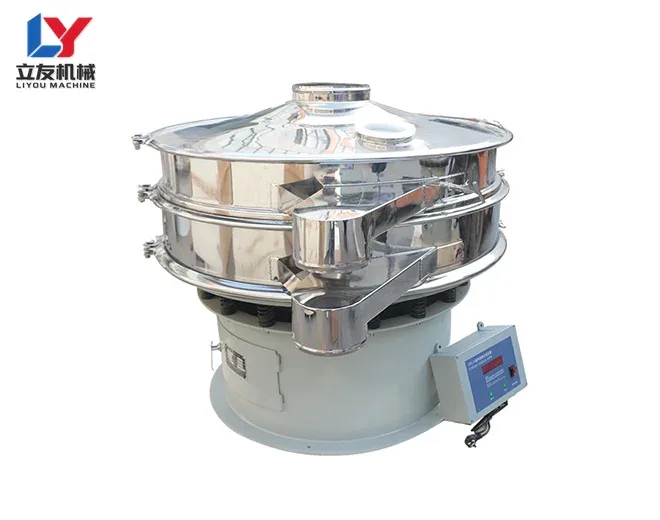
Stop and isolate the machine before inspecting the mesh, gasket seating and outlet. Look for coating on both sides, loose mesh tension, torn wires and residue around the frame. A rotary screen provides compact separation; a direct-discharge sifter gives accepted flour a short downward path. Ultrasonic assistance can reduce fine-powder adhesion on compatible screen assemblies, while mechanical mesh cleaning targets other blocking conditions.
Cleaning and ingredient changeover
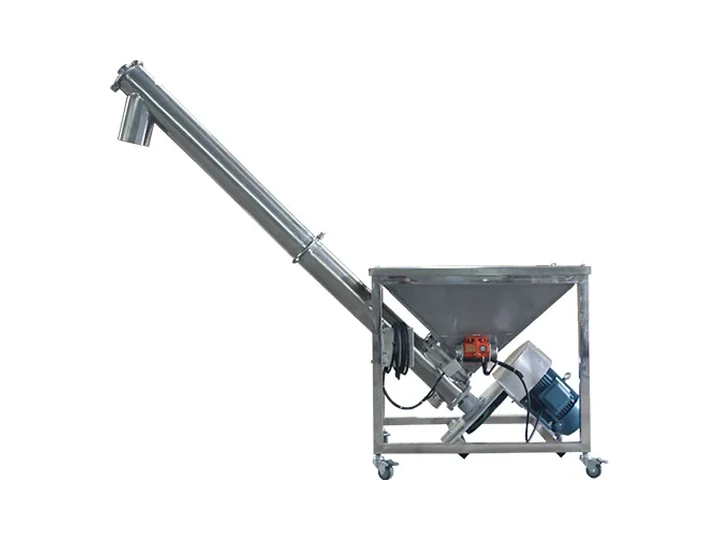
Residue can remain below the mesh, inside a discharge pocket or around a seal. Remove it during changeover rather than sweeping it into the next batch. Cleaning access and residue inspection matter particularly where different allergen ingredients share the equipment. An enclosed screw conveyor can move flour to blending, but its inlet, outlet and joints still need dust control and cleanout access. Fine flour dust also requires the plant combustible-dust controls.
Related equipment
Rotary Vibrating Screen
Remove lumps and grade powders with a rotary vibrating screen for flour, starch, mineral fillers and chemical ingredients.
Explore equipmentUltrasonic Vibrating Screen
Keep fine-powder screening openings clear with an ultrasonic vibrating screen for coating powders, mineral fillers and other cohesive dry powders.
Explore equipmentScrew Conveyor
Transfer dry powders and granules between hoppers, mixers and packing equipment with a screw conveyor sized for the feed and incline.
Explore equipmentRelated solutions
Grain Processing
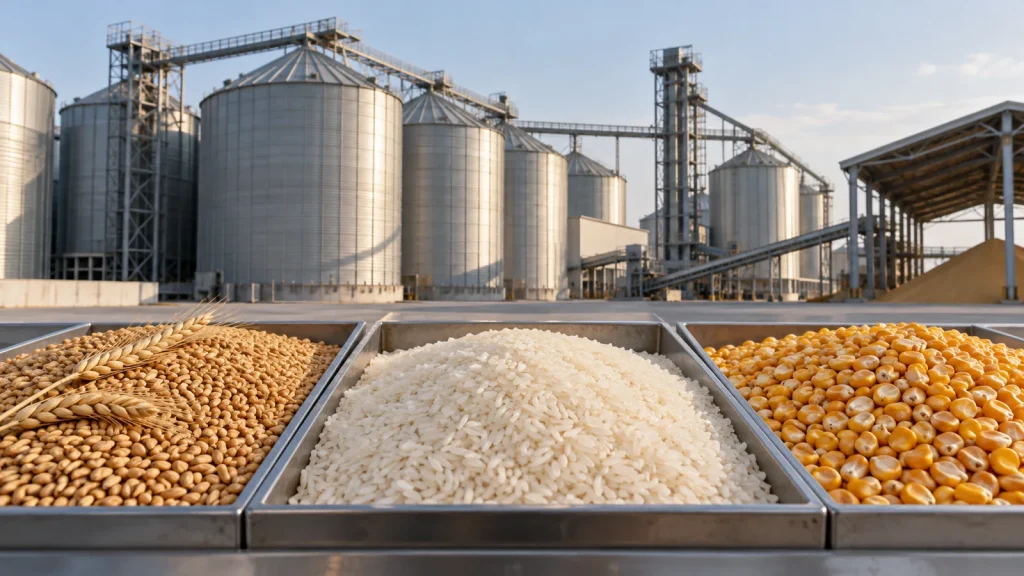
Remove oversized debris and undersize from wheat, corn and rice, then convey the cleaned grain with attention to breakage and carryover.
View solution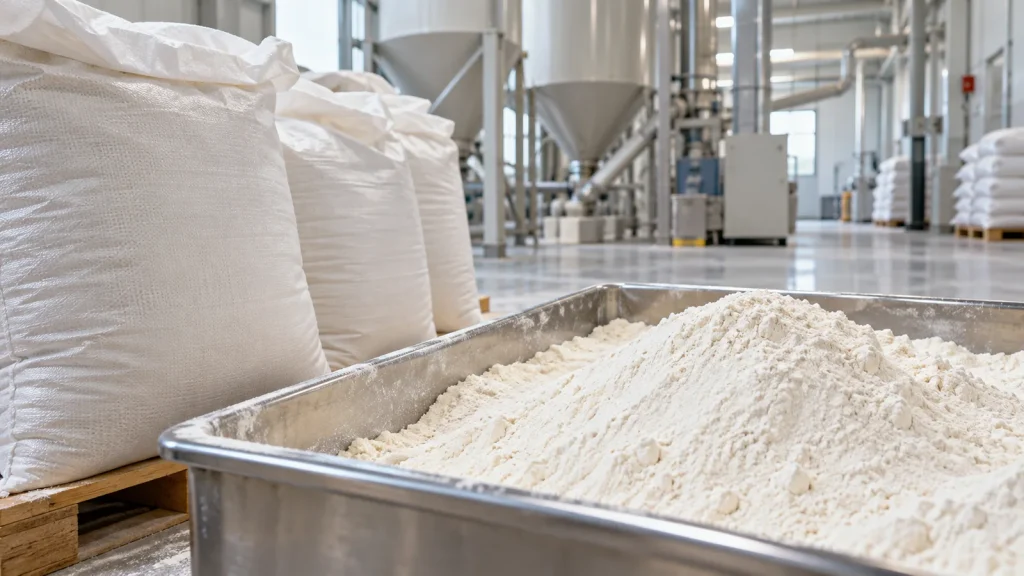
Food Processing
Remove oversize from flour and starch, grade sugar and salt, and transfer dry ingredients between sieving, blending and packing.
View solutionTechnical resources
How to Choose a Vibrating Screen
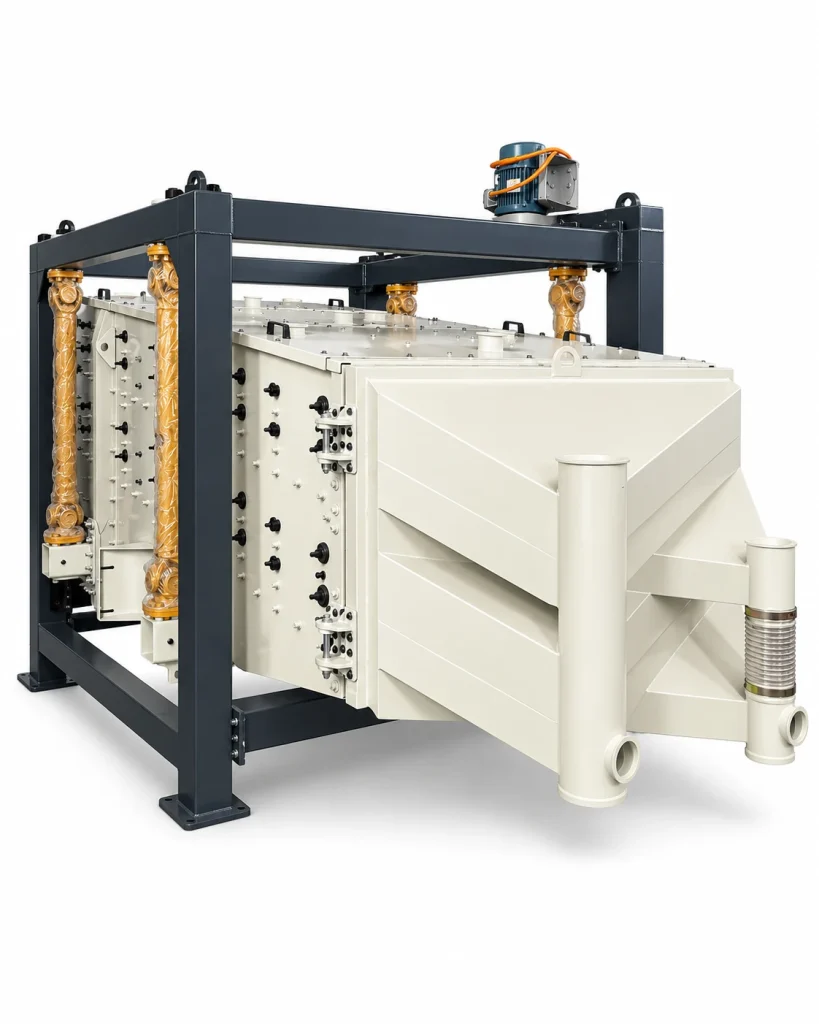
Compare screen motion, mesh openings and material properties to select equipment for the required size separation.
Read guideHow to Prevent Screen Blinding
Screen blinding can arise from particles lodged in openings, sticky coatings or cohesive agglomerates.
Read guideUseful answers
Frequently asked questions
Does a finer flour sieve always give better protection?
It retains smaller oversize but can also reduce open area and increase blinding. The opening must suit the flour and the intended separation.